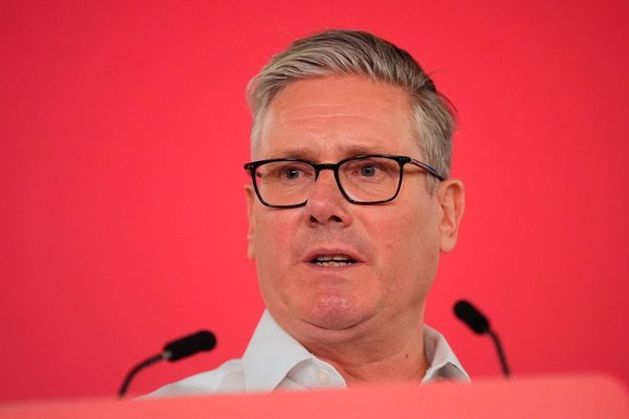
"“The Labour Party has a process for challenging a leader and that has not been triggered. The country expects us to get on with governing. That is what I am doing and what we must do as a cabinet.”"
"“None of that mattered, said Corbyn. His mandate to lead the party came from ordinary members, not MPs. He was duly re-elected by those members in the face of a challenge by a rival MP.”"
"“In a parliamentary system, the authority of a party leader or prime minister comes from parliament itself. A prime minister is appointed if he or she enjoys the confidence of a majority of the House of Commons. Therefore, when a prime minister ceases to enjoy that majority, he cannot continue as prime minister.”"
"“The constitution does not care about internal party machinations or democracy; it cares only whether an MP can justifiably claim to have the confidence of the house. No party leader who has lost the confidence of his MPs can continue in the job: this is an essential, irrefutable rule.”"
A growing rebellion against leadership has led to a firm message to the cabinet that governing must continue because the Labour Party’s process for challenging a leader has not been triggered. The stance is compared to Jeremy Corbyn’s earlier refusal to step aside after major resignations and a no-confidence vote by MPs. Corbyn claimed his mandate came from ordinary members rather than MPs and was re-elected by them. The constitutional argument is that authority in a parliamentary system comes from Parliament, with a prime minister appointed only while enjoying majority confidence in the House of Commons. If that confidence is lost, the prime minister cannot continue, regardless of internal party democracy or machinations.
Read at Irish Independent
Unable to calculate read time
Collection
[
|
...
]