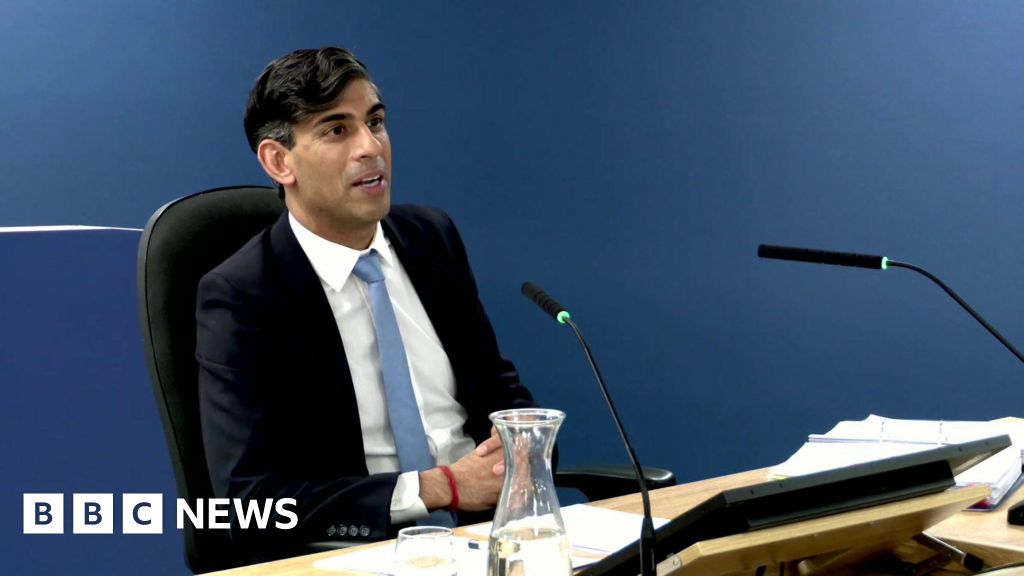
"Bounce back loans (BBLs) offered small businesses up to 50,000 with a 100% government guarantee, meaning taxpayers cash was used to pay back banks if the companies failed. The programme had "specific vulnerabilities to fraud and error," according to a government anti-fraud report. However, delaying the launch of the scheme even for a few weeks to introduce more controls would have put hundreds of thousands of businesses at risk, Mr Sunak said."
"Close to 1.5m BBLs worth a total of 46bn were issued, making it the biggest of the government's pandemic-era loan schemes. Around 1.9bn have been flagged by lenders as fraudulent. A report from the Covid Counter-fraud commissioner, Tom Hayhoe, published last week, said total fraud and error was estimated at up to 2.8bn. The Public Sector Fraud Authority believes the true total could be even higher, given that some fraud types are not picked up by current reporting methods."
"Mr Hayhoe wrote that the scheme was launched in less than two weeks, in May 2020, and applicants were subjected to "limited checks beyond standard banking fraud controls." Loans were limited to 25% of turnover, but lenders had to rely on what businesses told them. No checks were made on whether businesses had really been affected by the pandemic, or what they used the money for, his report said. Giving evidence for a second day at the Covid-19 Inquiry, Mr Sunak hit back at claims that inadequate checks were done. "I keep hearing as if there were no checks done whatsoever. Or that we didn't know what we were getting ourselves into. Both of those narratives are completely wrong. Of course we knew the risks we were taking on.""
Bounce Back Loans provided small businesses up to 50,000 with a 100% government guarantee, using taxpayer funds to cover bank repayments if firms failed. The scheme was launched in under two weeks in May 2020 and relied mainly on standard banking fraud controls, creating specific vulnerabilities to fraud and error. Close to 1.5 million loans worth 46bn were issued. Lenders flagged around 1.9bn as fraudulent and estimates put total fraud and error up to 2.8bn, with potential additional unreported losses. Loans were capped at 25% of turnover but verification of turnover, pandemic impact, or use of funds was minimal. Delaying rollout was judged to risk many businesses.
Read at www.bbc.com
Unable to calculate read time
Collection
[
|
...
]