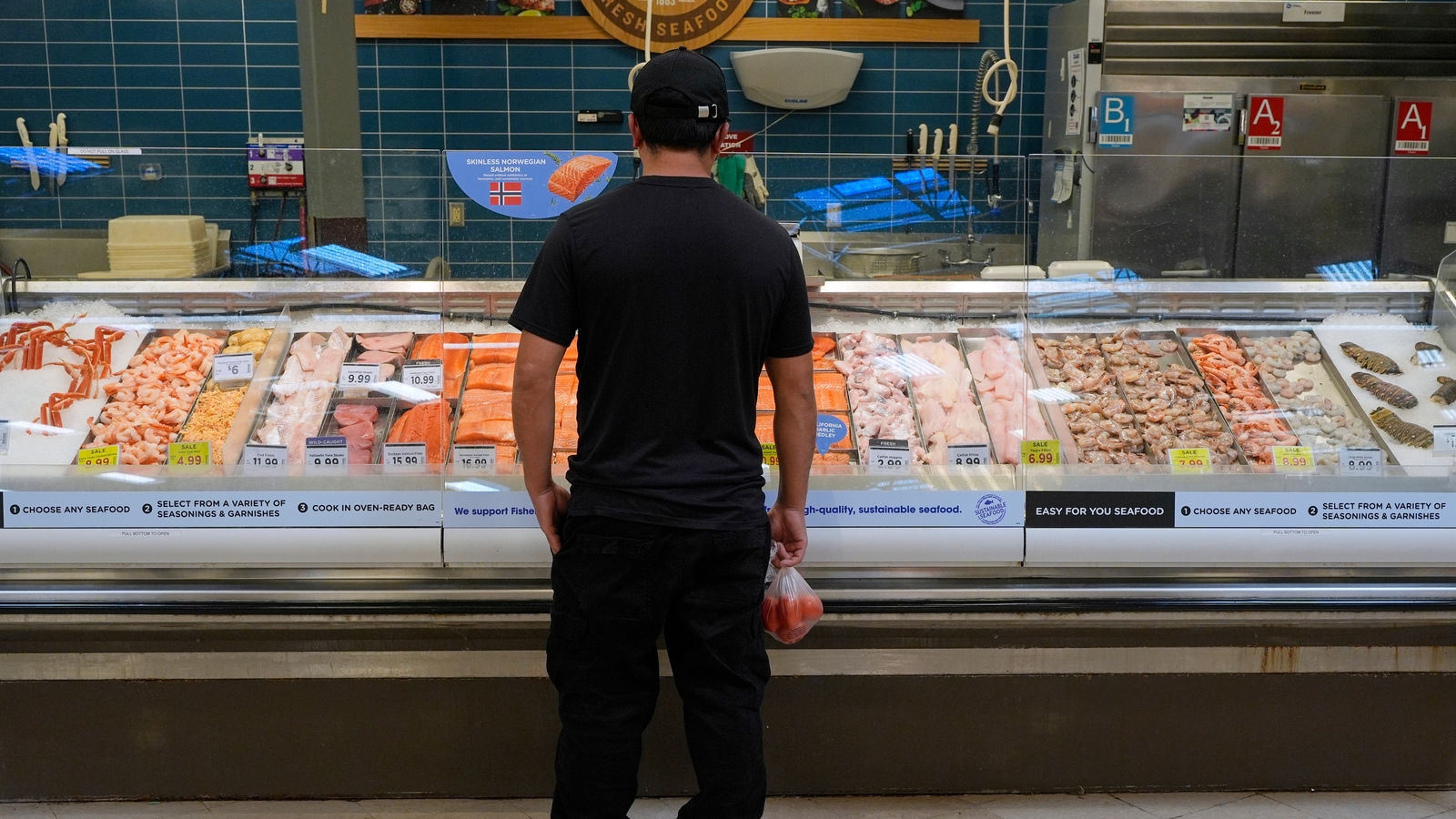
"Prices for food eaten at home rose 2.9% in April compared to the same month a year earlier, according to government figures released Tuesday. That was the highest year-over-year inflation rate for the category since August 2023. Prices at restaurants, fast-food chains, and other places to get prepared meals also increased, putting overall food prices up 3.2% in the last year, the Labor Department's consumer price index showed."
"Fuel prices have soared while the Iran war prevents cargo ships from passing through the Strait of Hormuz, a vital corridor for global oil supplies. Diesel fuel powers fishing boats, tractors, and the trucks that ship 83% of U.S. agricultural products. As of Tuesday, the average price per gallon was up 61% from a year ago, according to AAA."
"The meat, produce, and dry goods vendors that supply Sparrow Market, a small independent grocer in Ann Arbor, Michigan, all added fuel surcharges to their deliveries in recent weeks, owner Raymond Campise said. Wholesale prices for meat, produce, and some other products have also gone up, he said. "For independent markets operating on narrow margins, even small increases can have a major impact," Campise said."
"The full impact of rising energy costs on food likely has not hit retail grocery prices yet in the U.S., according to Purdue University economists Ken Foster and Bernhard Dalheimer. Higher costs to produce, process, store, and transport food can take three to six months to show up on supermarket shelves, where prices typically fall slowly once increased, they said. "Most of what we're seeing now in the food price chain probably predates the conflict," Foster, a professor of agricultural economics, said."
Food eaten at home increased 2.9% in April versus the same month a year earlier, the highest year-over-year rate since August 2023. Prepared meals also became more expensive, with restaurant and fast-food prices contributing to overall food prices rising 3.2% over the last year. Fuel prices surged as the Iran war disrupted cargo shipping through the Strait of Hormuz, tightening global oil supplies. Diesel used for fishing boats, tractors, and trucks that move most U.S. agricultural products became much more costly. A Michigan grocer reported fuel surcharges from meat, produce, and dry goods suppliers and higher wholesale prices. Retail impacts may lag because higher energy costs can take three to six months to reach supermarket shelves.
Read at ABC7 Los Angeles
Unable to calculate read time
Collection
[
|
...
]