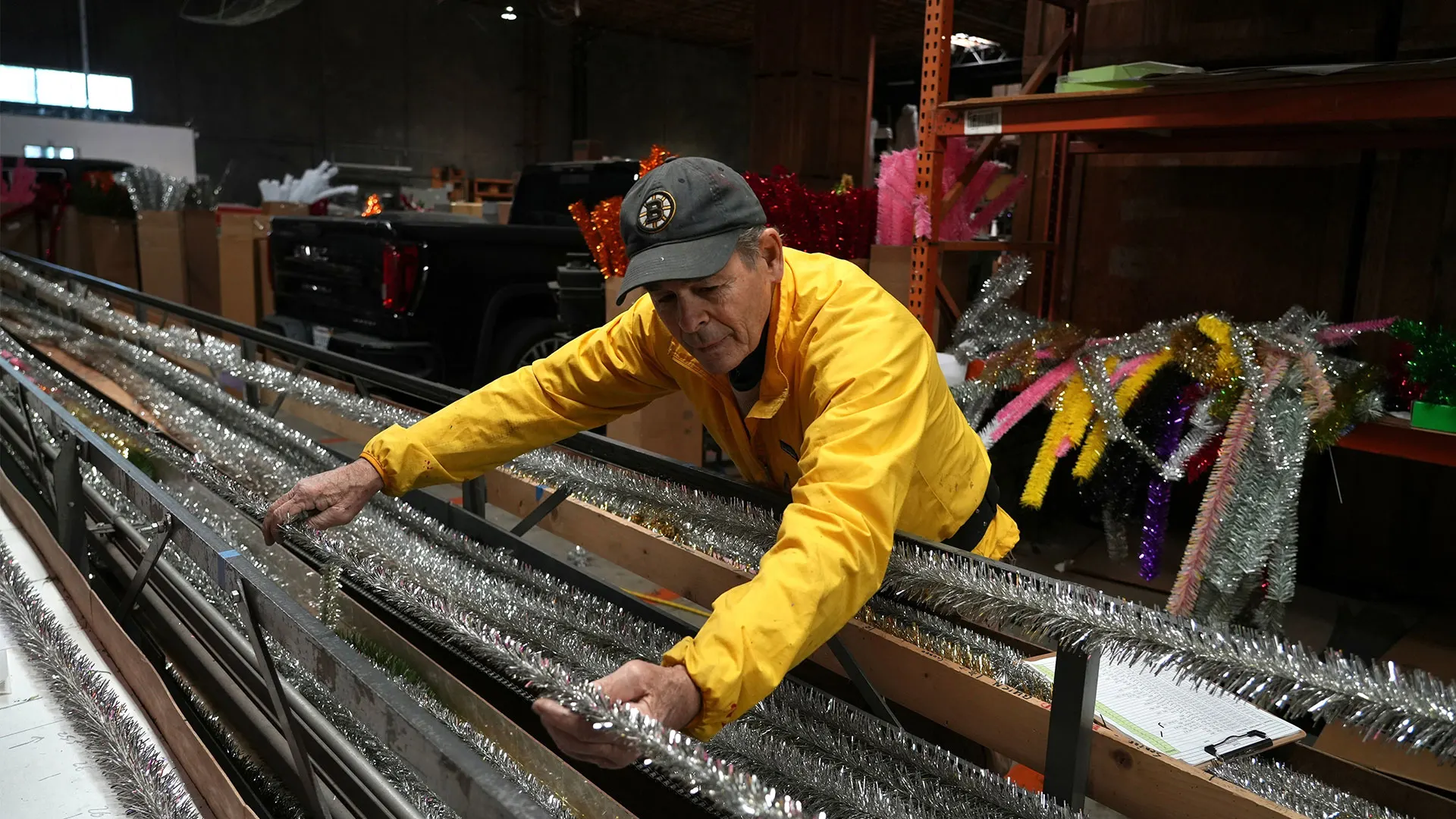
"They worked on a custom-made machine that's nearly a century old, churning out strands of bright silver tinsel along its 35-foot (10-meter) length.Latino is the CEO of Lee Display, a Fairfield, California-based company that his great-grandfather founded in 1902. Back then, it specialized in handmade velvet and silk flowers for hats. Now, it's one of the only companies in the United States that still makes artificial Christmas trees, producing around 10,000 each year."
"Fake trees are labor-intensive and require holiday lights and other components the U.S. doesn't make, said Chris Butler, CEO of the National Tree Co., which sells more than 1 million artificial trees each year. Americans are also very price-sensitive when it comes to holiday décor, Butler said."Putting a 'Made in the U.S.A.' sticker on the box won't do any good if it's twice as expensive," Butler said. "If it's 20% more expensive, it won't sell.""
Lee Display in Fairfield, California manufactures tinsel on a custom machine nearly a century old and produces about 10,000 artificial trees annually. New import tariffs pushed fake tree prices up roughly 10% to 15%, causing sellers to cut orders and absorb higher duties. Large-scale production remains centered in Asia because fake-tree assembly is labor-intensive and requires lights and components not made in the U.S. Consumer price sensitivity limits demand for higher-cost domestically made trees. About 80% of U.S. households that set up a tree planned to use a fake one this year.
Read at Fast Company
Unable to calculate read time
Collection
[
|
...
]