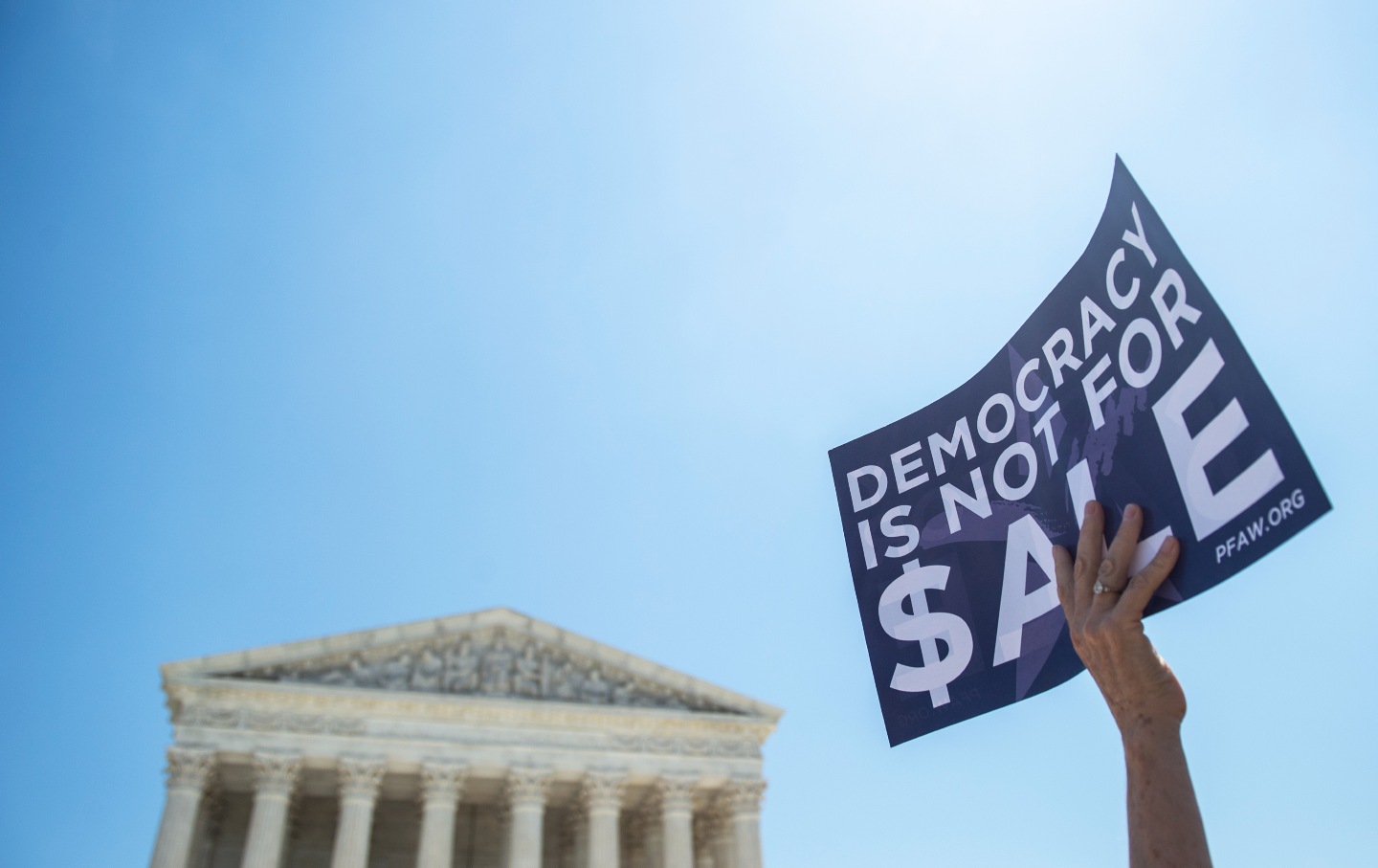
"In October, the US Court of Appeals for the First Circuit agreed to hear Dinner Table Action v. Schneider, a case that could decide the future of money in American politics. Fifteen years after the Supreme Court opened the floodgates to dark money and unchecked spending with Citizens United, the Maine initiative has exposed a tension in the movement for clean elections: should advocates pursue state and local reforms, or bet on a high-stakes legal battle that could radically rewrite the rules of campaign finance nationwide?"
"In the summer of 2023, Maine residents began to think about how to place a question about limiting super PAC contributions on the ballot. Drawing on a legal theory developed by Harvard Law professor Lawrence Lessig, organizer Cara McCormick founded Citizens to End Super PACs, the ballot-question committee formed to lead the campaign. McCormick, who pushed for Maine to adopt ranked-choice voting in 2016, crafted the initiative to cap donations at $5,000 based on efforts by Lessig's nonprofit, Equal Citiz"
Maine voters approved a ballot measure to cap donations to super PACs aimed at curbing corporate and wealthy donor influence in local races. Opponents filed suit, and the US Court of Appeals for the First Circuit agreed to hear Dinner Table Action v. Schneider, creating a federal legal test of the measure. The challenge poses a choice between pursuing state and local reforms and seeking a high-stakes court decision that could reshape national campaign finance rules. Organizers relied on a legal theory from Lawrence Lessig and set a $5,000 cap, building on Maine's history of election reforms and public financing. Fifteen years after Citizens United expanded dark-money spending, the case could determine whether states can set their own contribution limits.
Read at The Nation
Unable to calculate read time
Collection
[
|
...
]