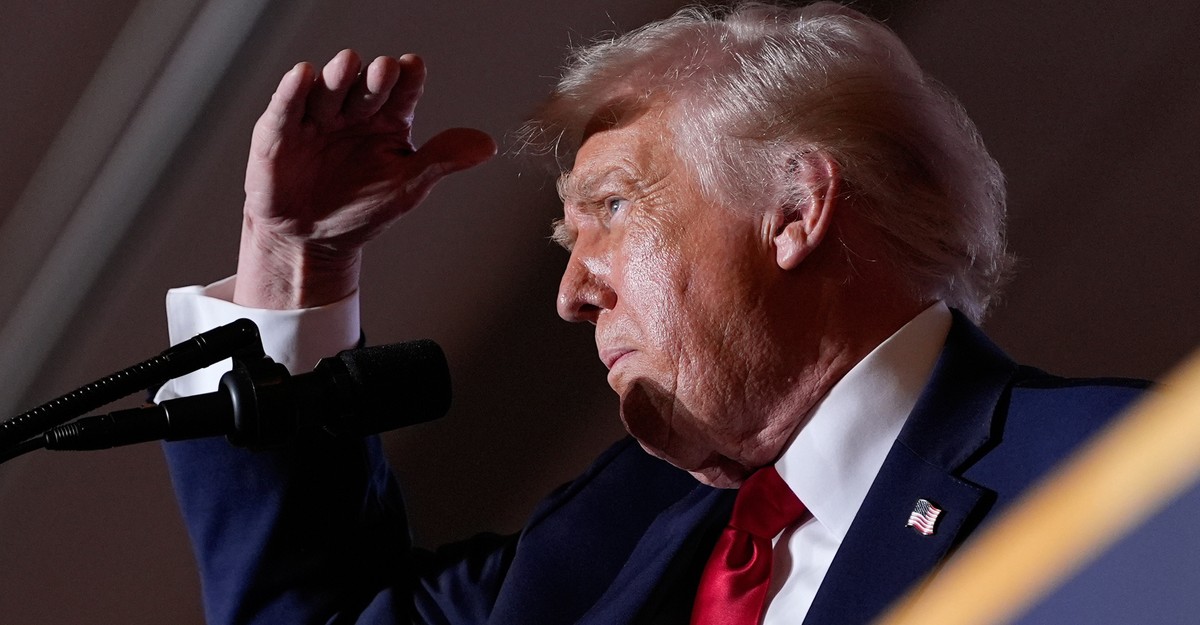
"Trump may have imagined he was immune. If so, he wasn't alone. The rules of political gravity, journalists have often declared, sometimes seem not to apply to him. He defied the Republican Party establishment to win the 2016 nomination. He beat the odds to defeat Hillary Clinton that fall. And although he was written off as finished following the 2020 election and his attempt to steal it, Trump completed the greatest comeback in American political history in 2024, easily eclipsing Richard Nixon's 1968 election."
"One of the secrets to Trump's success has been his control over other Republican figures, because of either their political and personal affinity or, failing that, the ability to bully them into submission with rhetorical attacks or threats of primary challenges. But as the end of Trump's political career approaches, his grip over the GOP is showing some cracks. This afternoon, the Republican-dominated Indiana Senate rejected a plan to redraw the state's U.S. House districts to benefit the GOP, despite a weeks-long pressure campaign."
Political power erodes over time through scandal, ineffectiveness, term limits, or party revolts. Historical leaders such as Lyndon B. Johnson, Margaret Thatcher, and Mitch McConnell experienced that decline in different ways. Donald Trump achieved unexpected electoral comebacks in 2016 and 2024, despite 2020 losses, by exerting strong control over Republican figures via affinity or intimidation. That control has enabled significant influence across the GOP. Recent events indicate growing limits to that influence, including a Republican-controlled Indiana Senate rejecting a redistricting plan sought by Trump and allies despite sustained pressure.
Read at The Atlantic
Unable to calculate read time
Collection
[
|
...
]