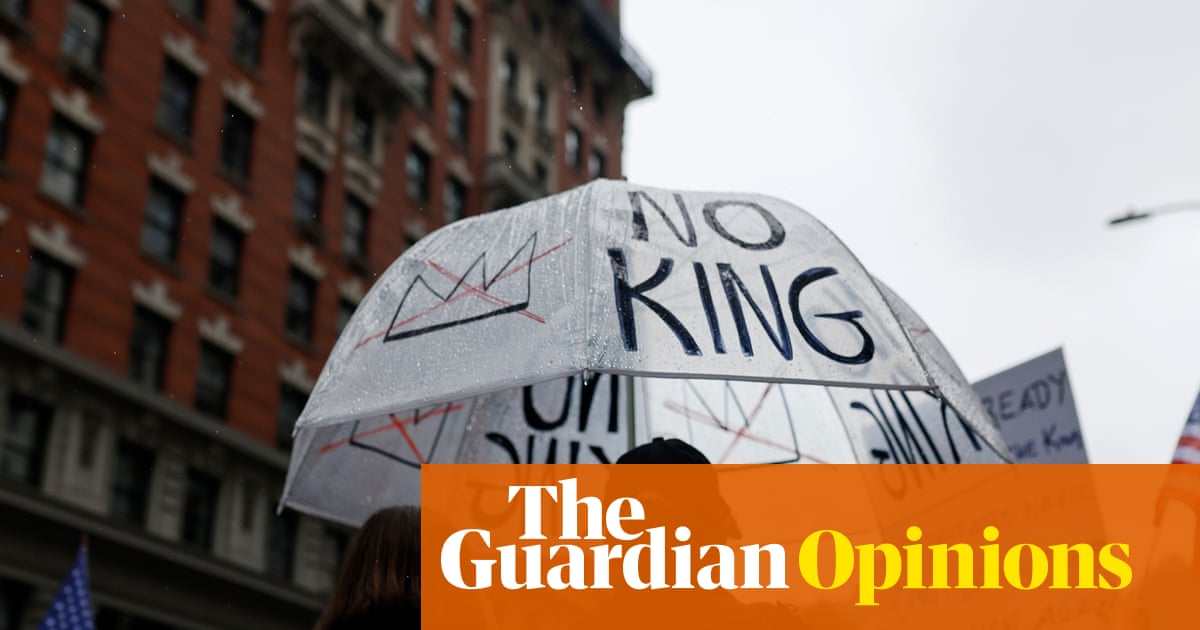
"Since November 2024, our group has doubled in size, and the gender imbalance has tipped even further: we are now about 80% women. Almost 18 months into Trump's second term, it is abundantly clear that the appetite for anti-Trump, pro-democracy activism has not dimmed at all. And yet, there is a substantial portion of the populace that, in my experience as an activist, seems to have lost its fervor for the fight."
"When we look at the demographics of Resistance 2.0 there is overwhelming consistency, writes Dana R Fisher, who studies civic engagement at American University. Participants are predominantly white, highly-educated, female, and middle-aged. During Trump's first term, things were similar: Laura Putnam and Theda Skocpol reported that women comprised 70% of the participants and most members of the leadership teams."
"So where did all the men go, and how can we get them on board? Some men have veered right. Some have burned out, their engines flooded by a terror that the work of protecting democracy goes on and on, world without end. Some have retreated to tend their own gardens: work, children, art, vinyl collections."
"There is also a well-documented gender gap in Trump support. So where did all the men go, and how can we get them on board? Some men have veered right. Some have burned out, their engines flooded by a terror that the work of protecting democracy goes on and on, world without end."
A Brooklyn activist group formed by two men now has a rapidly growing membership that is increasingly women-dominated, rising from about 65% women to about 80% women. Despite nearly 18 months into Trump’s second term, anti-Trump, pro-democracy activism continues without fading. Observations and research indicate Resistance 2.0 participants are predominantly white, highly educated, female, and middle-aged, matching patterns from the first term where women comprised about 70% of participants and most leadership. A gender gap in Trump support is noted, alongside explanations for men’s reduced presence, including shifting toward the right, burnout from ongoing threats, and withdrawal into personal responsibilities and hobbies.
#anti-trump-activism #gender-gap #civic-engagement-demographics #political-participation #resistance-movements
Read at www.theguardian.com
Unable to calculate read time
Collection
[
|
...
]