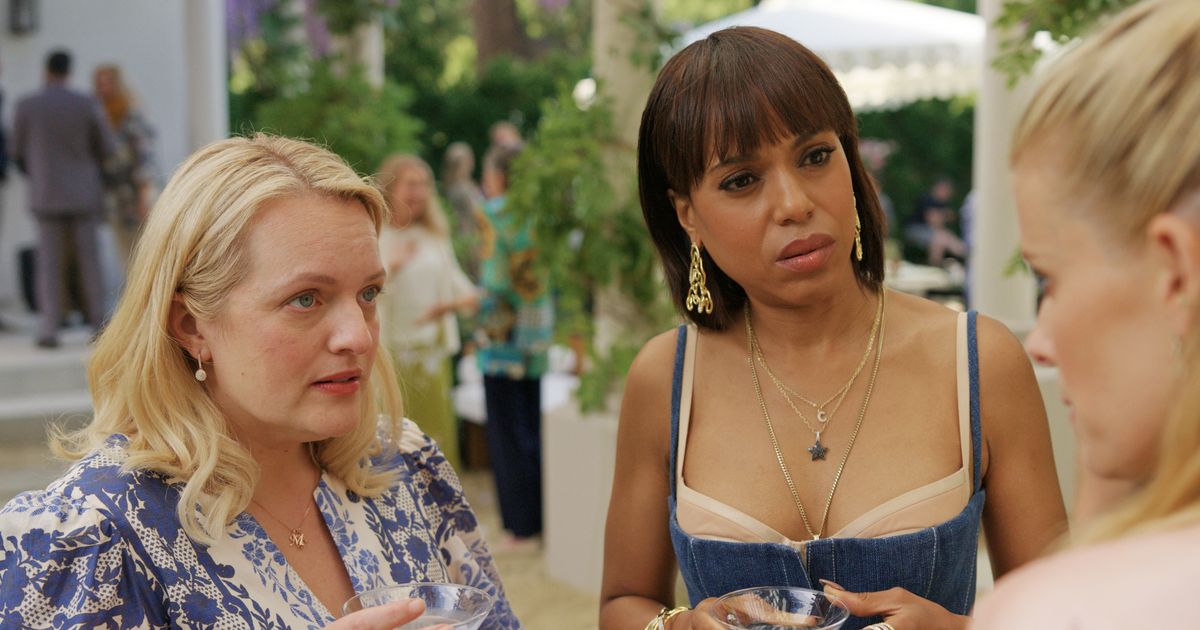
"At a glitzy awards dinner where Eleanor is being honored for her humanitarian work, she says in her acceptance speech, 'I'm not perfect. None of us are, really,' before going on to admit she sometimes feels like a 'fraud' and a 'monster.' The episode's title? Also 'Monster.' The series' ad nauseam repetition, its pat dialogue laying bare its themes and episode titles reaffirming those ideas, feel like a desperate, and ultimately failed, attempt to prove to us that Imperfect Women actually has something enlightening to say."
"You know this story: A group of women claim to be friends but get off on backstabbing each other and self-destructing in a moneyed environment. Every woman has it tough. Every man is an abuser. Every relationship is flawed. Everybody wants to be somebody else. At least The Better Sister gave Kim Dickens's skeptical investigator significant screen time and All Her Fault had a pair of bonkers final twists! No such luck with Imperfect Women, which languishes in the same genre space but is perfectly obvious in comparison."
Imperfect Women follows three college friends—Eleanor, a humanitarian NGO director; Mary, a former aspiring writer turned housewife; and Nancy, a former aspiring ballerina turned housewife—navigating complicated relationships and self-destruction in wealthy circles. Created by Annie Weisman and adapted from Araminta Hall's 2020 novel, the series explores themes of female friendship, betrayal, and unfulfilled ambitions. However, the show suffers from repetitive storytelling and on-the-nose dialogue that explicitly states its themes rather than exploring them subtly. The mystery central to the plot resolves halfway through the season, yet the series continues without compelling developments. Characters constantly acknowledge their imperfections and flaws, with episode titles reinforcing these themes redundantly, creating a sense of desperation in the narrative approach.
Read at Vulture
Unable to calculate read time
Collection
[
|
...
]