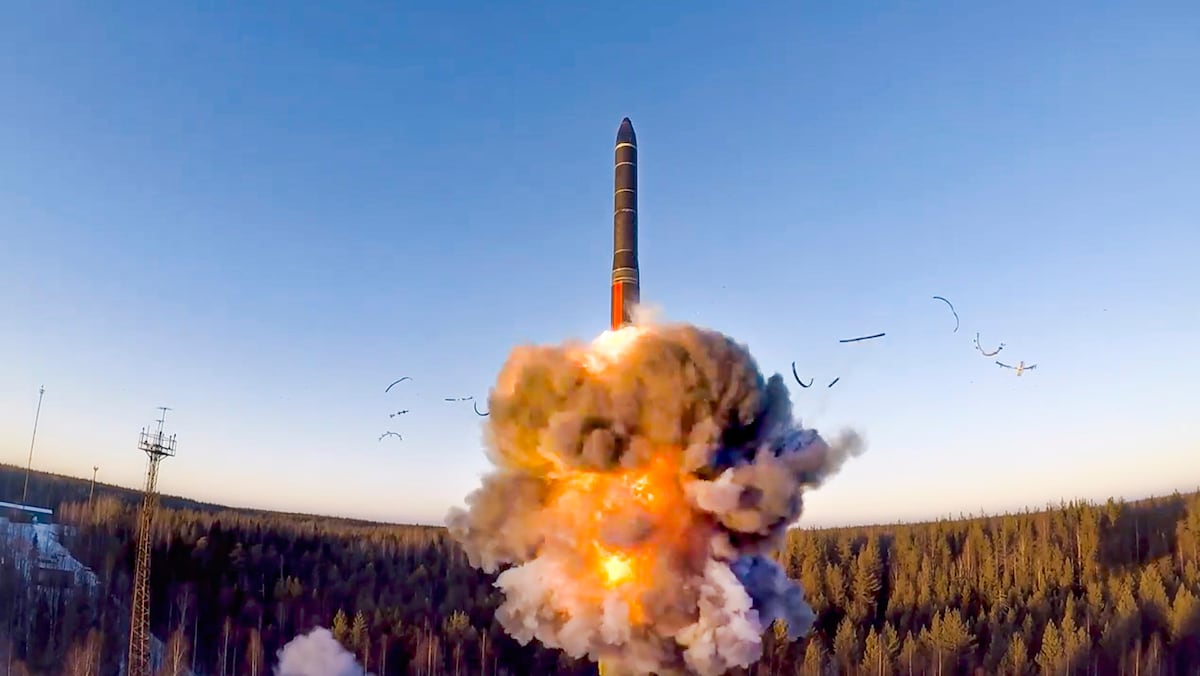
"The United States and the Russian Federation, the successor to the Soviet Union that was dissolving as Gorbachev resigned, have allowed the only remaining nuclear arms control agreement to expire without any sign of negotiations in the short term. Other pacts, such as the Anti-Ballistic Missile (ABM) Treaty and the Intermediate-Range Nuclear Forces (INF) Treaty, also perished before it. Gorbachev and Bush laid the foundation for this system of limiting nuclear arsenals with the signing of the START Treaty in Moscow on July 31, 1991."
"The objective of that first pact was to restrict long-range weapons power, termed strategic because it was designed to attack the enemy on its own territory. This distinguished it from tactical weapons, which have a shorter range and are used on the battlefield. U.S. President Barack Obama and Russian President Dmitry Medvedev gave arms control a new boost with the signing of the New START treaty in Prague in 2010, which was renewed in February 2021 for another five years."
Mikhail Gorbachev called George H. W. Bush on Christmas Day 1991 to say he would resign, and their era of strategic arms agreements followed. On January 5, the New Strategic Arms Reduction Treaty (New START), which capped deployed strategic warheads at 1,550, ended, leaving no remaining bilateral nuclear arms control pact between the United States and Russia. Earlier agreements such as the ABM and INF Treaties had already collapsed. Gorbachev and Bush signed START in Moscow on July 31, 1991. Strategic weapons target the enemy’s territory, unlike shorter-range tactical weapons. Obama and Medvedev signed New START in 2010 and renewed it in February 2021.
Read at english.elpais.com
Unable to calculate read time
Collection
[
|
...
]