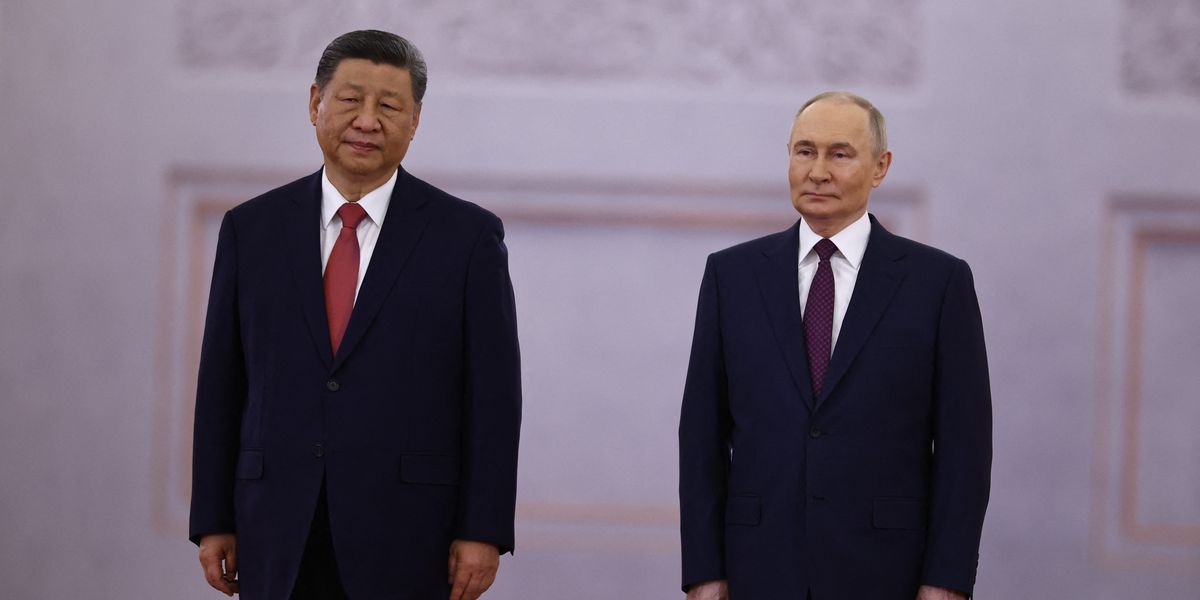
"Great powers with converging interests do not need an integrated command structure to complicate American and allied strategy. They need only recognize opportunity when it appears. Could the U.S. and its allies respond effectively if challenged by both China and Russia, or, given recent heavy U.S. involvement now in Iran, might one or both engage in aggression while the U.S.is already at war?"
"On the eve of the conflagration that became World War II, the United States was content to sit in isolation, and debate raged over whether to pursue those policies or to stand with Europe against the Axis. The UK was fighting for its survival since 1939, France had surrendered to Nazi Germany, and the Soviet Union was on the brink of complete annihilation of its armies by the end of 1941. The Germans in December were 20 km from the Kremlin's towers on the very approaches to Moscow."
"But we should also not forget, as was revealed after the war, that there was no meaningful collaboration between Nazi Germany and Japan on their war policies, nor on strategy more broadly. Hitler acted on what he saw as an opportunity and declared war on the United States within days of Pearl Harbor, despite little to no consultation or joint planning with Japan. It is an example of two expansionist powers that had an alliance but still acted independently, taking advantage of each other's actions."
"Similarly, Japan decided not to go to war with the Soviet Union, knowing it could potentially be overwhelmed by China and the USSR in Manchuria. Countries will do what is in their own interest, despite alliances. Both axis powers suffered from poor strategic intelligence. Hitler had no idea Japan was about to attack the United States, nor did he anticipate the ire"
Great powers with converging interests can complicate American and allied strategy without shared command by recognizing and exploiting opportunities. The lead-up to World War II shows how the United States initially favored isolation while Europe and the Soviet Union faced existential threats. Germany approached Moscow in late 1941, and Japan attacked the United States, prompting a major shift in American posture. After the war, evidence showed limited meaningful collaboration between Nazi Germany and Japan on war policies and strategy. Hitler declared war on the United States soon after Pearl Harbor with little consultation with Japan. Japan also avoided war with the Soviet Union, calculating it could be overwhelmed by other forces in Manchuria. Countries act primarily in their own interest despite alliances, and both axis powers suffered from poor strategic intelligence.
#great-power-competition #us-foreign-policy #world-war-ii-historical-analysis #alliances-and-strategy #strategic-intelligence
Read at The Cipher Brief
Unable to calculate read time
Collection
[
|
...
]