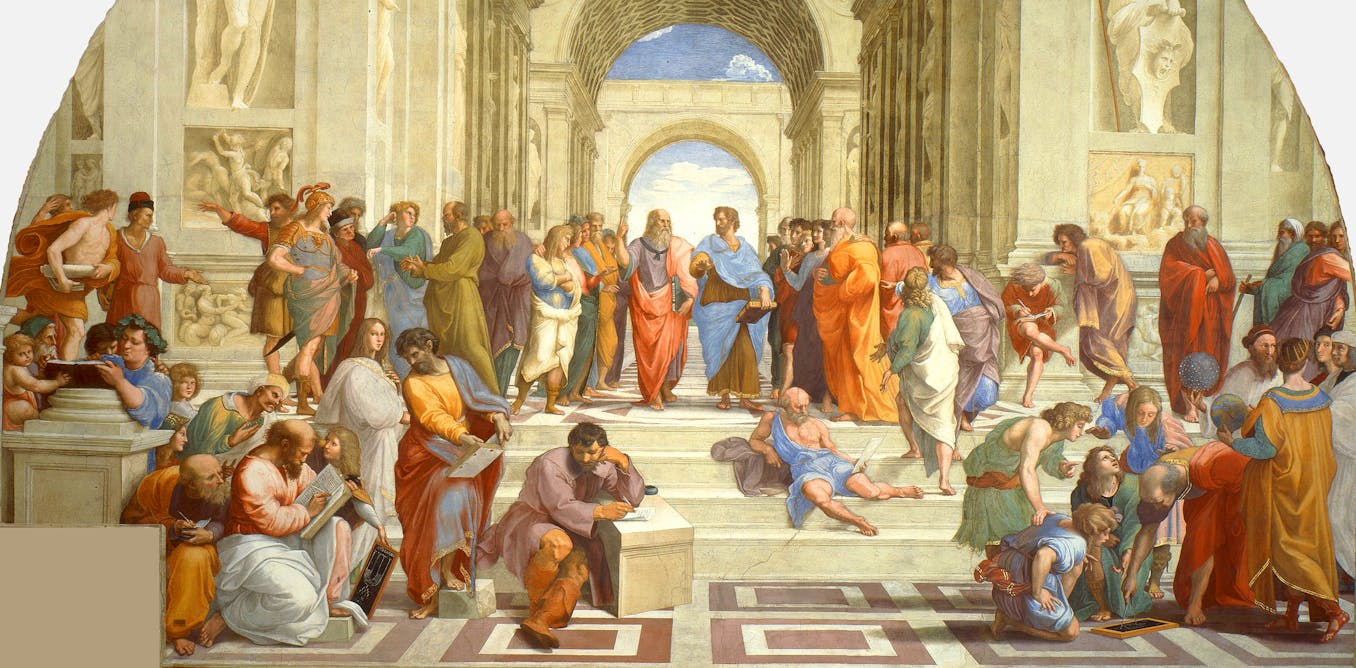
"If Plato was the first Western political philosopher, Aristotle was the first political scientist in today's sense. Plato's Republic, for instance, envisages an unworldly political utopia. But in Politics, Aristotle investigates a comprehensive range of political forms and regimes, down to their unglamorous, operational details. To research the book, Aristotle sent pupils at the Lyceum, his school in Athens, to many Greek city-states to record their constitutions, forming a kind of empirical data set."
"In Politics, readers are asked to consider the effects of climate, population and location on states. They are asked to weigh why it matters politically how long rulers' terms of office are; whether they are appointed or elected (by whom and how many); whether citizens should be paid to participate in public roles in democracies; and much more. Politics, as it emerges in Aristotle's great work (written around 330 BCE), is not a business of conceiving utopian ideals from a philosopher's armchair."
Aristotle applied empirical methods to the study of politics by collecting the constitutions of many Greek city-states to form a data set. Politics examines a wide range of regimes and operational details rather than proposing utopian models. The work considers effects of climate, population, and location on states and the political significance of term lengths, appointment versus election procedures, and citizen payment for public roles. Politics treats governance as the art of the possible, focusing on communities pursuing contested visions of the common good and on managing natural tendencies toward disagreement. It warns that extreme wealth and poverty can erode democratic stability.
Read at The Conversation
Unable to calculate read time
Collection
[
|
...
]