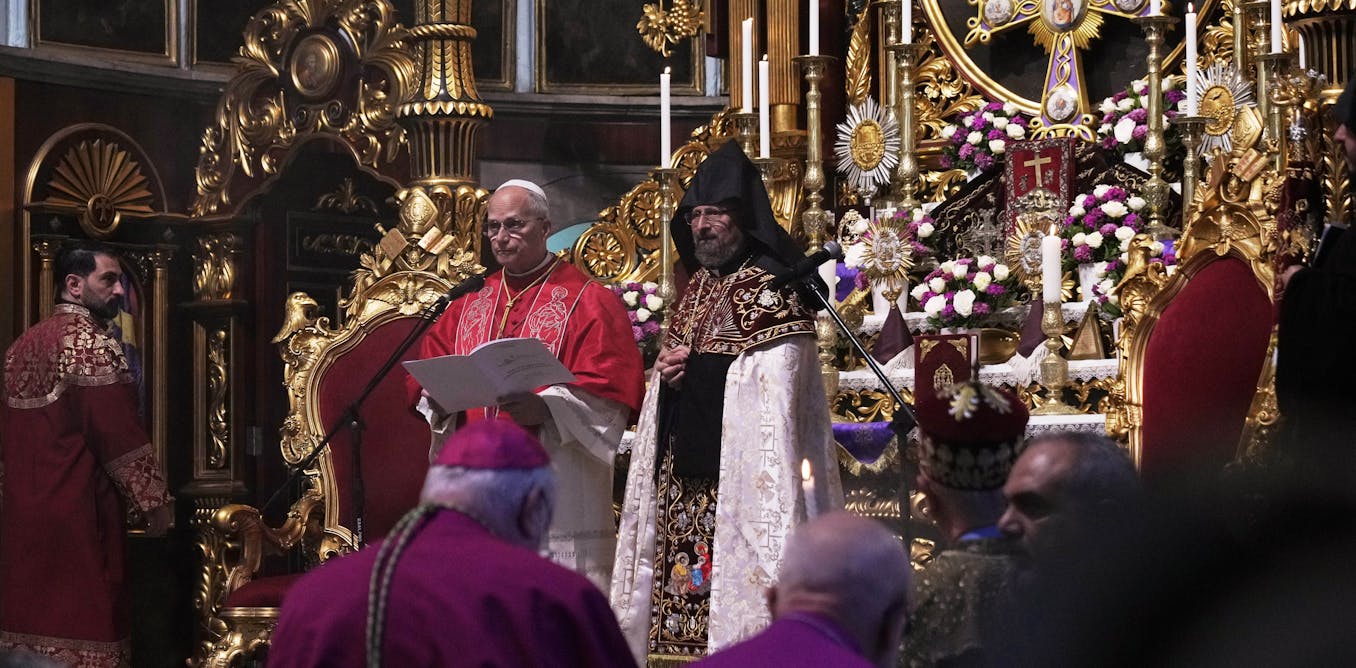
"On his visit to Turkey and Lebanon between Nov. 27 and Dec. 2, 2025, Pope Leo XIV met with political and religious leaders, celebrated Mass and visited historical sites. The trip marked the 1,700th anniversary of the Council of Nicaea, which resolved core doctrinal differences, with the aim of advancing Christian unity at the time. The Vatican framed the visit to the two Muslim-majority countries as a gesture of interreligious dialogue, as well as support for local minority Christian communities."
"Through interfaith dialogue and symbolic acts, religious leaders often act as diplomats to strengthen relationships with other faith groups as part of religious diplomacy. Traditional diplomacy often prioritizes political and economic interests, whereas religious diplomacy builds on identities and values. But as a scholar of religion and politics, I have often seen how religious diplomacy complements conventional diplomatic tools - the pope's visit being the most recent example."
"Despite Turkey's significance in the history of Christianity, today Christians constitute less than 0.5% of its population. These include diverse Christian communities, from Armenian Orthodox, Greek Orthodox and Syriac Orthodox to Roman Catholic and Protestant. Turkey's constitution guarantees religious freedom, but Christians face legal and administrative hurdles in matters such as building places of worship. The pope's visit did not directly confront these structural issues, but the trip itself drew international attention to the plight of Christians."
Pope Leo XIV traveled to Turkey and Lebanon from Nov. 27 to Dec. 2, 2025, meeting political and religious leaders, celebrating Mass and visiting historical sites. The trip coincided with the 1,700th anniversary of the Council of Nicaea, which resolved core doctrinal differences and aimed to advance Christian unity. The Vatican positioned the visit as interreligious dialogue and support for local minority Christian communities. Religious diplomacy relied on symbolic acts and engagement to strengthen ties with other faiths and to complement conventional diplomatic efforts. In Turkey Christians make up under 0.5% of the population and face legal and administrative hurdles, including restrictions on building places of worship.
Read at The Conversation
Unable to calculate read time
Collection
[
|
...
]