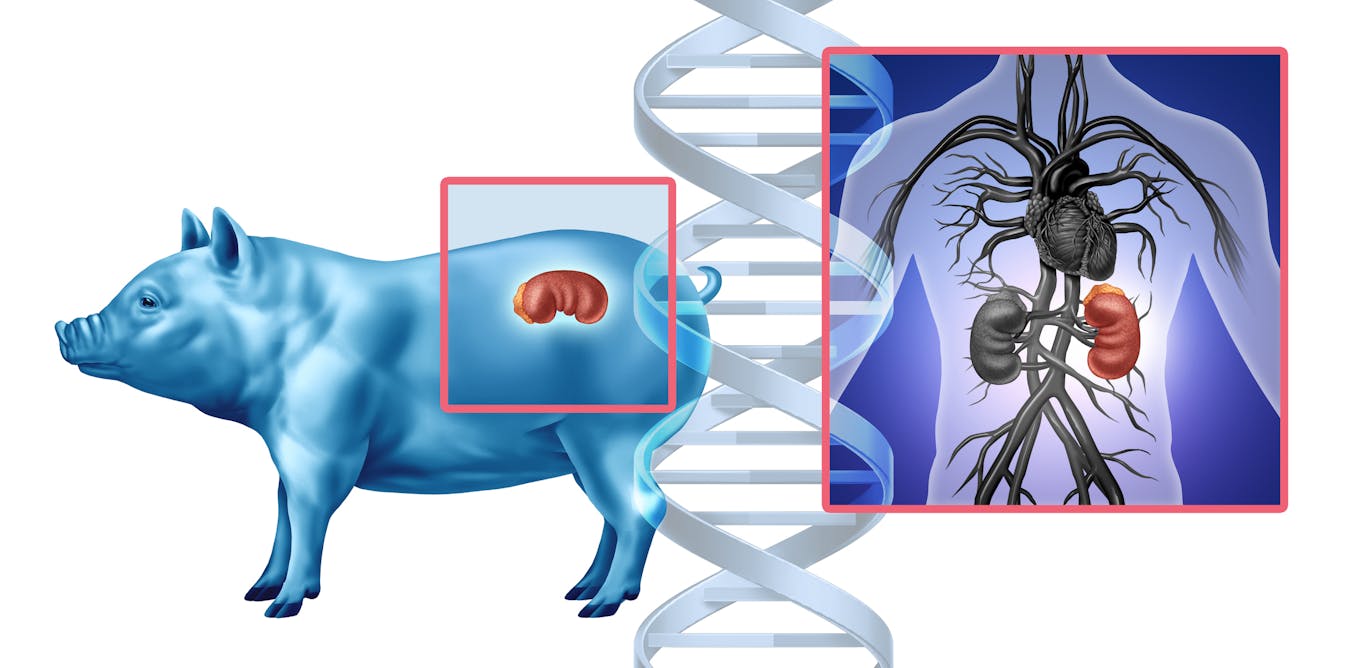
"In a Maryland operating room one day in November 2025, doctors made medical history by transplanting a genetically modified pig kidney into a living patient. The kidney had been engineered to mimic human tissue and was grown in a pig, as an alternative to waiting around for a human organ donor who might never come. For decades, this idea lived at the edge of science fiction. Now it's on the table, literally."
"But in 2015 the National Institutes of Health paused funding for that work to consider its ethical risks. The pause remains today. As a bioethicist and philosopher who has spent years studying the ethics of using organs grown in animals - including serving on an NIH-funded national working group examining oversight for research on human-animal chimeras - I was perplexed by the decision. The ban assumed the danger was making pigs too human. Yet regulators now seem comfortable making humans a little more pig."
In November 2025 surgeons transplanted a genetically modified pig kidney into a living human as part of an initial clinical trial of pig-to-human kidney transplants. The kidney was engineered to mimic human tissue and grown in a pig to provide an alternative to scarce human donors. Six patients are enrolled to evaluate whether gene-edited pig kidneys can safely replace failing human ones. Previously, researchers attempted to grow human organs inside pigs using human cells, but NIH funding for that approach was paused in 2015 over ethical concerns about human-animal chimeras. Immune rejection remains the central scientific challenge amid an urgent organ shortage.
Read at The Conversation
Unable to calculate read time
Collection
[
|
...
]