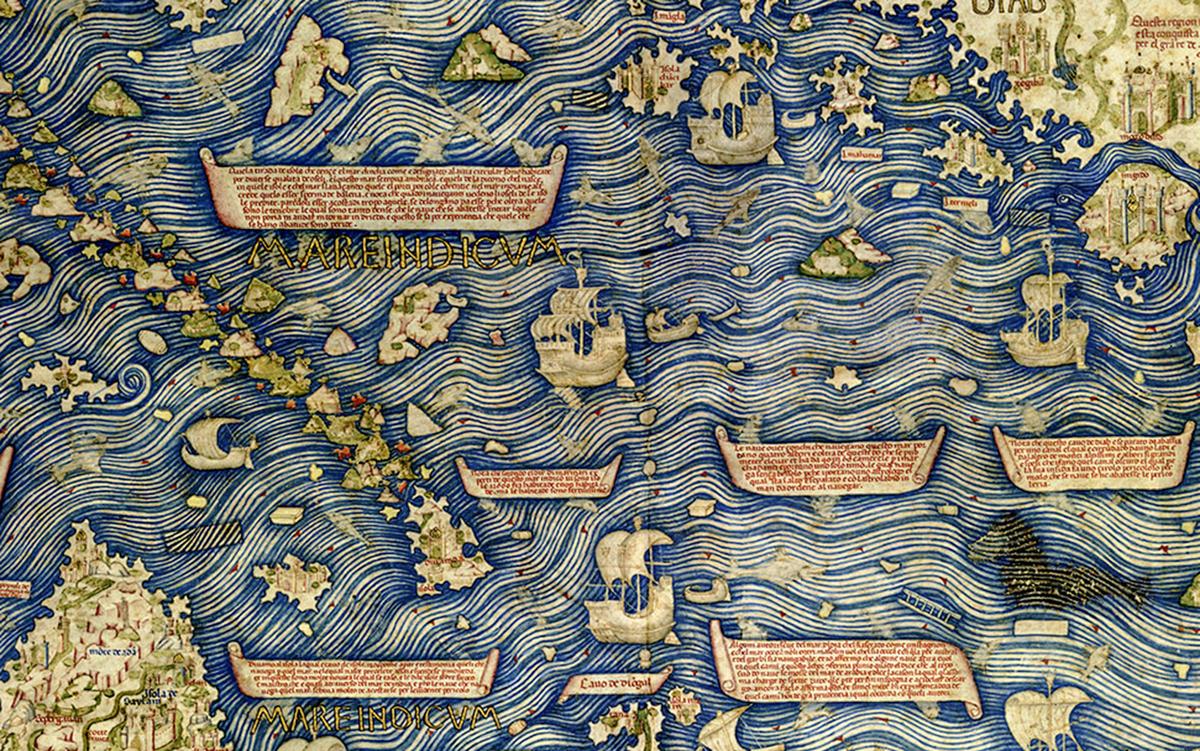
"The liberal international order or Pax Americana, the world order built by the United States after the Second World War, is coming to an end. Not surprisingly, this has led to fears of disorder and chaos and, even worse, impending Chinese hegemony or Pax Sinica. Importantly, this mode of thinking that envisages the necessity of a dominant or hegemonic power underwriting global stability was developed by 20th-century US scholars of international relations, and is known as the hegemonic stability theory (HST)."
"In particular, hegemonic stability theory developed out of the work of the American economist Charles P Kindleberger. In his acclaimed book The World in Depression 1929-1939 (1973), Kindleberger argued that: 'The world economic system was unstable unless some country stabilised it,' and that, in 1929, 'the British couldn't and the United States wouldn't.' While Kindleberger was mainly concerned with economic order, his view was transformed by international relations scholars to associate hegemony with all sorts of things."
The US-built liberal international order is weakening, generating concerns about disorder and a possible Chinese hegemony. Hegemonic stability theory, rooted in Charles P. Kindleberger’s work, claims the global economic system requires a stabilising dominant power; Kindleberger observed that in 1929 the British could not and the United States would not stabilise the system. Hegemony encompasses military dominance, economic centrality, and cultural-ideational leadership. US naval power is treated as a public good that secures maritime commons. China’s growing naval and economic capabilities challenge US dominance, and the return of Donald Trump heightens allied anxieties.
Read at Aeon
Unable to calculate read time
Collection
[
|
...
]