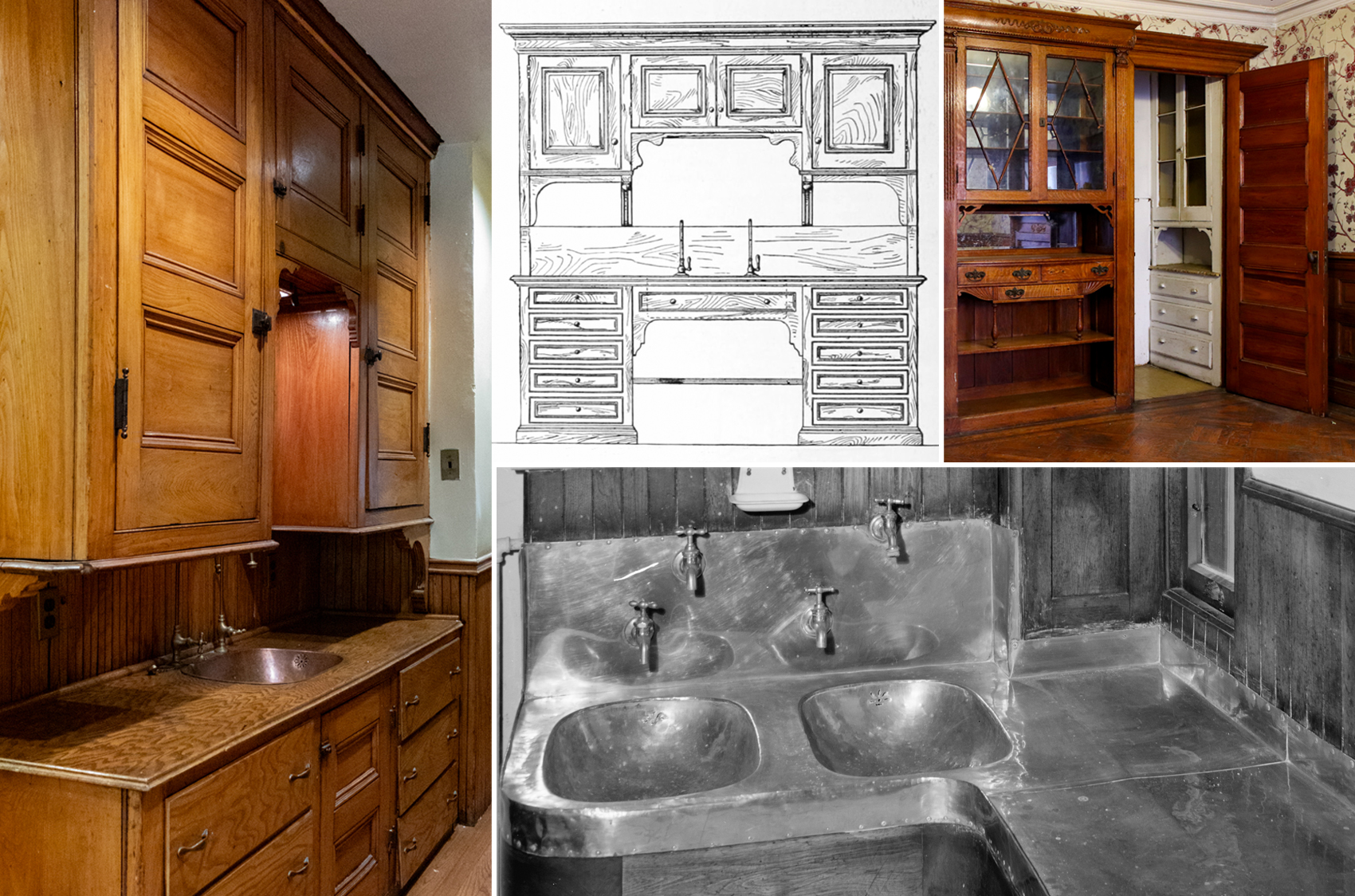
"The room usually has wall-mounted sets of cabinets with glass doors, a wood or marble countertop beneath the cabinets, often with a small sink, and wide drawers and cabinets underneath. If the room is large enough, the other side of the room might be equally equipped or contain locked cabinets holding the household sterling silver, glassware, and china. That's the makeup of a classic late 19th century butler's pantry."
"The name "butler's pantry" is often used interchangeably with the general term "pantry." There are really two types of pantries. One is basically a closet off the kitchen with shelves and perhaps cabinets where non-perishable foodstuffs are stored. The shelves often hold small appliances, pots, bowls, and other cooking-related things one doesn't want cluttering up the adjoining kitchen countertops or cabinets. That is your classic pantry, and most 19th century homes, including our row houses, were built with them."
Butler's pantries are distinct service rooms adjacent to kitchens or dining rooms equipped with built-in cabinets, countertops, small sinks, drawers, and secure storage for fine tableware. They originated in mid- to late-19th-century large homes and estates where a butler oversaw silver, china, glassware, and linens. A classic pantry differs as a closet-like storage area for nonperishable food, small appliances, and cookware. Enthusiasts prize authentic period details, and surviving butler's pantries are often regarded as standout, highly valued features in historic and adapted homes.
Read at Brownstoner
Unable to calculate read time
Collection
[
|
...
]