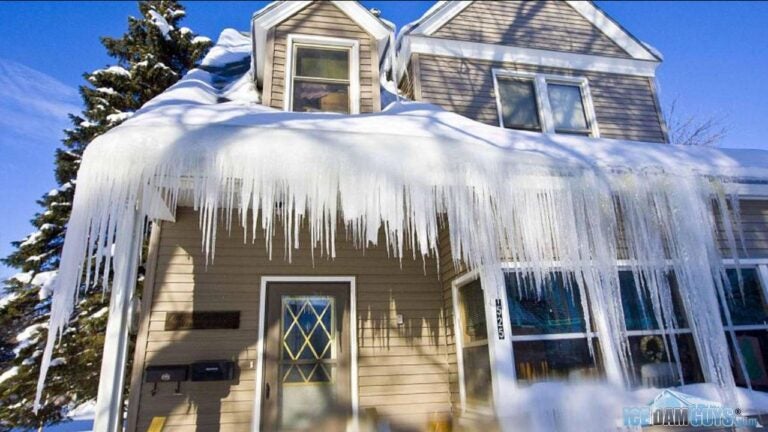
"An ice dam is a ridge of ice that forms along the edge of a roof, typically near gutters, according to the National Weather Service. When water melts higher up on the roof, it runs down toward the colder overhang and refreezes, forming the ice dam, Palumbo said. As the water continues to melt and refreeze, the ice dam grows larger."
"Ice dams are a problem because they trap water, which can leak under shingles and into walls, ceilings, and insulation, Palumbo said. "It's trickling down the shingles, rolling down the slope of the roof from the top to the bottom," he said. "It just keeps building up one microscopic layer at a time." Fannon added that ice dams can cause serious structural issues."
""That dam of ice sitting there is blocking liquid water that comes down," he said. "Most roofs are not designed to have liquid water sitting on them." If water pools behind the ice, it can leak into areas not meant to handle it, causing damage, including to electrical systems, and potentially mold, Fannon said."
An ice dam is a ridge of ice that forms along a roof edge, typically near gutters. Meltwater higher on the roof runs down toward colder eaves and refreezes, and repeated melting and refreezing enlarges the dam. Ice dams trap water that can back up under shingles and enter walls, ceilings, and insulation. Pooled liquid water on roofs can cause structural damage, harm electrical systems, and promote mold. Most roofs are not designed to hold liquid water, so the severity of damage depends on building design and specific conditions.
Read at Boston.com
Unable to calculate read time
Collection
[
|
...
]