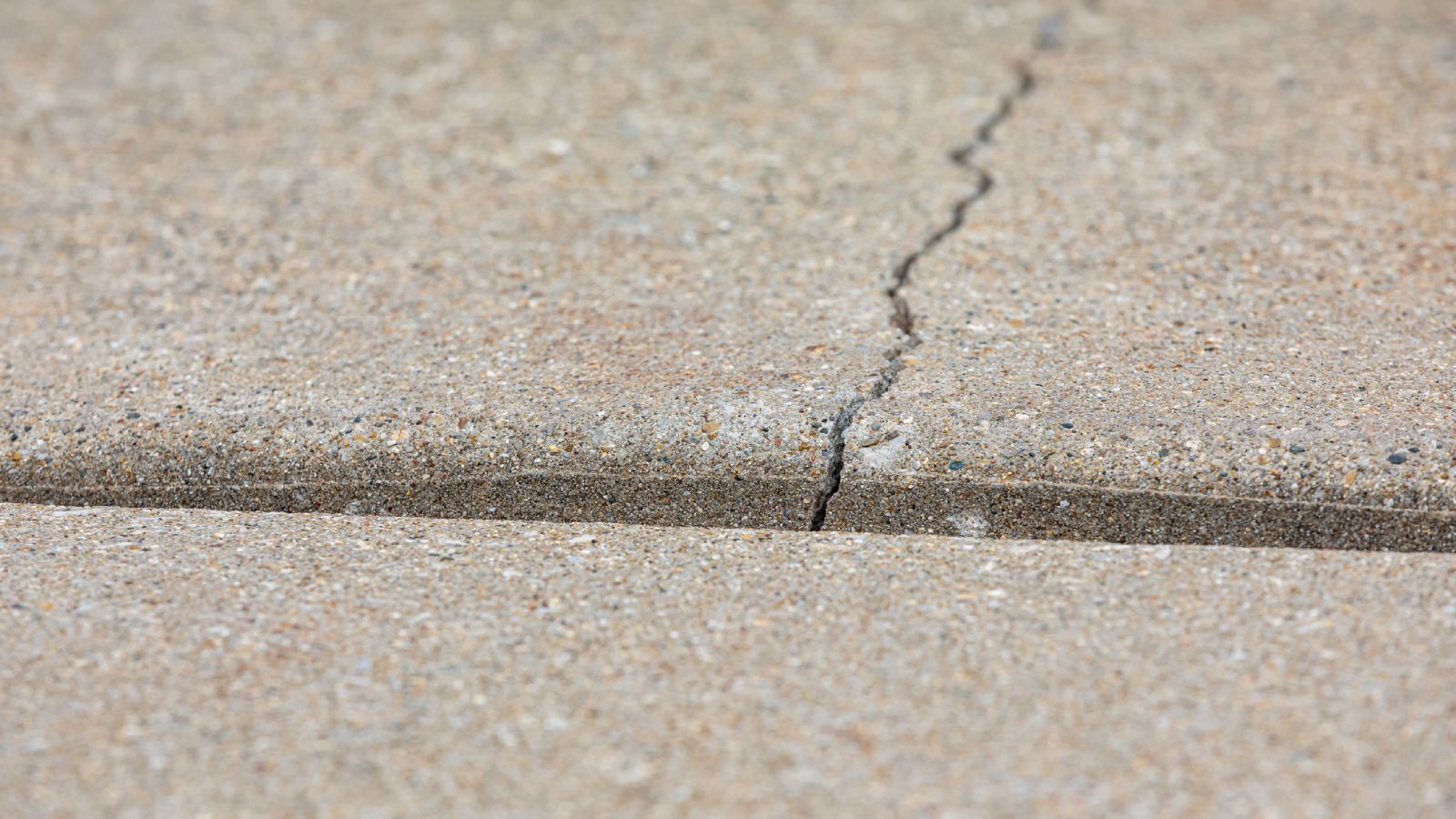
"Most homeowners don't give much thought to the height of their driveway, but that soon changes when a bodged driveway resurfacing job leaves the surface uneven or excessively high. This problem can result when the new surface layer of your driveway idea - whether that's asphalt, concrete, paving or another material - is laid on top of an old surface that has structural issues or has not been removed properly."
""It's quite common with cover-up jobs, and we've taken out driveways where people have made this error," says Lee Bestall, garden designer at Sheffield-based, Bestall & Co. "You'll often see it where property developers have paid for a quick job to make a property look more glamorous, and there are just layers upon layers of driveway surfaces." As we'll see, this is not the only reason why some driveways turn out excessively high."
Driveway resurfacing can leave surfaces uneven or excessively high when a new surface layer is applied over an old surface that has structural issues or has not been removed properly. New surfacing materials—such as asphalt, concrete, paving or other finishes—can increase thickness and accentuate underlying problems when used as a cover-up. Cover-up jobs frequently result in multiple accumulated layers that raise driveway height and may conceal structural faults. Such situations are common where quick cosmetic work is commissioned to improve appearance. Correcting excessive height typically requires removing accumulated layers and addressing sub-surface structural issues to restore proper levels.
Read at Homebuilding
Unable to calculate read time
Collection
[
|
...
]