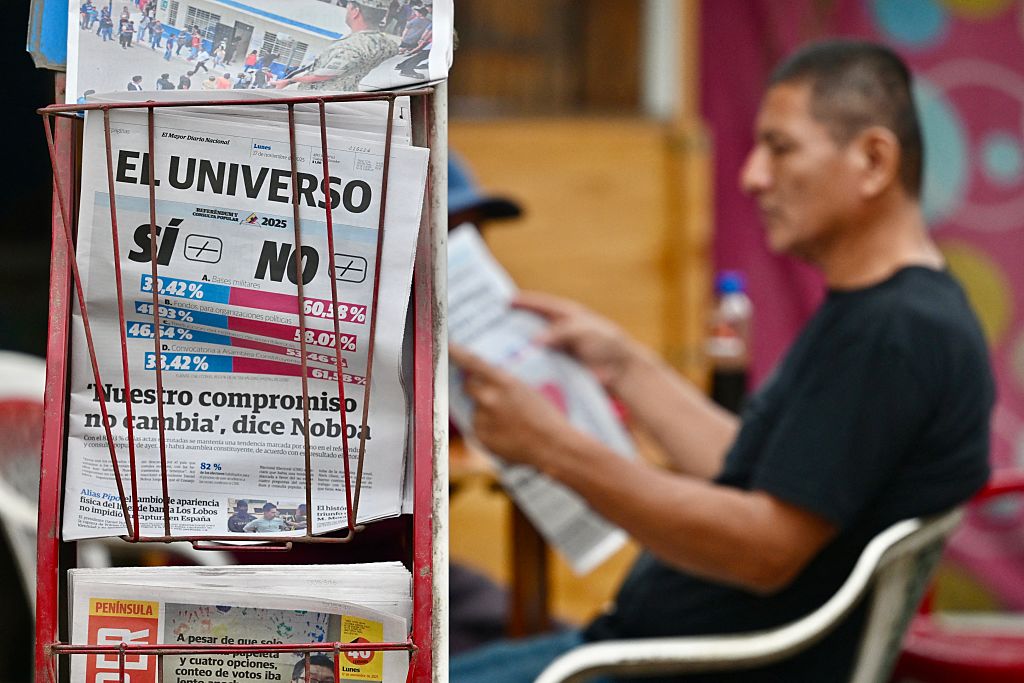
Indigenous and environmental leaders in Ecuador say they are facing a wave of state intimidation ahead of a national referendum next month on whether to rewrite the world's only constitution that recognises the rights of nature. The pressure is being applied by the rightwing president, Daniel Noboa, who has begun his second term with a Trumpian agenda of consolidating power and sweeping away legal and social barriers to extractivist businesses, such as mining.
Less than four months after being elected, South Korean President Lee Jae-Myung has announced an ambitious campaign to reform the constitution in way which would allow future presidents to serve two consecutive four-year terms instead of stepping down after a single five-year stint. The initiative is at the top of the administration's 123-item policy agenda. Proponents say the reform would also synchronize presidential elections with votes for members of the National Assembly in order to encourage continuity of policies and greater responsibility while in office.
Tanzania's incumbent president, Samia Suluhu Hassan, told supporters on Thursday that she planned to spend the next five years not only improving their health and their children's education, but also drafting a new constitution and fostering national reconciliation. Hassan said that she was guided by the so-called 4Rs reconciliation, resilience, reform, and rebuild a political strategy she adopted when she first assumed office in 2021. "Guided by the 4Rs philosophy, we will continue consultations with political stakeholders, civil society organizations, and the private sector by forming a commission to initiate reconciliation and mediation talks, and to prepare the environment for a new constitution," she told thousands gathered at the rally, which took place at the Tanganyika Packers sports ground in Tanzania's commercial capital, Dar es Salaam.