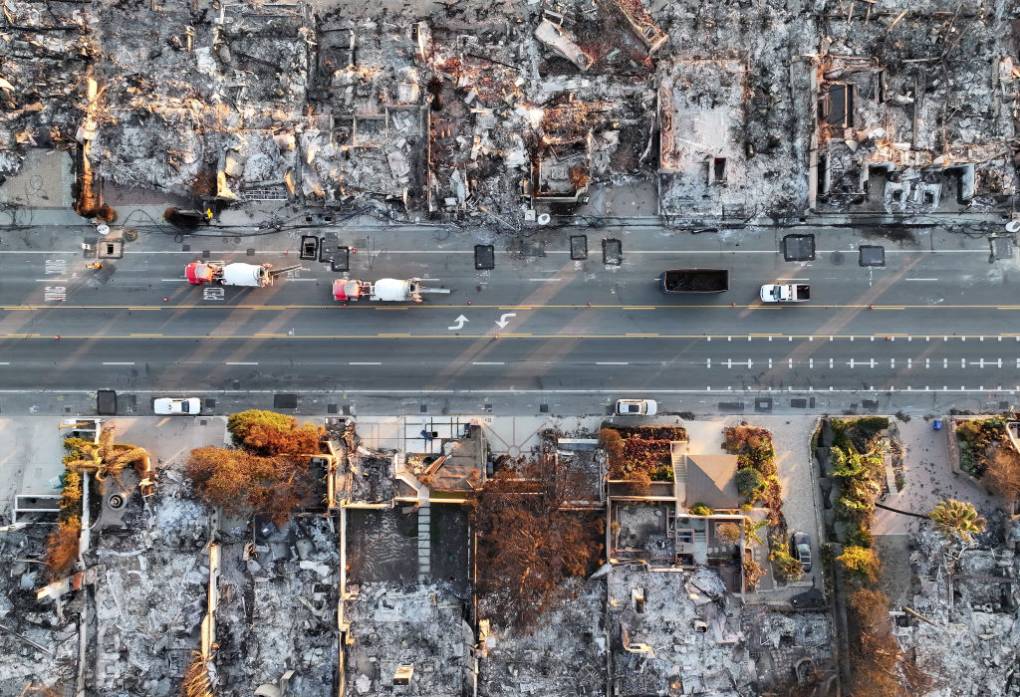
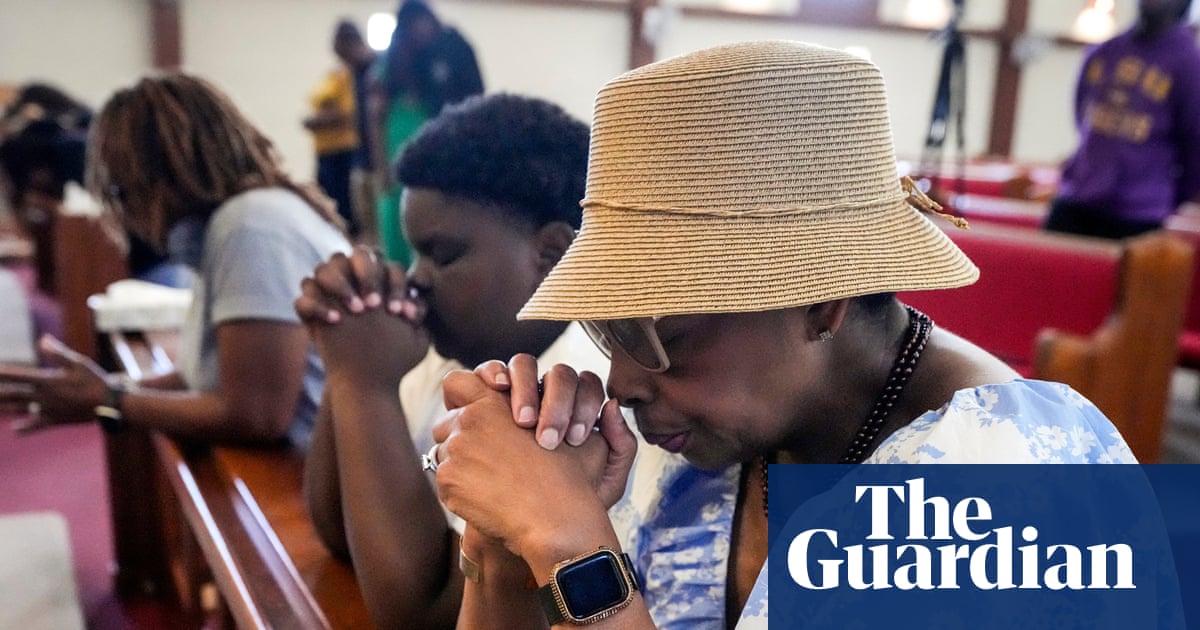
LGBTQ+ residents also faced additional barriers during recovery due to discrimination and bias from service providers, survivors told report authors. "When the fires [were finally] under control, [LGBTQ+ residents] faced recovery services led by a federal administration hostile to LGBTQ+ people, and local service providers, including some faith-based service providers, that were not fully inclusive of their families," said lead author Brad Sears, distinguished senior scholar of law and policy at the Williams Institute.
"The two outages we experienced last year were painful for our guests, employees and financial results," he said. "It's not for a lack of investment. We were investing in IT. I think it was more of a configuration. We had hardware failures. We had backup systems and triple redundancies that didn't kick in."
Uber has built HiveSync, a sharded batch replication system that keeps Hive and HDFS data synchronized across multiple regions, handling millions of Hive events daily. HiveSync ensures cross-region data consistency, enables Uber's disaster recovery strategy, and eliminates inefficiency caused by the secondary region sitting idle, which previously incurred hardware costs equal to the primary, while still maintaining high availability. Built initially on the open-source Airbnb ReAir project, HiveSync has been extended with sharding, DAG-based orchestration, and a separation of control and data planes.
Robust IT systems support uninterrupted operations through resilience, security, and proactive monitoring. CIOs report that 87% of digital-first businesses rely on automated failover systems to reduce service disruption. Continuous monitoring helps detect failures before they impact users. Recovery plans activate system redundancies and restore functions with minimal input. Automated backup schedules and patch management prevent gaps in continuity. IT managers emphasise the role of configuration management and centralised monitoring tools.
One of the brutal truths about enterprise disaster recovery (DR) strategies is that there is virtually no reliable way to truly test them. Sure, companies can certainly test the mechanics - but until disaster strikes, the recovery plan is activated and 300,000 workers and millions of customers start interacting with it, all bets are off.
Australian collaborationware company Atlassian has revealed it's spent four years trying to reduce dangerous internal dependencies, and while it has rebuilt its PaaS, it still has issues - but thinks they're now manageable. As explained in a Tuesday post by Senior Engineering Manager Andrew Ross, "Atlassian runs a large service-based platform with thousands of different services, most deployed by our custom orchestration system, 'Micros'."
Ransomware doesn't knock on the front door. It sneaks in quietly, and by the time you notice, the damage is already done. Backups, replication, and cloud storage help recover from ransomware, but when it strikes, these products may not be enough. You copy your data and ensure copies are recoverable when needed. Replication is often viewed as the gold standard of protection. It is fast, efficient, and seems like an easy answer. Two common types of replication are in use today.
Hundreds of community association leaders visited Capitol Hill this past Thursday for the Congressional Advocacy Summit hosted by the Community Associations Institute (CAI). More than 200 advocates from CAI representing more than 77 million homeowners association, condominium and co-op residents met with members of Congress and their staff to discuss federal issues in those sectors. Meetings with legislators addressed access to affordable insurance, disaster recovery, affordable housing, preservation of community self-governance and other policies affecting community associations nationwide.
After disasters - natural or otherwise - people with disabilities often find themselves in temporary lodging that offers a roof, but lacks the safe, customized environment they need. This can result in many dangers and difficulties, including leaving people in wheelchairs or who require walkers to spend weeks or months in unfamiliar rental housing with dangerous stairways, rather than accessibility-friendly ramps.
We like to say, 'We're the heartbeat of the Caribbean,' Simpson said. "Jamaica is an island that has given so much to the world - entertainment, the arts, the culture, the food, the tourism, the hospitality. And so knowing the devastation is unlike anything they've ever seen in centuries, it's definitely time for the world to give back to Jamaica."
It's been five years since a sudden shift in the wind brought the North Complex fire roaring up a remote canyon into the pines of Berry Creek, where it incinerated almost all of the more than 1,500 houses in the area and killed 16 people. But to many of the hundreds of people who remain in the mountain hamlet in Butte County, the blaze that burned through their homes and
Alfred Dasugo, 84, says he's tired of waiting for help. A Filipino immigrant, Dasugo has called Lahaina home for more than a half century. As a young musician, he performed at the Royal Lahaina Resort with famed ukulele player Nelson Waikiki. Later, he spent 25 years working for Maui county parks and recreation, coaching volleyball and basketball to generations of youths.
The introduction of PhysicalBackup Custom Resources provides an efficient backup solution, particularly for large datasets, utilizing mariadb-backup and Kubernetes-native VolumeSnapshots.
"Too many organizations assume they're more resilient than they actually are. This research makes clear that real resilience isn't about where your systems live - it's about how well you've prepared to keep them running."
On October 17th, 1989, the Oakland A's were playing the San Francisco Giants in the World Series, but just as the game was kicking off-the television broadcast cut out. When the signal came back, it was no longer the baseball game. These were the early minutes of the Loma Prieta earthquake, which struck near Santa Cruz. It was the first major earthquake ever to be broadcast live on national TV.
The Emergency Management Department faces overwhelming challenges with a bare-bones team and limited budget, struggling to handle disaster recovery effectively in the wake of major incidents.
"Restoring drinking water service is one of the most vital steps in any disaster recovery," said State Water Board Chair E. Joaquin Esquivel. "The lifting of all drinking water advisories marks a major milestone in post-fire recovery."
"We lost everything â our home, our agriculture, and all of our belongings," says Bishnu Humagain, reflecting on the devastating impact of the floods in Panauti.
Our house is 100 feet from the river. We were flooded. Six months after the storm, my farm near the Swannanoa River was still three feet of sand dunes.