#embroidery
#embroidery
[ follow ]
#art #textile-art #nostalgia #design #feminist-art #cultural-heritage #community #table-linens #bayeux-tapestry
#textile-art

Arts
fromdesignboom | architecture & design magazine
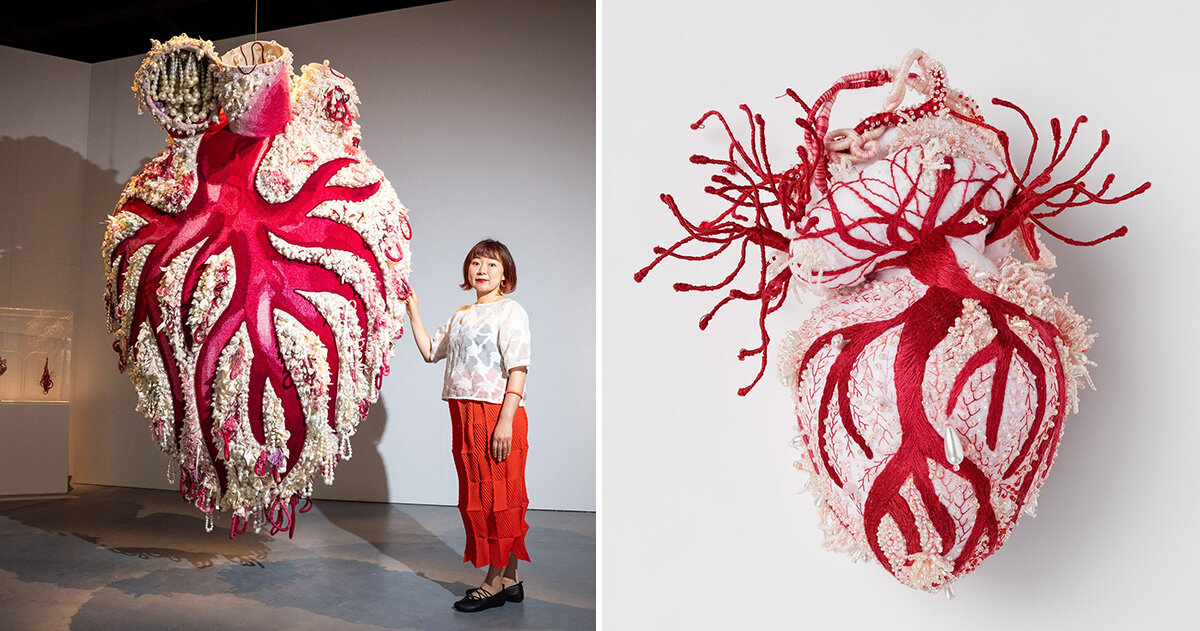
2 months agoema shin embroiders intricate detailing into monumental heart for biennial of sydney
Ema Shin presents a monumental embroidered heart at the 2026 Biennale of Sydney, scaling up her signature textile practice to create an anatomically detailed sculpture celebrating unrecognized women in family histories.
fromThe Local France
3 months agoMen's fashion turns to embroidery as guys want 'something different'
Embroidery is a historic mainstay of traditional clothing in Asia or the Middle East, as well as Western Haute Couture, but it is increasingly present in Paris, Milan or New York on modern men's shirts, bomber jackets or blazers. Designers at Dior, Dolce Gabbana, Kenzo or Gucci have adopted it in recent runway shows, while Louis Vuitton's celebrity rapper-designer Pharell Williams dedicated his entire June collection to India after visiting the country.
Fashion & style
fromRemodelista
3 months agoStudio of the Week: uvres Sensibles Shop and Atelier in Marseille
Arles-born artist Sarah Espeute learned embroidery as a child but did not return to the practice until decades later. After studying graphic design in Paris, working in Riso printing, founding a publishing house, and painting, she took up embroidery again for a one-off exhibition. The response was immediate. She went on to found Œuvres Sensibles and relocated her studio to Marseille, where she now works from a made-to-measure atelier alongside a team of trained embroiderers and artists.
Design
fromThe Art Newspaper - International art news and events
4 months agoEnrico David: 'It's as if the objects are there as an avatar for something that has gone'
The Italian-born, London-based artist Enrico David first attracted attention in the late 1990s with his large-scale, immaculately executed embroideries featuring masked figures striking extravagant poses. Many of these works were bought by Charles Saatchi and exhibited at the collector's eponymous gallery in a 2001 group show titled New Labour. Soon afterwards, though, David changed direction and began producing the enigmatic, psychologically charged sculptures of mutated humanoid forms for which he is now better known.
Arts
fromStuffed Memories by RightDesignInc.
6 months agoStuffed Memories by RightDesignInc.
A tattoo is an indelible mark, a permanent etching of a memory or a belief onto the body. We apply this concept to stuffed animals, which are often deeply intertwined with our personal histories. Through interviews with the owners, we uncover the unique stories and memories associated with each toy-where it came from, what it has witnessed. A tattoo artist then translates these narratives into a custom embroidery design.
Design


[ Load more ]