#medical-education
#medical-education
[ follow ]
#healthcare #northwestern-university #health-equity #feinberg-school-of-medicine #public-health #mentorship
fromNews Center
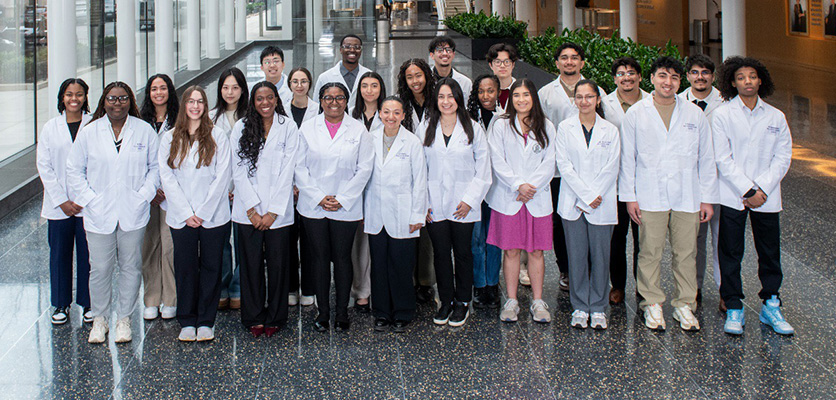
1 month agoNU Docs Program Provides Aspiring Physicians a Pathway to Medicine - News Center
"As medicine continues to evolve, we must ensure that every student with an interest and a passion has the necessary tools to not only survive but thrive. That starts with exposure, mentorship and networking. NU Docs provides all of this and serves as an important conduit connecting the Evanston campus to the incredible work happening here on the Feinberg Campus."
Medicine
fromBoston.com
1 month agoJust one Mass. college ranks among the nation's best graduate schools, per U.S. News
MIT ranked No. 1 for best graduate engineering program in the 2026 rankings, leading the country and excelling in six engineering specialties, including computer and electrical engineering.
Boston
Medicine
fromwww.theguardian.com
1 month agoDoctors need to stop pretending to have all the answers. I don't know' does not mean I have nothing to offer' | Ranjana Srivastava
Medicine offers diverse opportunities for knowledge seekers, but disillusionment can occur among some doctors despite advancements in patient care.
fromNews Center
1 month agoFeinberg Students Celebrate Match Day 2026 - News Center
"I can't wait to start taking care of patients," said Alison Almgren-Bell, who matched in internal medicine at McGaw Medical Center of Northwestern University. "They really have been my north star through all of medical training."
Medicine
Medicine
fromThe New Yorker
1 month agoDoctor Mike's Internet Medicine
Dr. Mikhail Varshavski, a family medicine physician with fifteen million YouTube subscribers, creates medical content including TV show commentary, misconception clarification, and interviews with doctors, celebrities, and politicians.
Healthcare
fromwww.theguardian.com
2 months agoRFK Jr urges medical schools to increase nutrition education training
Health Secretary Robert F Kennedy Jr launched an initiative requiring medical schools to provide 40 hours of nutrition education by autumn 2026, with 53 schools voluntarily participating.
Medicine
fromNews Center
2 months agoInside the Feinberg Curriculum: The MD Program - News Center
Feinberg's medical education emphasizes collaborative learning, mentorship, early clinical exposure, and evidence-based practice to prepare physician leaders for patient-centered care and advancing health.
fromPsychology Today
2 months agoThe Glenn Gould of Radiology
He told me about a man, who I'll call B, who had completed nearly all the requirements for a radiology specialization at the University of Montreal. This man was the best student in his class. He had spent fifteen years training. He could read twice as many radiological scans as a non-autistic colleague. He was also a professional-level guitarist. Mottron called him "the Glenn Gould of radiology," Glenn Gould being a brilliant, classical pianist.
Mental health
Medicine
fromInside Higher Ed | Higher Education News, Events and Jobs
3 months agoMedical Accreditor Weighs Diluting Health Equities Curricula
Removing explicit structural competency accreditation requirements would reduce training on how social, economic, and political systems shape health and harm patients facing barriers.
Public health
fromInside Higher Ed | Higher Education News, Events and Jobs
3 months agoHow One University Trains and Retains Rural Care Providers
Place-based medical education and satellite clinics at Touro University train and retain healthcare providers to serve rural, underserved Native American and other communities.
Healthcare
fromenglish.elpais.com
3 months agoBrazil shocked to find that 13,000 students about to graduate from medical school lack basic knowledge to practice medicine
One-third of evaluated Brazilian medical programs fail to prepare students adequately; 25% of students failed Enamed and 13,000 final-year students flunked.
fromwww.aljazeera.com
3 months agoIndia shuts Kashmir medical college after Muslims earned most admissions
India has shut down a medical college in Indian-administered Kashmir in an apparent capitulation to protests by right-wing Hindu groups over the admission of an overwhelming number of Muslim students into the prestigious course. The National Medical Commission (NMC), a federal regulatory authority for medical education and practices, on January 6 revoked the recognition of Shri Mata Vaishno Devi Medical Institute (SMVDMI), located in Reasi, a mountainous district overlooking the Pir Panjal range in the Himalayas,
World news
fromwww.aljazeera.com
3 months agoA nightmare': Fear grips Indian students in Bangladesh amid unrest
Every evening around 8pm, Faisal Khan locks himself inside his small hostel room at East West Medical College in Nishat Nagar, on the outskirts of Dhaka, Bangladesh. If there is a knock on the door, he pauses before opening it, listening carefully first for familiar voices. Outside the campus, he avoids crowded tea stalls and markets. He does not speak Bangla fluently, and he knows that his accent could give him away as an Indian an identity he desperately wants to mask these days,
World news
fromApaonline
4 months agoTeaching Normative and Applied Ethics: How, and to What End? Stephen Scher
Two senior physicians who had read our first book, Rethinking Health Care Ethics (2018), noted that in their clinical work, they inescapably address many ethical problems, large and small, on the spot, in the course of providing patient care. They also observed, however, that the resident bioethicist cautioned, when presented with one of their typical problems, that it would take him days or even weeks to reach a proper solution.
Philosophy
fromwww.theguardian.com
4 months agoEven in the most unlikely places there is beauty': stories of hope from newsrooms around the world
Founder of the Migration Story, India Shubham Sabar, 19, was working at a construction site in Bengaluru, capital of India's southern Karnataka state, when he received a phone call from his teacher back home, hundreds of miles away in Odisha state, telling him he had passed the National Eligibility cum Entrance Test (Neet) India's tough admissions examination for undergraduate medical and dental colleges.
Higher education
fromwww.theguardian.com
5 months agoZimbabwe's only female heart surgeon on medicine, misogyny and making a difference
When Dr Kudzai Kanyepi qualified as Zimbabwe's first female cardiothoracic surgeon four years ago, she was filled with pride and anticipation after succeeding in an area long dominated by men. She was only the 12th woman in Africa to qualify in the field four more have joined her since. Even now, with 100 operations under her belt, the reality of working in a role in which she confronts misogyny and discrimination daily has not dented Kanyepi's love of the surgical theatre.
World news
Education
fromBusiness Insider
5 months agoCollege in the US didn't give me the independence I wanted. I moved to Germany, where medical school costs me $100 per semester.
A 27-year-old from Philadelphia relocated to Munich to attend medical school, seeking independence, cultural freedom, and low-cost tuition of about $100 per semester.
Higher education
fromIndependent
5 months ago'I didn't get enough points for medicine in Ireland so I went to study to be a doctor in Tbilisi, Georgia instead'
Ryan Mangan initially failed to attain the Leaving Cert points for medicine but later enrolled in medical school in Tbilisi, Georgia, bringing his dream closer.
fromNews Center
5 months agoMedical and MPH Students Present Research at Poster Session - News Center
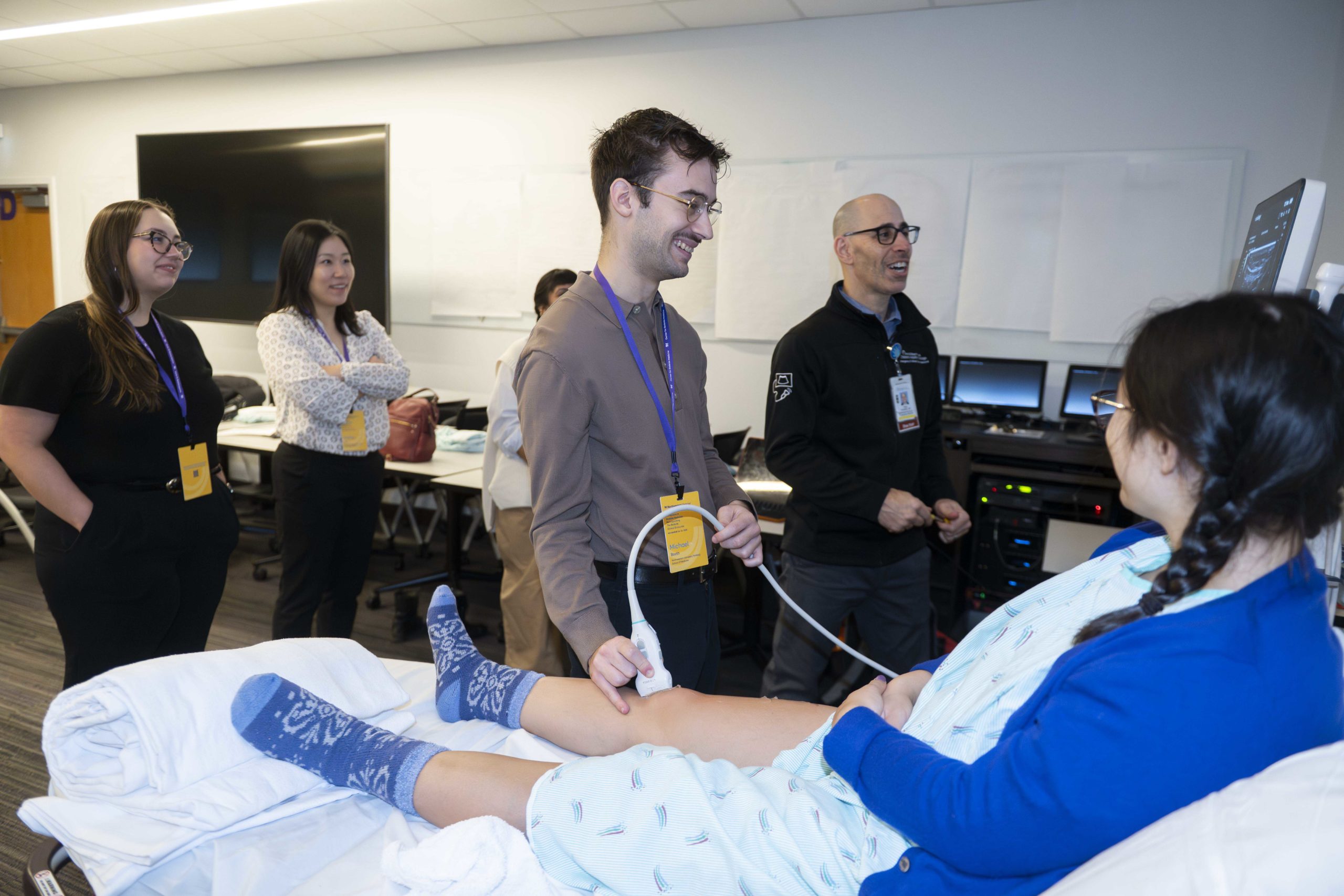
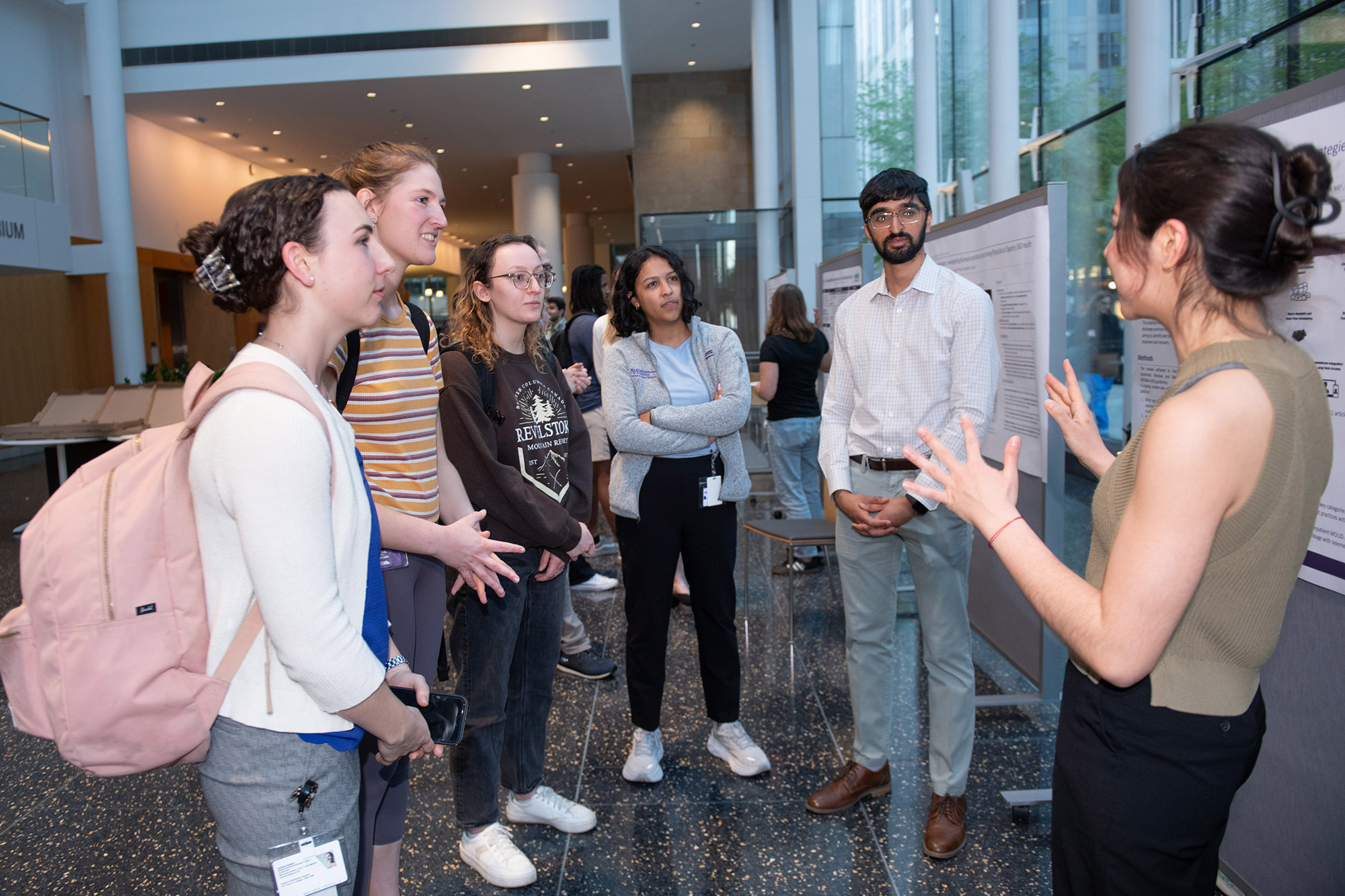
"Research has become an increasingly more important component of medical training, both as an avenue for career development and to showcase ground-breaking insights," said Kelly Bachta, MD, PhD, associate director of Feinberg student research, director of AOSC and assistant professor of Medicine in the Division of Infectious Diseases.
Public health
Medicine
fromCbsnews
6 months agoStudents get early exposure to emergency medicine at Maimonides Health in Brooklyn
High school and college students gain hands-on emergency medicine experience, clinical skills, and patient-centered compassion through a Health Scholars Program at Maimonides in Brooklyn.
Medicine
fromCornell Chronicle
6 months agoFirst WCM-Q AI Hackathon drives health care tech innovation | Cornell Chronicle
Interdisciplinary AI hackathon united medical and computer science students to develop AI-driven clinical solutions across six projects, advancing precision health and collaboration.
Medicine
fromNews Center
7 months agoPrecision Education in Focus at Medical Education Day - News Center
Medical Education Day showcased precision, data-driven, and personalized approaches to medical teaching through workshops, posters, panels, and a keynote on modernizing health professions education.
Toronto
fromwww.cbc.ca
7 months agoWhy a new medical school in Ontario is focusing on culturally sensitive care | CBC Radio
A new TMU medical school in Brampton trains culturally and linguistically knowledgeable family physicians to address regional doctor shortages and better reflect local communities.
fromwww.aljazeera.com
8 months agoMedicine is being invented in Gaza
As medical students in Gaza, we are taught how to save lives with nothing and how to make impossible decisions. It was my childhood dream to study medicine. I wanted to be a doctor to help people. I never imagined that I would study medicine not in a university, but in a hospital; not from textbooks, but from raw experience.
Medicine
fromFuturism
8 months agoFounder of Google's Generative AI Team Says Don't Even Bother Getting a Law or Medical Degree, Because AI's Going to Destroy Both Those Careers Before You Can Even Graduate
With so many people seeking further education as they get edged out of the job market by AI, Tarifi offered a different perspective: that nobody "should ever do a PhD unless they are obsessed with the field." The AI veteran also told BI that he'd advise caution to anyone looking to get into the fields of medicine and law, which take years - and often hundreds of thousands of dollars - to complete a degree.
Artificial intelligence
fromScary Mommy
8 months agoWoman Couldn't Believe EMTs Didn't Know What A Copper IUD Was
"None of them! The man on the phone, who I was on the phone 911 with, he was like, 'What's your emergency?' And I was like, 'My roommate got a copper IUD inserted and he goes IUD?' And I'm like, 'Yeah, like, you know, like the birth control?' This man is just like, 'Okay, sounds like you're having a medical emergency. I'll transfer you over to the paramedics.'"
Public health
fromBusiness Insider
8 months agoAn early member of Google's generative AI team says it's too late to get a Ph.D. to cash in on the AI hype
"AI itself is going to be gone by the time you finish a Ph.D. Even things like applying AI to robotics will be solved by then. So either get into something niche like AI for biology, which is still in its very early stages, or just don't get into anything at all," Tarifi said.
Artificial intelligence
fromwww.independent.co.uk
9 months agoNewly qualified doctors face recurring cycle of debt', BMA warns
Many newly qualified doctors are taking part-time jobs to cope with debts, often driving Ubers or working in bars to supplement their income. This cycle of financial strain is particularly affecting students from lower-income backgrounds, highlighting a significant funding gap in medical education.
UK news
fromwww.npr.org
10 months agoDoctors don't get much menopause training. State lawmakers are trying to change that
Carter Salazar shared her experience of feeling uncomfortable due to hot flashes in professional settings, worrying about how this affected her perceived competence among coworkers and students.
US news
fromInside Higher Ed | Higher Education News, Events and Jobs
11 months agoHealth Disparities Will Worsen as Accreditor Drops DEI Standard
Untreated symptoms sometimes progress from pain to death, emphasizing the urgent necessity for diversity in medical education to ensure equitable healthcare.
Social justice
fromInside Higher Ed | Higher Education News, Events and Jobs
11 months agoMedical School Accreditor Eliminates Diversity Standard
We're just dumbfounded by this decision made by LCME. We have such a rich and incredible history of talented Black physicians. If we knock out the access before they even are entering medical schools... we're just going to be a nation that's not as creative, not as innovative and not as successful.
Medicine
fromNews Center
11 months agoCelebrating Honors Day 2025 - News Center
Medical school has been filled with late nights in the library, reading up on new literature and guidelines and diverse encounters with a wide variety of patients. But most importantly, the last four years have solidified my place in the medical field, alongside the lifelong friends I have made and the incredible attendings, residents, nurses, social workers, pharmacists, and dietitians I have had the pleasure of working with.
Medicine
[ Load more ]