#multi-animal-cases
#multi-animal-cases
[ follow ]
#conservation #wildlife-conservation #animal-welfare #biodiversity #zoos #animal-behavior #wildlife-rescue

fromwww.scientificamerican.com
6 days agoSee these ziti-sized fish scale a 50-foot waterfall
During major floods, thousands of tiny fish convene at Luvilombo Falls in the upper Congo River Basin to undertake a peculiar vertical migration, described for the first time today in Scientific Reports.
OMG science
#zoos
Pets
fromThe Boutique Adventurer
4 days agoThese Are the U.S. Zoos Animal Lovers Should Visit at Least Once - The Boutique Adventurer: Luxury Adventure Travel Blog focussed on Emerging Destinations for those over 35
Zoos in the US can be ethical, focusing on conservation, education, and research, with many being AZA-accredited for animal care standards.
Pets
fromThe Boutique Adventurer
4 days agoThese Are the U.S. Zoos Animal Lovers Should Visit at Least Once - The Boutique Adventurer: Luxury Adventure Travel Blog focussed on Emerging Destinations for those over 35
Zoos in the US can be ethical, focusing on conservation, education, and research, with many being AZA-accredited for animal care standards.
fromMail Online
1 week agoBritain has just 20 years to save its wildlife, experts warn
'Our results show that the next 20 years are critical,' lead author Dr Rob Cooke told the Daily Mail. 'By around 2050, we reach a point where the choices we make on emissions and land use will largely determine whether Britain moves towards a much more degraded or a much more nature‑positive future.'
Environment
fromLos Angeles Times
3 weeks agoH5N1 bird flu spreads to sea otters and sea lions along San Mateo coast, wildlife experts say
The strain the animals have contains a mutation allowing it to more easily transmit between mammals. It is also a different variation than the ones found in dairy cows and commercial poultry. This one is Eurasian in origin, first seen in 2022. It has been detected in birds that fly along the Pacific Flyway, and is responsible for a mass mortality event in 2023 in northern fur seals on an island in eastern Russia.
Public health

UK news
fromwww.independent.co.uk
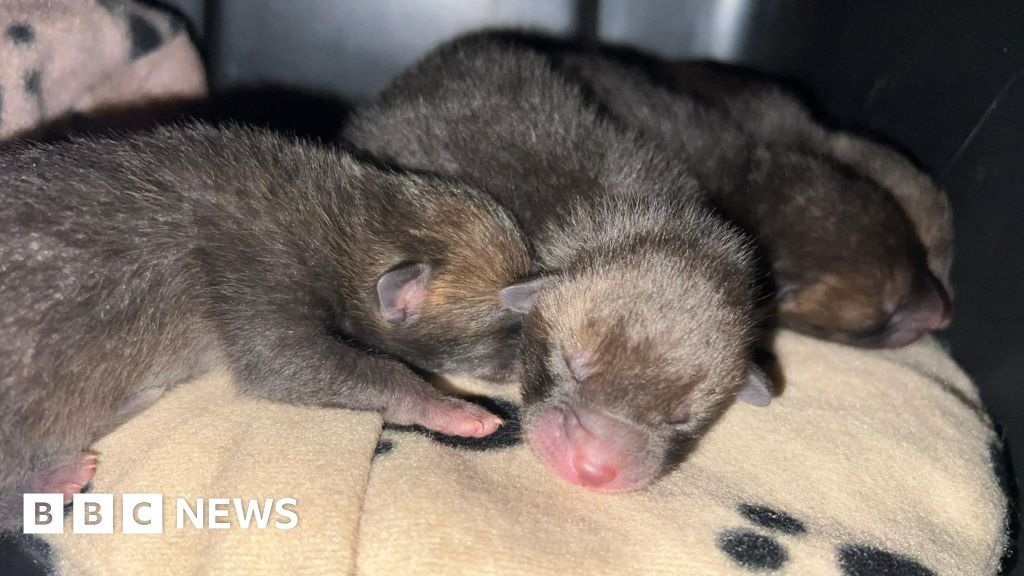
4 weeks agoUltrasound waves could help hedgehogs avoid being run over by cars
Hedgehogs possess ultrasonic hearing capabilities that could be leveraged through vehicle-mounted sound repellents to reduce road traffic deaths, addressing a critical conservation crisis affecting one-third of the population.
fromwww.npr.org
3 weeks agoVaccinating bats could be good for people. But how do you vaccinate a bat?
Bats carry a lot of very deadly pathogens like Ebola virus, Nipah, Hendra, coronavirus, and also rabies virus. People are finding more and more bat-borne viruses. When such viruses are transmitted to humans, the results are often fatal so there's a lot of interest in trying to prevent spillover in the first place.
Coronavirus
fromNature
4 weeks agoPrevent pandemics through One Health commitments
Risks of outbreaks with pandemic potential rise with increasing land-use change, biodiversity loss and climate change. The Pandemic Agreement adopted by the World Health Assembly in 2025 marks a historic shift that establishes the One Health approach as a legally binding obligation for pandemic prevention.
Public health
fromNature
4 weeks agoUsing mosquitoes to vaccinate bats could curb the spread of deadly diseases
In a study published in Science Advances, researchers in China fed Aedes aegypti mosquitoes blood that contained either a vaccine against Nipah virus or the rabies virus. The viruses, contained in the vaccines, replicated inside the insects and reached their salivary glands, allowing them to pass on the vaccine when feeding on bats or when the bats ate the insects.
Coronavirus
Science
fromwww.theguardian.com
1 month agoMarsupials previously thought extinct for millennia discovered in New Guinea
Two marsupial species presumed extinct for 6,000 years were discovered alive in West Papua rainforests, representing rare Lazarus taxa that survived despite disappearing from fossil records.

fromHigh Country News
1 month agoCoyotes and cougars and rats, oh my! - High Country News
An unnamed tourist saw it and told Aidan Moore, who works for Alcatraz City Cruises. Moore told SFGATE that he was initially skeptical, but the guest's iPhone footage left little room for doubt. The video shows, not a sea lion or an otter, but an actual Canis latrans, doggedly dogpaddling, then clambering out of the water, noticeably shaky and struggling to settle tired paws on the craggy rocks.
California
fromwww.theguardian.com
1 month agoBird flu kills dozens of elephant seal pups at California state park
Our team has been so dedicated working around the clock, over time, whatever it takes to continue monitoring this outbreak. It's a really hard, emotional thing to go through as undergraduate, graduate students and young scientists to watch the seals that you've gotten to know over the years get sick.
Public health
fromwww.latimes.com
1 month agoH5N1 bird flu found in elephant seals at Ano Nuevo State Park
This is exceptionally rapid detection of an outbreak in free-ranging marine mammals, said professor Christine Johnson, director of the Institute for Pandemic Insights at UC Davis' Weill School of Veterinary Medicine. We have most likely identified the very first cases here because of coordinated teams that have been on high alert with active surveillance for this disease for some time.
Public health
fromYanko Design - Modern Industrial Design News
1 month agoWhen Zoo Design Tells the Story of Life Itself - Yanko Design
The House of Elements, set to become the crown jewel of Orientarium Zoo in Łódź, Poland, takes the classical elements (earth, ice, water, fire, and air) and transforms them into a 6,000-square-meter narrative experience. Rather than designing a building where you walk from exhibit to exhibit, VMA created a continuous downward-then-upward journey that mirrors the evolution of life itself. Designer: VMA Design Studio for Orientarium Zoo
Design
Pets
fromwww.scientificamerican.com
3 weeks agoWhat would happen if snakes disappeared like in Zootopia 2? An investigation
Zootopia 2 defends snakes as misunderstood creatures while highlighting their critical ecological importance as mesopredators that control rodent populations and sustain food chains.
fromwww.theguardian.com
2 months agoBlack and white and sent back over: end of panda diplomacy as Japan returns bears to China
The panda house at Ueno Zoo in Tokyo is not due to open for several hours, but visitors are already milling around its entrance, pausing to pose for photographs in front of murals of the facility's most beloved residents. A short walk away the gift shop is doing a roaring trade in themed souvenirs from cuddly toys and stationery to T-shirts and biscuits. The visitors are here to say goodbye to Xiao Xiao and Lei Lei.
World news
fromwww.scientificamerican.com
2 months agoHow zoos are preparing animals for this weekend's massive winter storm
In Texas, the Houston Zoo has prepared its buildings and barns with heaters designed to withstand extreme conditions, the zoo said in a blog post on Friday. Animals will have access to extra hay and bedding, and food was stocked in advance. Across the Zoo, sensitive plants are being protected with coverings, and generators are positioned to provide backup power if needed, the blog post said.
US news
fromUSA TODAY
3 weeks agoRed fox lands at Bronx Zoo after days at sea. Here's how he's doing.
Discovered on a ship arriving at the Port of New York & New Jersey from Southampton, England, the red fox was placed in the care of the Bronx Zoo on Feb. 19, one day after it was "safely secured" by U.S. Customs and Border Protection.
Pets
fromwww.scientificamerican.com
1 month agoThe surprising science behind why daylight saving time is good for wildlife
Animals' risk of becoming roadkill depends on several factors, including how many vehicles are on the road, how many animals are on the road, and how animals and human drivers behave, explains Tom Langen, a professor of biology at Clarkson University, who studies animal-vehicle collisions. DST can minimize these collisions, however.
Pets
Environment
fromFortune
1 month agoAnimal behavioralists saved a rhino with bleeding eyes by giving it eye drops, in a "ridiculous idea" gone right | Fortune
Voluntary training allowed caretakers to safely administer eyedrops to an endangered white rhino in Zimbabwe, preserving vision and protecting a community reintroduction program.
fromNature
2 months agoBiodiversity conservation has an evidence problem - it's time to fix it
Biodiversity loss is continuing at an unprecedented rate, with species becoming extinct at between 100 and 1,000 times the average pre-human, or 'background', rate. Human activities are the main cause. Although there are hundreds of local, regional and international initiatives to conserve and sustainably use species and ecosystems, many conservation scientists worry that measures such as interventions to conserve individual species or incentives to create protected areas are not supported by strong evidence from research.
Environment
fromwww.theguardian.com
2 months agoExperience: a bear moved into my house
The next morning, I checked the critter-cams and saw the bear again, now captured by a camera I'd placed by a little mesh-covered opening near the small basement under my house. I watched as a massive shape emerged from the hole. My brain refused to believe it. The bear looked too large to fit in that tiny gap. I watched it again, shocked. My hands started to sweat.
Environment
Environment
fromwww.theguardian.com
2 months agoAfrica's great elephant divide: countries struggle with too many elephants or too few
Elephant numbers contrast sharply: catastrophic declines in South Sudan, with a lone collared bull in Badingilo, versus overabundance and human conflict in parts of Kaza.
fromThe Atlantic
1 month agoHow Many Wolves Is Enough?
The wolves arrived in May of last year, just days after Paul Roen had driven his cattle back up to their summer pasture in Northern California's Sierra Valley. He started finding the bleeding bodies of calves-some still alive, so badly paralyzed that they'd need to be shot. After weeks of this, Roen finally saw a kill himself. "One wolf grabbed a cow and spun her around, while another grabbed a calf," he told me. "He tore it into three pieces in 30 seconds."
Environment
fromwww.dw.com
2 months agoThe business of saving nature
The world spends 30 times more money destroying nature than protecting it. That's according to a new report from the United Nations Environment Programme (UNEP) that exposes a massive gulf between so-called "harmful investments" and financing that promotes nature preservation. The global environment agency's latest "State of Finance for Nature" (SNF) report is calling to phase out the US$7.3 trillion (6.2 trillion) in global investments that damage nature including into high-emissions energy infrastructure and manufacturing, for example.
Environment
[ Load more ]