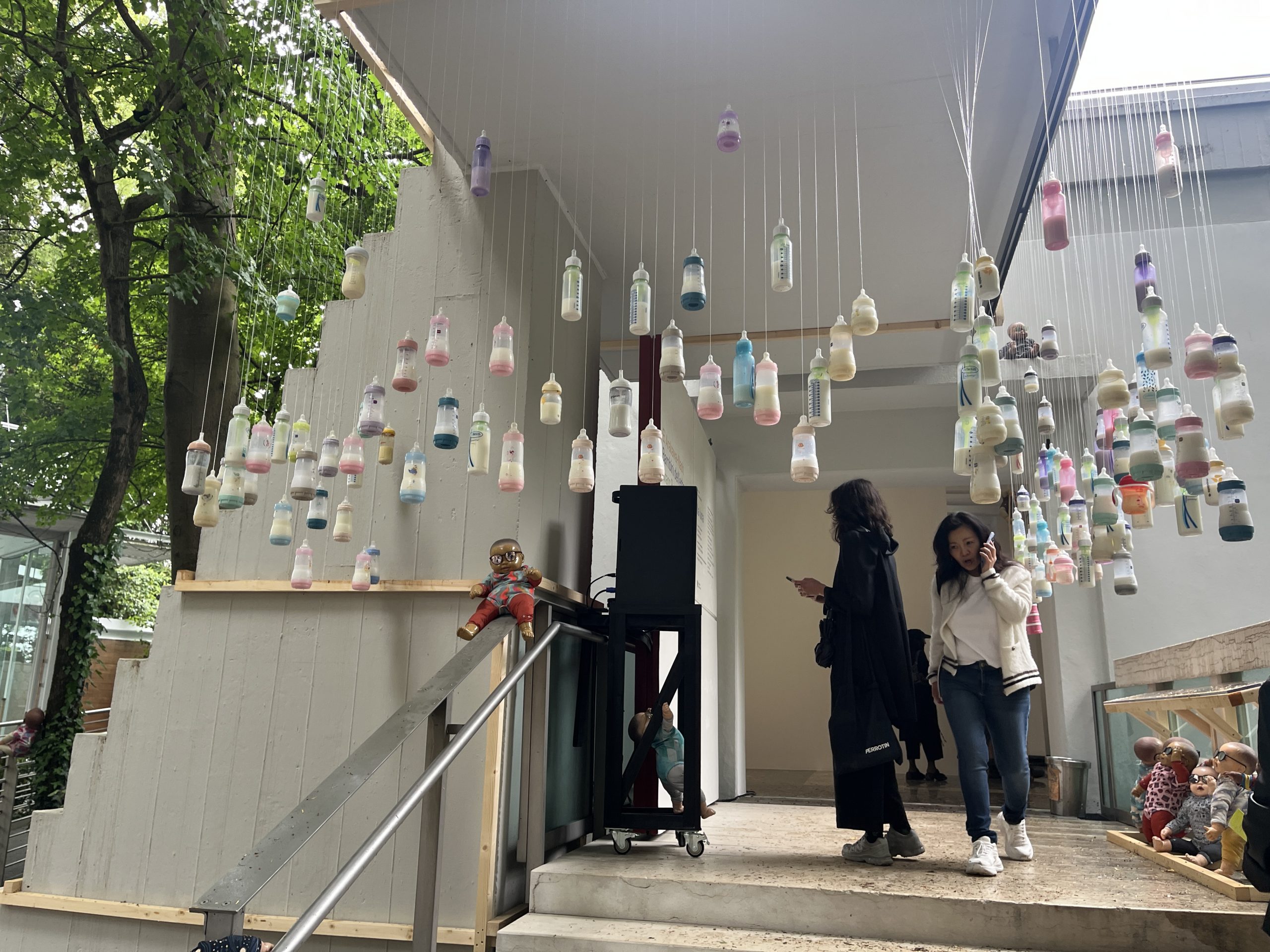
"The Japan Pavilion was an oasis of calm amidst all the protests erupting on the grounds of Giardini and Arsenale this week. Filled with gentle music and baby cooing sounds, it greets visitors with milk bottles that adorn its entrance. Inside, 208 baby dolls wearing cool shades and colorful onesies hang on ropes and sit atop massive metal scaffoldings. A few rest in front of a large screen, watching. The installation by Ei Arakawa-Nash, Grass Babies, Moon Babies (2026), was an instant hit."
"Visitors can grab a doll at a pickup area outside the pavilion and carry it upstairs to change its diaper. Inside the diaper, there's a QR code that leads to a poem people can read to their baby babies. Once done, they place the baby in a basket attached to ropes and send it back down to the pick-up station. Each doll is surprisingly hefty, weighing around 6 kilograms (about 13 pounds, the size of an average 4-month-old)."
"On opening day on Tuesday, a couple changed their real baby's nappy, using one of the changing stations (the only ones available on the biennial grounds). The interactive experience seemed to transform people: Everyone slowed down and mellowed out, smiling blissfully and even laughing. We all were babies once, after all."
The 61st Venice Biennale, “In Minor Keys,” opens to the public on May 9 with many exhibitions across Venice. Visitors face tough choices because time and attention are limited. The Japan Pavilion in the Giardini provides a calm contrast to protests, using gentle music and baby cooing sounds. The installation features 208 baby dolls with cool shades and colorful onesies displayed on metal scaffoldings. Visitors can pick up a doll, change its diaper at a station, scan a QR code inside the diaper to read a poem, and then place the doll in a basket to send it back down. The dolls are heavy, and the interactive process visibly relaxes participants.
Read at Artnet News
Unable to calculate read time
Collection
[
|
...
]