When I started, there was no art coverage in the news magazines and there was no regular coverage, even in Time ... Contemporary art, particularly, was considered a ridiculous and foolish aberration. It didn't have anything to do with art, according to a lot of people.
In many ways working in the tradition of Kazimir Malevich and Josef Albers, his compositions employ a language of squares and rectangles known as "Cells" and "Prisons," connected by bold lines called "Conduits." Together, these geometric and linear arrangements tap into the inherent geometry that structure reality, and conceptually refer to the construction of everyday life, both public and private as well as physical and psychological.
In honor of the 100th anniversary of the painter and multimedia artist's birth, the Robert Rauschenberg Foundation is presenting a one-time award of $100,000 to four artists. Senga Nengudi won the Rauschenberg Centennial Award for visual art, David Thomson for performance, Chandra McCormick and Keith Calhoun for photography, and Patricia Spears Jones for writing.
The new New Museum is many things: contemporary, perhaps, but also a science, history, anthropology, and many other museums in one. It echoes the desire of its patron class to own the world and its affiliated courtier class to deliver it to them on a silver platter, or encased in perforated metal, in this case.
His humor, his clarity, and his vision shaped many discussions across the agency and within the wider photographic world. This exhibition pays homage to the unique vision of Martin Parr, whose sharp eye for contemporary society and prominent role within Magnum Photos have left an enduring mark on photography.
The RA is led by leading artists and architects, with the UK's oldest-and, crucially, free-art school at its heart. The opportunity to shape the RA's artistic programme and respond to its extraordinary gallery spaces, as well as launching the expanded Collection Gallery, is tremendously exciting.
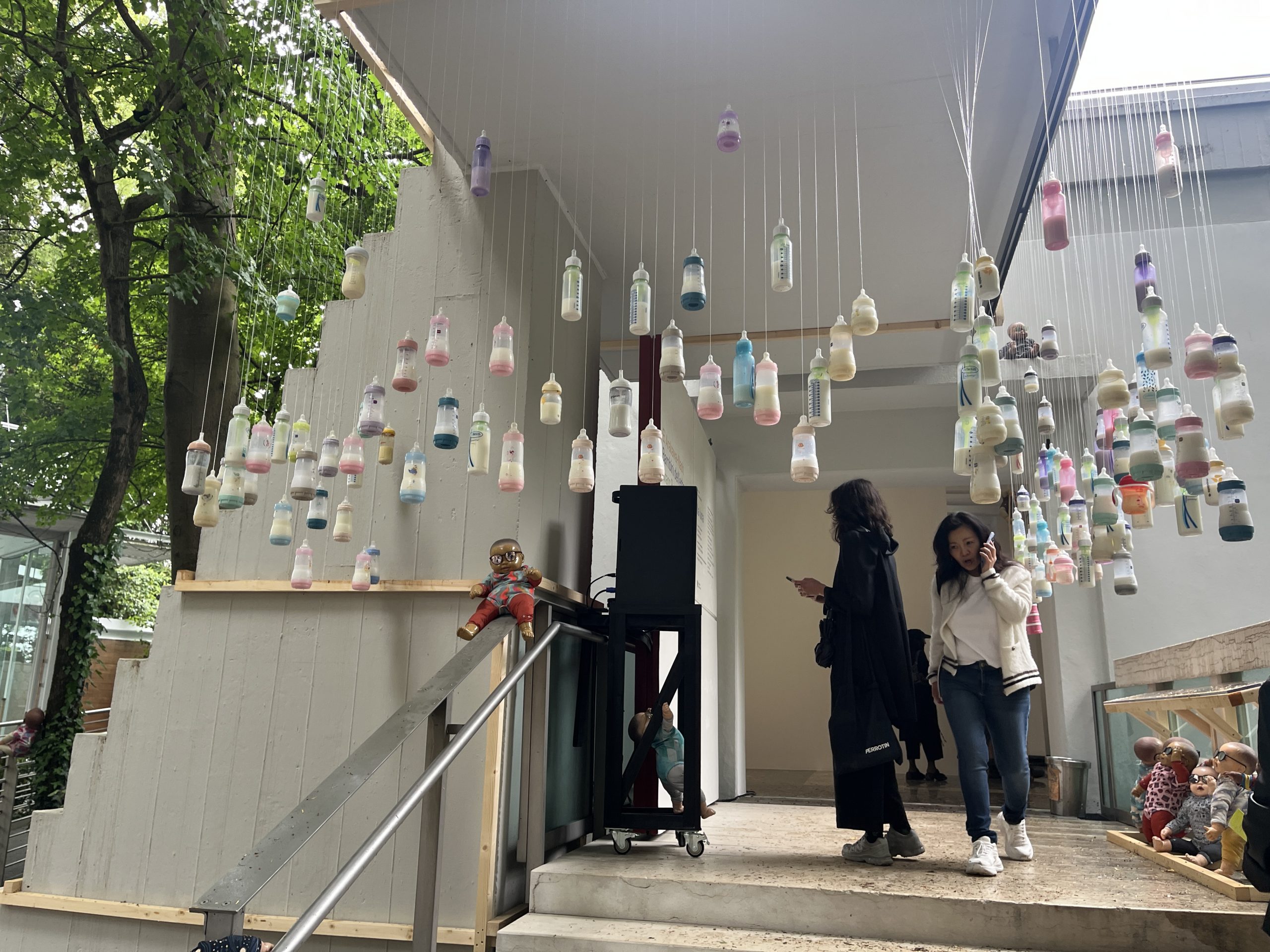
There is a scene in "Morgenkreis | Morning Circle" (2025), a 16-mm film by Berlin-based Palestinian artist Basma al-Sharif, that unfolds at the threshold of a daycare center. A young boy clings to his father, his fists locked into the fabric of his coat, his arms wrapped tightly around him. The father gently tries to pry himself free while a daycare worker crouches nearby, attempting to distract the child and coax him inside. It is an ordinary moment, one that anyone who has ever been a child - or cared for one - recognizes instantly, as well as the gut-wrenching feeling it provokes.
In recent years, this remote West Texas outpost, which has a population hovering around 1,700, has also become an unlikely shopping destination, with an emphasis on one-of-a-kind wares from the local artists who've made their homes here.
As a child, I imagined a place far behind our own sky. A planet with its own weather, its own atmosphere, its own logic entirely. It was my own version of science fiction. How did it feel on this planet? Was it snowy, windy, or could you sense the first green breath of spring-I called it Planet Z.
Muscle memory refers to procedural memory, actions taken that do not require conscious thought (like riding a bike) as the motor movement has been embedded in the brain through repetition. Contextual mistakes in muscle memory—such as someone attempting to zoom in while drawing on paper versus a tablet computer or double-tapping a photograph instead of a social media feed—prove a potent starting point for Doe's latest body of work.
It's really trying to extend the ability of understanding who is our family, right? Who is our brothers, sisters, and grandfathers? By allowing others to admire these incredible webs, they will become more empathetic.
From unassuming hunks of Carrara marble and limestone, Matthew Simmonds carves realistic, miniature gothic cathedral arches, stairwells, and colonnades. Often based on architectural details of real places, such as cities around Tuscany and Germany's Bamberg Cathedral, the sculptures portray intimate details of corners, vaulted ceilings, arcades, and stairwells that can sometimes be peeked through additional apertures.
Upon entry, Kent's "IF" (1965) lures the eye upward. The serigraph-a silkscreen print in fine art parlance-hangs high on the wall with a subtle vulnerability. Two orange letters hover toward the composition's top edge, as if pushing to transcend the picture plane. A feeling of possibility emerges through the conjunction and its visual form.
In the poem, Brontë declares an unshakable, fearless belief in something eternal. Gregor holds close to that spirit, but with one significant difference: she leaves off the final words, is Mine. Where Brontë speaks with certainty, Gregor is searching.
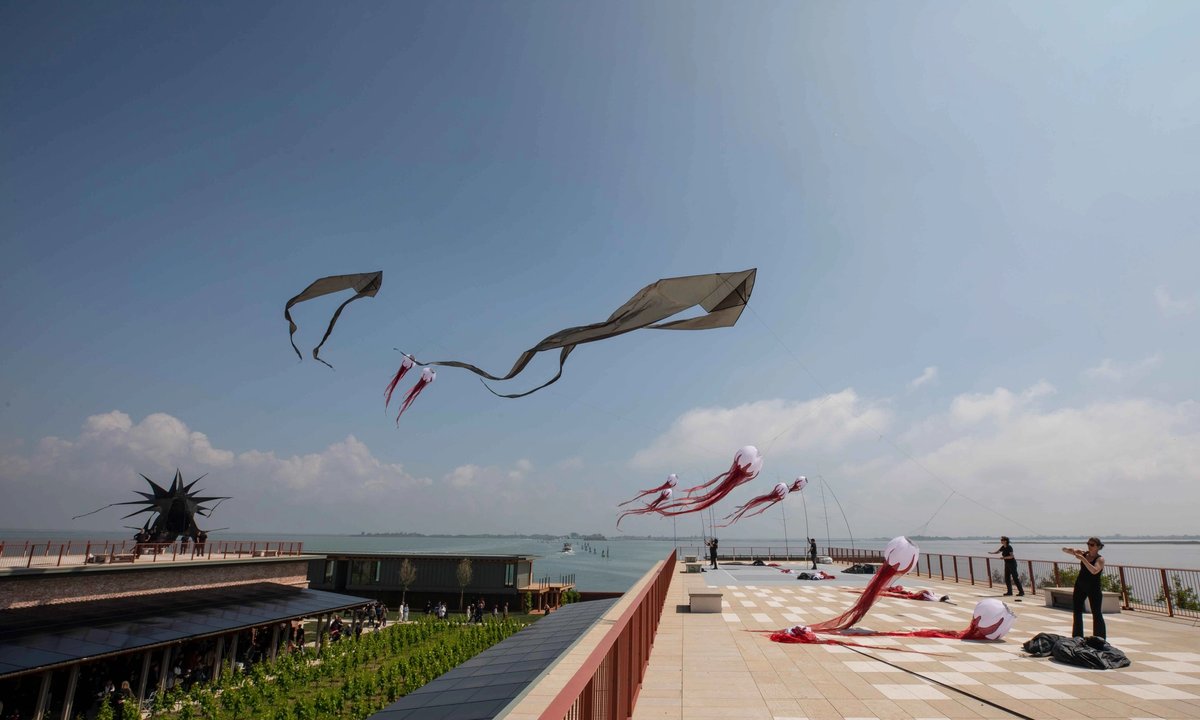
I wanted to translate that idea into public space, to imagine the trail as a site of encounter between visitors and works by artists whose visual language already centres otherworldly beings, creatures or ecologies. In that meeting, the strange or unfamiliar hopefully becomes a source of curiosity and interconnectedness.
I was nine years old, and I felt like I lost that childhood. I felt like I became a kid when I looked at a TV this morning. Burn that image into your mind, his mother told him, knowing the city would never be the same. It was 2003, and mere days later, the United States and its allies would launch their invasion of Iraq, raining airstrikes down on the city.
Technology is currently one of the most powerful forces shaping our lives, our economies, our politics, and even our sense of identity and reality. Cultural institutions cannot remain outside of that conversation. If museums are places where society reflects on itself, then they must engage with the technologies that are actively transforming it.
Of Lithuanian-Russian heritage, Panova's work is informed by that layered cultural inheritance as growing up between cultures has shaped her sensitivity to shifting narratives. Her work explores folklore, quiet, and images that feel suspended between past and present.
With a rich background in both Chinese ink painting from the illustrious Central Academy of Fine Arts in Beijing and Western painting at Kunsthochschule Kassel, Xia brings a unique duality to his creations. His latest body of work blends these contrasting techniques, showcasing paintings stretched across unconventional canvases, think flattened cardboard boxes and vintage record sleeves.
Major works from media mogul S.I. Newhouse's estate are poised to smash records at Christie's in May. The tranche of 35 to 40 works includes paintings by Jackson Pollock, Pablo Picasso, and Jasper Johns, as well as a Constantin Brancusi sculpture, and is valued it at a whopping $450 million.
Stars under the border began with a simple image of people resting together in an open field, but that idea quickly expanded into something more complex, both visually and formally. I kept thinking about aspiration: how it persists beneath systems that try to define or limit us. The title suggests this tension. Stars suggest hope or possibilities existing in an endless veil of darkness, while a border implies a sense of limitation and separation.
In her latest body of work, Hayv Kahraman grapples with the loss of her Altadena home during last year's Eaton Fire. The women in her paintings channel a sense of magic, wonder, and ritual as they contort their bodies or dance across the canvas. Kahraman herself endured the traumatic displacement from her native Iraq as a child during the first Gulf War, and she incorporates symbols from her heritage, such as Sufi talismans and the Anqā, a phoenix-like bird from Arab mythology.
In his expressive, large-format works, Proux stages humans in the field of tension between industry and nature in the context of 21st century's late capitalism. Depictions of workers in offices, factories and warehouses are juxtaposed with light-flooded scenes of people and nature.
Since she graduated in the late 1980s, amid the Aids crisis, Opie has made portraits of her community, friends and family, adopting unflinching realism, saturated colours, and dramatic tonal contrasts from the 16th-century portrait painters. Many of Opie's most famous portraits included in her new exhibition at the National Portrait Gallery use these devices deliberately, a declaration that these people deserve, as the title of the show underlines, to be seen.