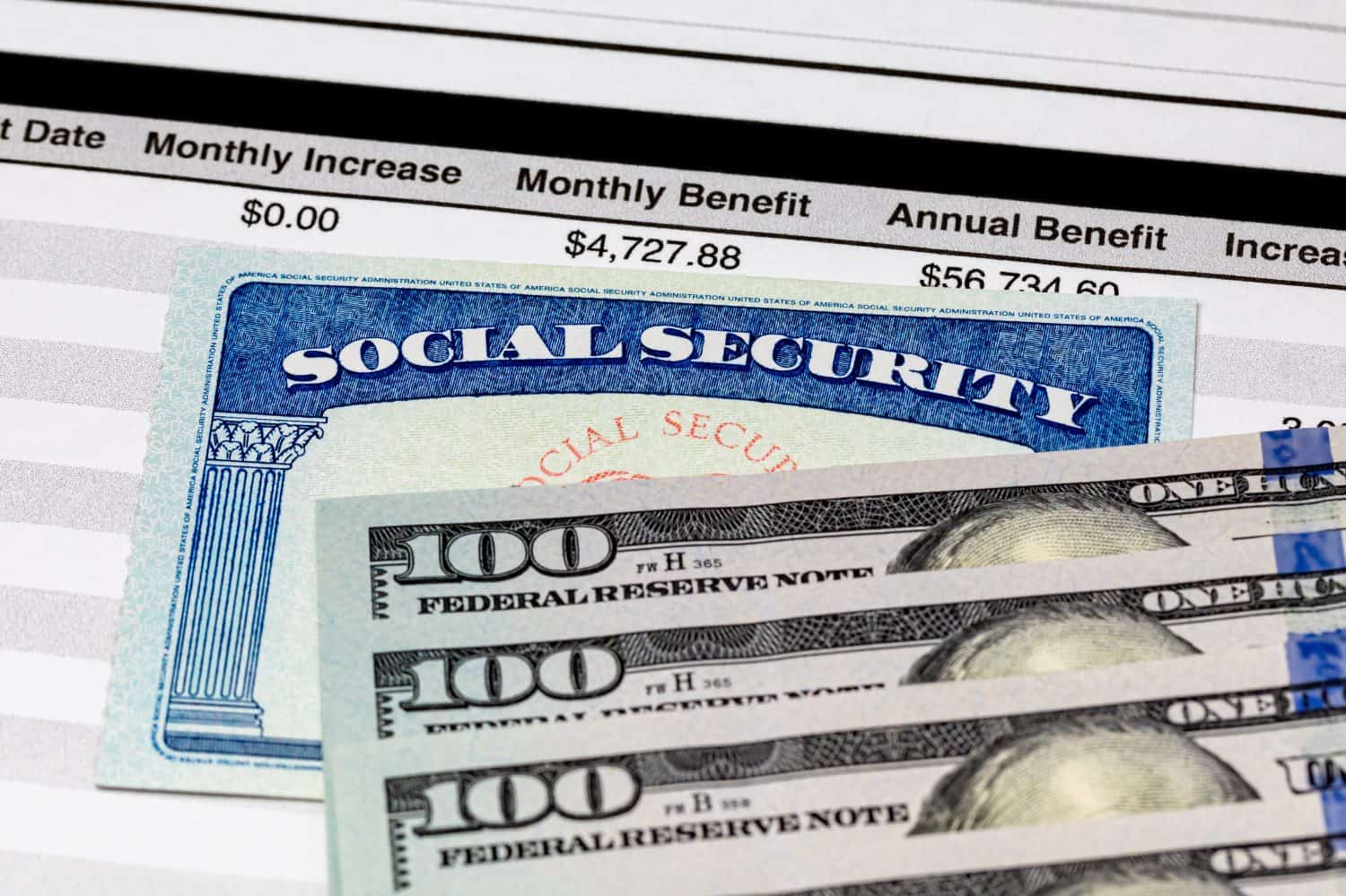
"You might assume you'll get plenty of monthly income from Social Security once you retire. But did you know that the average retirement benefit today is only $2,015 a month? That's barely over $24,000 a year. In fact, if you earn an average paycheck, you can expect Social Security to replace about 40% of it once you retire. But there's a caveat, and it's that the program is facing the possibility of benefit cuts in the next 10 years."
"Another big problem is that Social Security's annual cost-of-living adjustments, or COLAs, often tend to fall flat, leaving seniors with raises that don't actually keep pace with inflation like they're meant to. Social Security COLAs aren't measured based on a senior-specific index. Rather, they're based on the Consumer Price Index for Urban Wage Earners and Clerical Workers (CPI-W), which measures the costs incurred by working folks in cities."
Millions of retired Americans receive most of their income from Social Security, which provides an average benefit of $2,015 per month (about $24,000 per year). Social Security typically replaces roughly 40% of an average paycheck. The program faces the possibility of benefit cuts within the next ten years as baby boomers retire and trust funds potentially run dry without new revenue. Annual cost-of-living adjustments (COLAs) are tied to the CPI-W, not a retiree-specific index, so they often fail to reflect seniors' expenses. Healthcare costs commonly rise faster than broad inflation and are not captured by COLA calculations, eroding retirees' buying power. Social Security therefore has significant structural challenges.
Read at 24/7 Wall St.
Unable to calculate read time
Collection
[
|
...
]