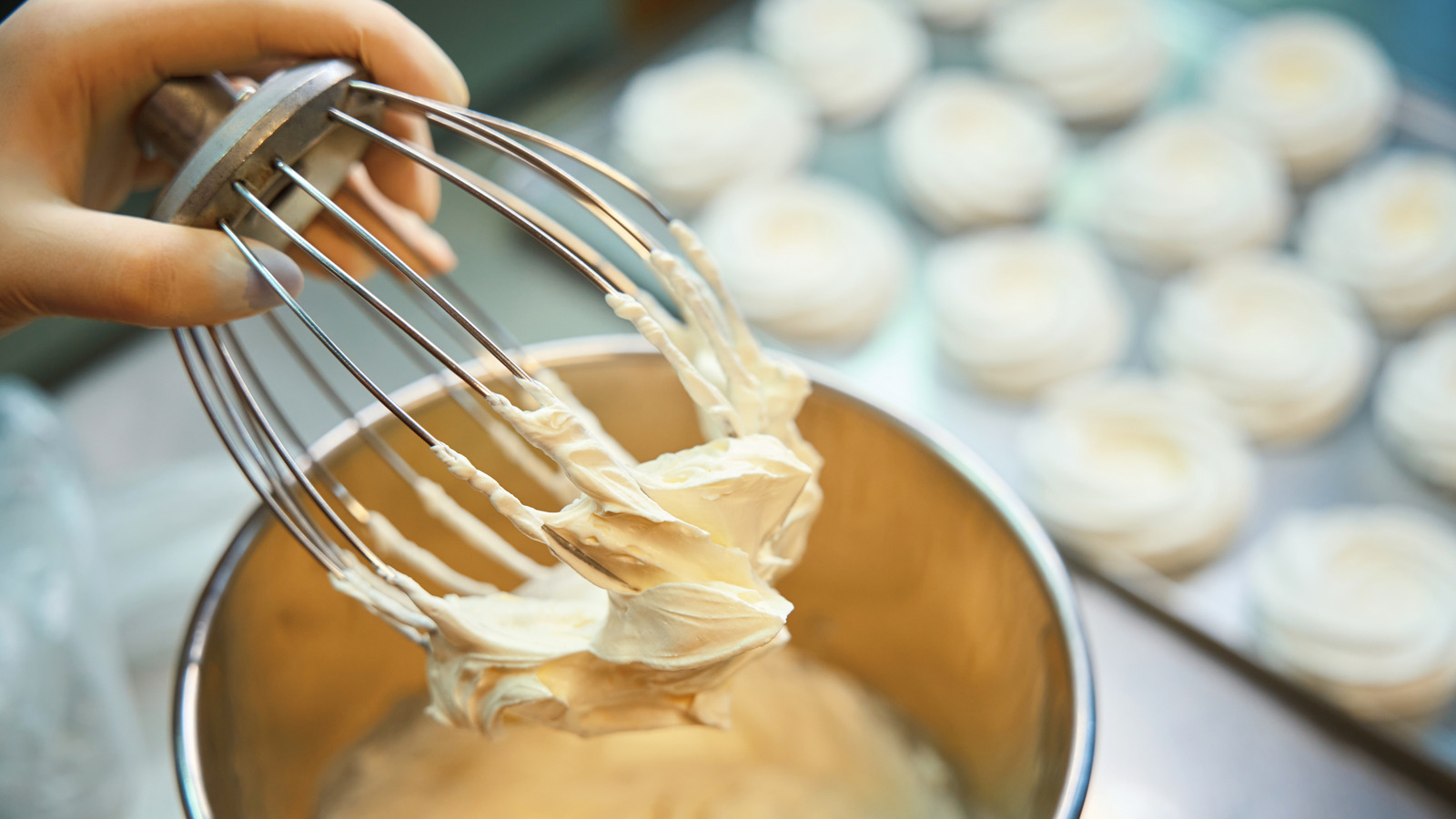
""When beating sugar and butter, it should be pale yellow, almost ivory, and it should be creamy and have increased in volume," she explains. "It should not have harsh granules of sugar." Room-temperature butter will help you get there. You want to ensure you can make a noticeable indent with your finger before you use it. "If you use room temperature butter, it will incorporate better and smoother and in a shorter amount of time," Sepsy adds."
"The whole reason we cream sugar into butter is to trap air inside of the molecules. But if the butter is too cold, it won't expand, and the ingredients won't incorporate properly, leading to a chunky mess. When it comes to cold butter, Sepsy says there's a better chance that you'll over-cream the mixture too. "If your butter is too hard, you may have to beat it longer," she explains, "making it more likely that you walk away and lose track of the progress.""
Properly creamed butter and sugar trap air, creating light cakes, fluffy muffins, crisp cookies, and tender sweet breads. Creaming requires balancing time and butter temperature: under-creamed mixtures remain dense and gritty; over-creamed butter can lose structure. The mixture should turn pale yellow, almost ivory, increase in volume, become creamy, and lose harsh sugar granules. Room-temperature butter incorporates more smoothly and shortens beating time; it should yield a noticeable fingertip indent. Cold or hard butter may require longer beating, increasing the risk of over-creaming and a chunky or improperly incorporated mixture.
Read at Tasting Table
Unable to calculate read time
Collection
[
|
...
]