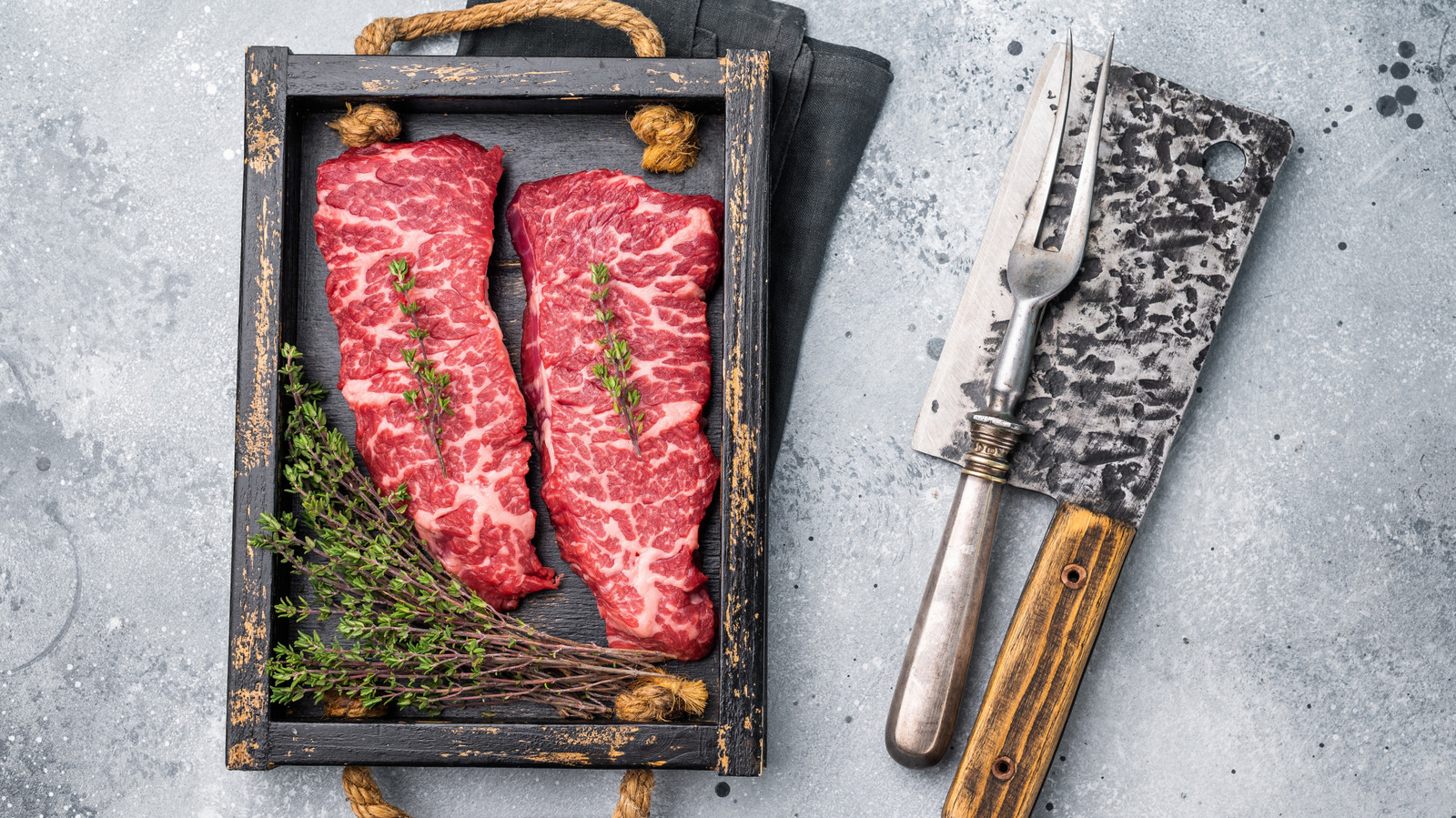
"When you think of the most popular cuts of beef, a Denver steak probably isn't the first that comes to mind. But, this butcher's favorite has been growing in popularity in recent years, as word continues to spread about its buttery texture, rich flavor, and juicy finish. It shouldn't be too hard to seek one out, but you do need to make sure the person butchering your beef has a skilled hand, as Denver steaks can be notoriously difficult to cut."
"Denver steaks come from a very specific part of the chuck that's located beneath the cow's shoulder. Known as the serratus ventralis, the muscle has exceptional marbling and a robust beefy flavor, providing a steak that sits somewhere between a ribeye and strip. Sounds great, right? Well the problem is that the chuck contains a lot of connective tissue, which needs to be trimmed off to reveal a perfectly lean Denver steak. It's not a particularly tedious process, but it does require some skill."
"Butchers first need to remove both the muscles of the shoulder blade and the chuck eye steak to reveal the Denver steak, then they need to properly trim all of the excess fat. The steak also needs to be cut against the grain to ensure the most tender results -- and all of this needs to be done with the utmost precision."
The Denver steak comes from the serratus ventralis, a muscle beneath the cow's shoulder within the chuck. The muscle features exceptional marbling, a robust beefy flavor, and a texture that falls between a ribeye and a strip. Extracting the cut requires removing shoulder blade muscles and the chuck eye, trimming excess fat, and slicing against the grain to maximize tenderness. The chuck contains substantial connective tissue, so precise trimming is necessary to reveal a lean Denver steak. A research program called Beef Checkoff identified the cut in 2008, and the Denver name was chosen purely for marketing.
Read at Tasting Table
Unable to calculate read time
Collection
[
|
...
]