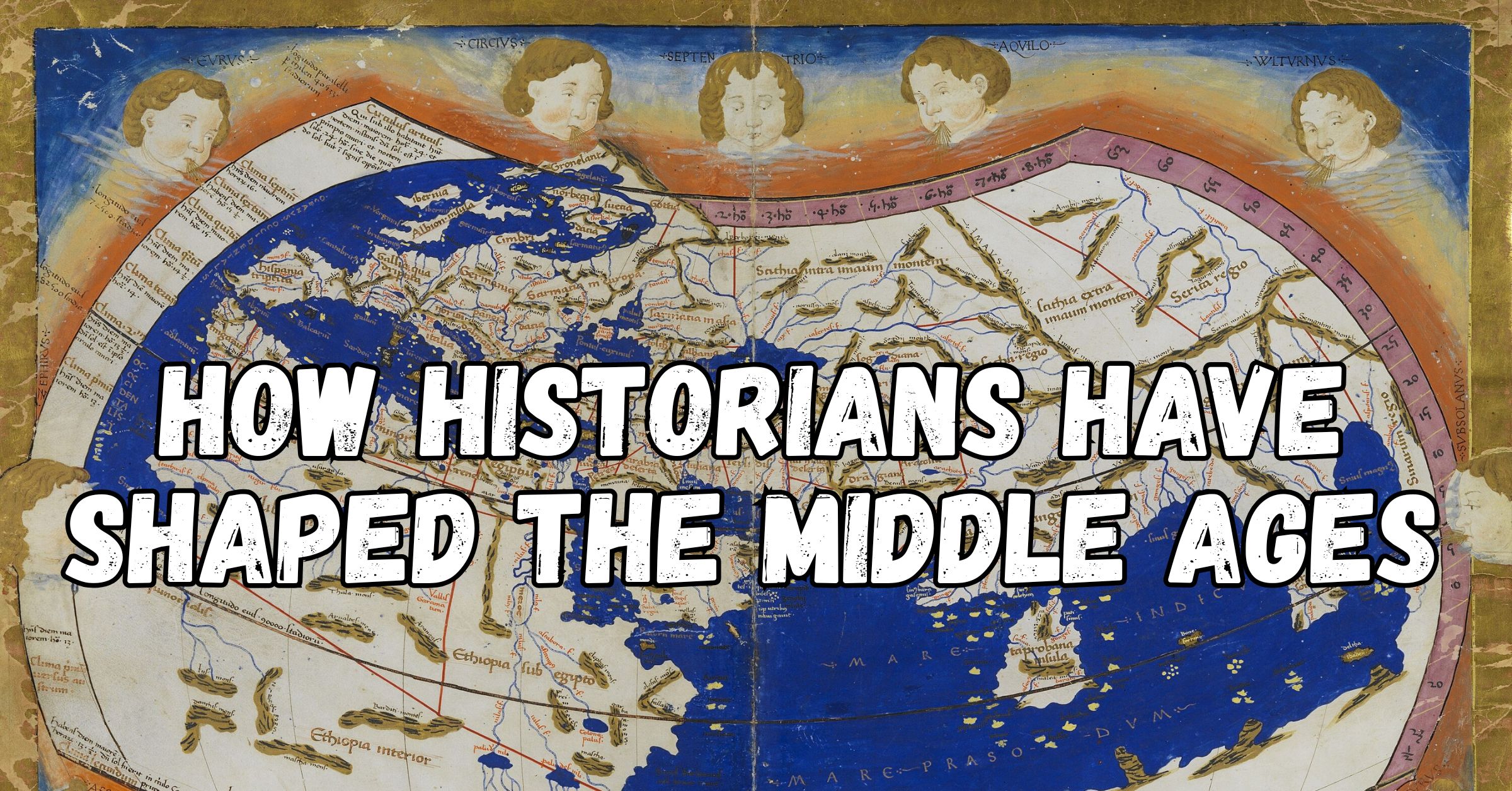
"The Middle Ages we study today isn't just a record of what happened - it's also a product of how historians have chosen to describe it. Over the centuries, scholars have coined terms and frameworks to make sense of medieval society, culture, and power. Concepts like the Viking Age, the 12th-Century Renaissance, and the Silk Road didn't exist in the Middle Ages themselves - they were created later to explain its complexities."
"Even the Middle Ages itself is a historiographical construct. The term was coined by Renaissance humanists, who saw the centuries between classical antiquity and their own time as a middle period - an era in between two supposedly superior ages. Medieval people did not think of themselves as living in a "middle age," nor did they see their world as a temporary or inferior phase of history."
"To impose further structure on this long and diverse period, historians later subdivided it into three parts: The Early Middle Ages (roughly 500-1000), often associated with political fragmentation, new kingdoms, and the transformation of the Roman world The High Middle Ages (roughly 1000-1300), typically framed as a period of population growth, institutional expansion, and cultural production The Late Middle Ages (roughly 1300-1500), commonly characterised by crisis, adaptation, and profound social change"
The Middle Ages is a term coined by Renaissance humanists who viewed the centuries between classical antiquity and their time as an intermediary era. Medieval people did not conceive their era as a 'middle age' or as temporarily inferior. Historians later adopted the label to organize the past, commonly dating the period from the fall of the Western Roman Empire in the fifth century to the fifteenth century. The period is often subdivided into Early (c.500–1000), High (c.1000–1300), and Late (c.1300–1500) Middle Ages, each associated with characteristic political, demographic, institutional, and social patterns. Those subdivisions are modern analytical tools with flexible, contested boundaries.
Read at Medievalists.net
Unable to calculate read time
Collection
[
|
...
]