"This was my great-grandfather Wilhelm's city, the place he'd left more than a century earlier to migrate to Mexico. I was presenting research on the very phenomenon his migration had set in motion. Wilhelm adapted quickly to San Luis Potosí. He learned Spanish, raising five children in a household that was neither fully German nor fully Mexican. He never taught his children German. The language was gone within a generation. But three generations later, my own children recovered it through deliberate immersion during my research fellowships in Germany,"
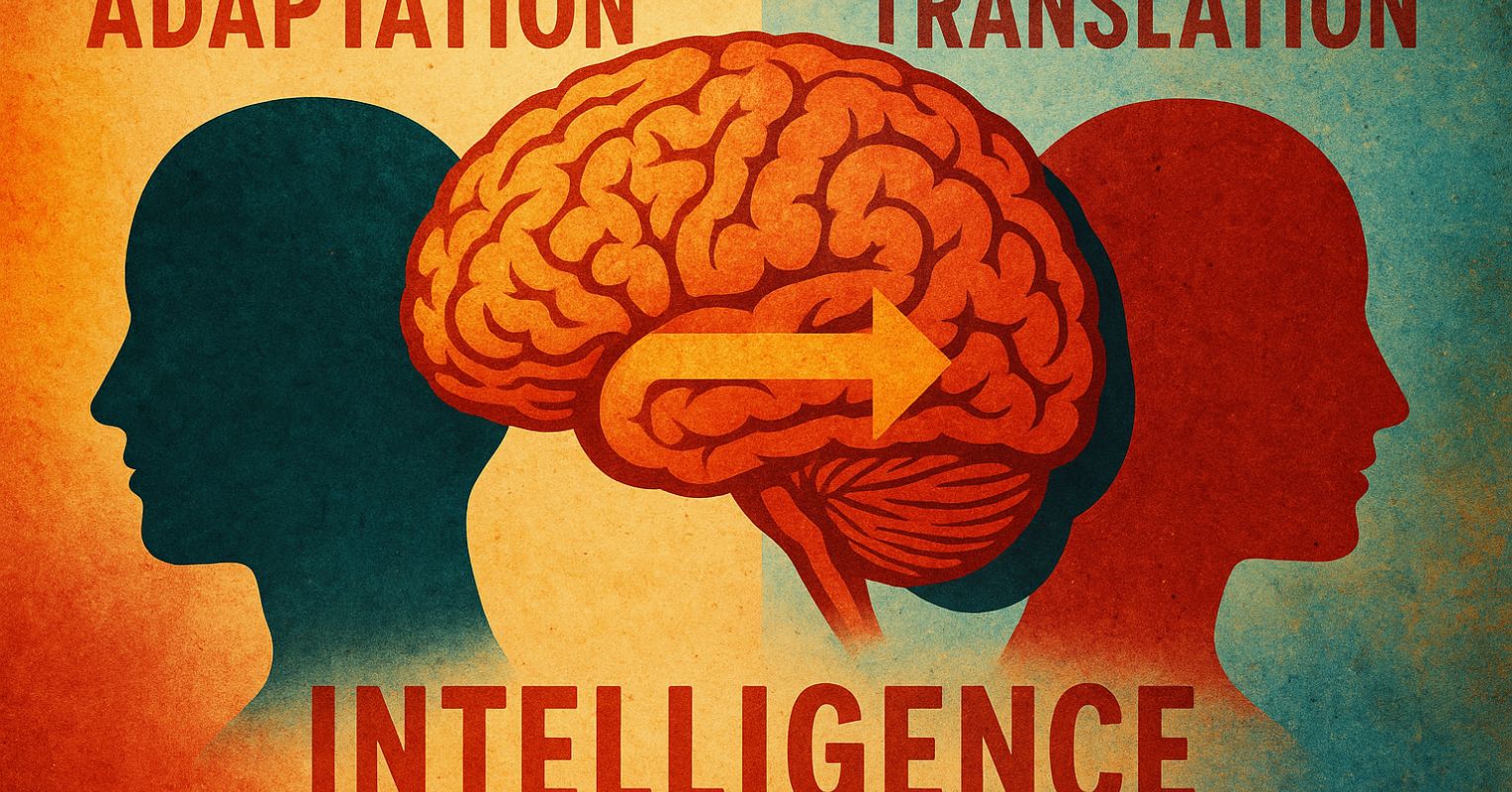
"This family story isn't just personal history. It's a case study in something fundamental about human cognition: Our capacity for adaptation is inseparable from our capacity for translation. The Bilingual Brain as Model Bilingual individuals offer a useful window into how human cognition achieves flexibility, albeit not for the reasons usually cited. The advantage isn't just about accessing two languages. It's what managing multiple linguistic systems reveals about adaptive cognition."
"When bilinguals switch between languages, they engage neural networks that manage context-dependent selection-choosing the appropriate linguistic system based on who they're talking to, where they are, what they're discussing. This requires mapping different contexts onto different response systems while maintaining coherent output."
Bilingual experience cultivates cognitive flexibility by training neural mechanisms that select context-appropriate systems rather than by mere language switching. Managing multiple languages requires mapping contexts to distinct response systems and maintaining coherent output, engaging selection processes that generalize to other domains. Family language recovery through deliberate immersion illustrates translation-driven adaptability across generations. Comparable gains appear in other domains, where practice in selecting incompatible systems yields similar cognitive benefits. Cultivating multilingual or multidomain fluency builds adaptive cognitive capacities grounded in context-dependent selection and translation that current AI does not replicate.
Read at Psychology Today
Unable to calculate read time
Collection
[
|
...
]