#art-market
#art-market
[ follow ]
#contemporary-art #sothebys #art-fairs #auctions #auction-records #auction-houses #collectors #women-artists

fromThe Art Newspaper - International art news and events
6 days agoFather and daughter plead guilty in $2m counterfeit art scheme
"For years, these defendants painted themselves as purveyors of fine art while selling lies on canvas to unsuspecting collectors," said Joseph Nocella Jr, a US attorney for the Eastern District of New York. "The duo's convictions strip away the varnish and reveal the fraud underneath."
Arts
fromThe Art Newspaper - International art news and events
1 week agoToday's war, tomorrow's loot: attempts at stemming the illicit trade in art
The Hague Convention of 1954 ensures that countries prevent theft and pillage of cultural property during armed conflict, while a protocol to that convention prevents the export of such material, requiring other countries to seize unlawful exports and repatriate them at the end of hostilities.
Arts
fromArtforum
1 week agoWalking With Giants: The Return of the Totemic
According to recent journalistic reports, totems are on the rise: 'These spiritual sculptures have taken prime position in the art market,' says the Financial Times. Firmly anchored in an otherwise indeterminate space, the totem seems to express a yearning for transcultural commonality.
Typography
fromThe Art Newspaper - International art news and events
2 weeks agoWildenstein dispute over Monet work highlights art market opacity
The case traces back to the 1980s, when the dealer Daniel Wildenstein identified Adolphe Monet Reading in a Garden (1867), a significant early work depicting the artist's father and held by the family of Monet's brother, Léon.
Arts



fromArtnet News
1 month agoThe Business of KAWS: What Data and a Museum Show Reveal About His Market | Artnet News
KAWS has shown an uncanny ability to connect with a wide variety of people. Younger buyers clamor for his $50 Uniqlo T-shirts, while trophy-hunting collectors shell out millions for paintings.
Arts
Arts
fromThe Art Newspaper - International art news and events
1 month agoVaccine billionaire buys $17.9m Raja Ravi Varma, setting new record for Indian painting at auction
Raja Ravi Varma's painting Yashoda and Krishna sold for $15m, setting a new auction record for South Asian art just a year after the previous record.
fromArtnet News
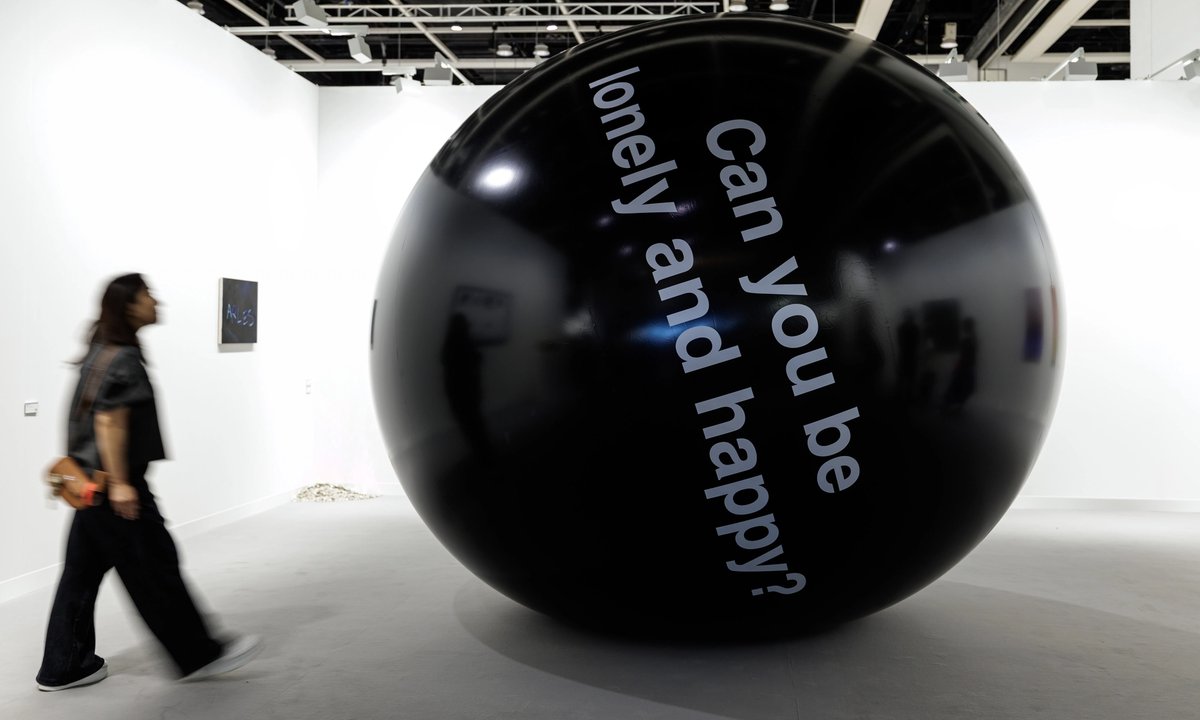
1 month agoAt Art Basel Hong Kong, Wet Paint Hits Galleries, Malls, a Semi-Secret Space, and More | Artnet News
Hong Kong's particular and seductive Metabolist city planning is an ode to consumption as a great totalizer of culture, and to contemporary art as merely a niche commodity form among many others.
Arts


Arts
fromArtnet News
1 month agoThis Small Dorothea Tanning Painting Sold for $120,000 per Square Inch-and Set a New Record | Artnet News
Dorothea Tanning's 1942 painting sold for $6.26 million at Christie's London, setting a new auction record and nearly doubling her previous high from four months earlier.
Arts
fromArtnet News
2 months agoVan Gogh Museum Adds Rare Work by a Woman Artist to Its Collection | Artnet News
The Van Gogh Museum acquired Virginie Demont-Breton's L'homme est en mer for €500,000-€1 million, becoming only the third painting by a woman in the collection, inspired Van Gogh to create his own copy.
fromThe Art Newspaper - International art news and events
2 months agoTefaf Maastricht: the wish list
This first edition book of Shakespearean poems was published by Kelmscott Press, the private press founded by the English designer and author William Morris in 1891. This example is covered in an opulent, bejewelled binding from the renowned London bookbinders Sangorski and Sutcliffe. The decoration, set with mother-of-pearl and more than 100 precious stones, takes inspiration from the sonnets inside.
Arts

London
fromThe Art Newspaper - International art news and events
2 months agoLondon springs back to life in Sotheby's Modern and contemporary evening sale
London's art market demonstrates resilience and renewed vitality despite geopolitical instability, with Sotheby's Modern and contemporary sale achieving £106.4m, more than double the previous year's results.
NYC real estate
fromCurbed
2 months agoCarol Bove Has a Retrospective at the Guggenheim and an Apartment to Sell
Sculptor Carol Bove is selling her Fifth Avenue apartment for $3.5 million while opening a career-defining Guggenheim retrospective, having purchased it for $2.9 million in 2021 during her divorce.

fromWashingtonian - The website that Washington lives by.
2 months agoHemphill Artworks Has Closed Its DC Gallery - Washingtonian
Hemphill Artworks, the longtime modern and contemporary art gallery and a stalwart of the DC scene, has closed its location in Mount Vernon Square, a sign of the challenges facing art dealers across the country. In an email to collectors and supporters, founder George Hemphill said the gallery will pivot to a different business model, continuing to represent artists and sell work but no longer hosting regular exhibitions. It's the first time Hemphill will be without a storefront in 33 years.
Arts
Arts
fromThe Art Newspaper - International art news and events
2 months agoUK artist resale right at 20: how successful has the pioneering scheme been?
The artist resale right (ARR) has been broadly accepted in the UK but requires global adoption to prevent market displacement and competitive disadvantage.
fromArtnet News
3 months agoRare Rembrandt Drawing Nets Record-Smashing $18 Million at Auction
A Rembrandt drawing of a young lion has become artist's most valuable work on paper to sell at auction after it realized a breathtaking $18 million at Sotheby's New York on February 4. The work, Young Lion Resting (ca. 1638-43), which carried a $15 million to $20 million estimate, smashed Rembrandt's $3.7 million auction record for a drawing. Ahead of the sale, it went on view Paris, London, Abu Dhabi, Hong Kong, and Diriyah, as Sotheby's deepens its presence in Saudi Arabia after staging its first-ever auction in the country last year.
Arts


fromBrooklyn Eagle
3 months agoConey Island family sells Banksy mural after 13 years, ships wall to new buyers
The piece, known as "Tagging Robot," was by an art-shipping firm that extracted an entire section of brick wall from the building at Stillwell and Neptune avenues and transported it to a brewery in Bridgeport, Conn. The Ruocco family, six siblings who own the building, said the sale fetched less than $500,000, with the buyer also covering roughly $75,000 in removal and transport costs.
Brooklyn
fromHyperallergic
3 months agoJeff Koons's Reflective Sculptures Mirror the One Percent
Jeff Koons is a hit-or-miss artist whose sculptures always give viewers something to talk about. The same isn't true of his paintings, none of which have ever become memorable because there is nothing particularly arresting about them. This doesn't mean that painting is dead, just that his are. A lot of the discourse around his sculptures gets unnecessarily heated, with (often White) critics arguing over whether or not they critique capitalism or celebrate consumerism,
Arts
Arts
fromThe Art Newspaper - International art news and events
3 months agoComment | Tate Britain's Turner and Constable show got me thinking about Marxist art history
Old Master sales show mixed strength: standout multi-million-pound results alongside steep losses, while Tate Britain's Turner and Constable exhibition is a major blockbuster.
Arts
fromThe Art Newspaper - International art news and events
3 months agoA gifted colourist and civic-minded storyteller: touring show celebrates US artist Noah Davis
Noah Davis's posthumous survey demonstrates his mastery of color, narrative subtlety, art-historical erudition, and rising market and museum recognition.
Arts
fromThe Art Newspaper - International art news and events
3 months agoSingapore cements its role as a hub for art-and artists-in Southeast Asia
Singapore functions as a regional hub and melting pot for Southeast Asian art, offering institutional support, openness, and market access that boost the region's profile.
fromThe New Yorker
3 months agoPeter Doig's Histories of Ink
One recent weekday morning, the British painter Peter Doig arrived at a bonded warehouse-a cavernous brick building-about a mile south of the River Thames, but not subject to the import taxes of the United Kingdom. He buzzed through security and entered a windowless white room, where he settled in for a long day. Awaiting him were a series of etching prints that had been brought over from the United States to be signed by Doig before being put up for sale.
Arts
Arts
fromThe Art Newspaper - International art news and events
4 months agoComment | We are living in an age of bad painting-the medium must be challenged to stay interesting
Contemporary painting shows a widespread trend of complacent, market-driven, and poorly executed works that often lack urgency and substantive engagement.
fromThe Art Newspaper - International art news and events
4 months agoIn a 'K-shaped' economy, the art market's recovery could rely on the super-rich
"I think the last week is going to bring a lot of confidence back into the market," said Madeline Lissner, Sotheby's global head of fine art and major collections, in an interview with the online magazine Puck in November, after a mood-changing $2.2bn series of Modern and contemporary art auctions in New York. "I'm talking beyond auction, to the landscape of dealers and advisors,"
Arts
Arts
fromThe Art Newspaper - International art news and events
4 months agoHow much should art cost? The pitfalls and paradoxes of pricing works
Art-market cycles reverse trends: rising rates and contraction curtail speculative prices, prompt collector shifts, and force dealers to lower or flex primary prices.
fromThe Art Newspaper - International art news and events
4 months agoPredicting art market trends 2026: underwhelming rebound and another Frieze fair
Much of the macro-economic and geopolitical uncertainty has not gone away, and there is now the added threat that the artificial intelligence (AI) stock market bubble looks ready to burst. Within the art market, the shift in taste towards lower-priced art (plus a few trophies) seems here to stay as collectors nurse the reality that their "investments" in art have not paid off these past ten years or so.
Arts
Arts
fromThe Art Newspaper - International art news and events
4 months agoRobert Mnuchin, the blue-chip gallerist who loved the drama of the auction saleroom, has died aged 92
Robert Mnuchin, a former Goldman Sachs trading desk head, became a leading gallerist who shaped the secondary art market and championed underrecognized artists.
fromThe Art Newspaper - International art news and events
4 months agoArt market 2025 review: all eyes on the Gulf as Trump destabilises global order
The contraction of the global art market stretched well into 2025, with the challenging macro environment cited as a key reason behind the closures of several prominent businesses. Middle market powerhouses Blum (with locations in Los Angeles, New York, Tokyo) and Clearing (New York, Los Angeles) both shut shop, while stalwart New York dealerships Sperone Westwater, Tilton and Kasmin also announced their closures.
World news
Arts
fromThe Art Newspaper - International art news and events
4 months agoChristie's and Sotheby's end 2025 with increased sales, thanks to luxury goods, trophy lots and private deals
Christie's and Sotheby's project revenue up in 2025: Sotheby's $7bn, Christie's $6.2bn, driven by strong public auctions and robust private sales.
Arts
fromThe Art Newspaper - International art news and events
4 months agoComment | After a market shake up-in 2025, it's time to create a right-sized art trade
The global art market is undergoing right-sizing after speculative overexpansion; a smaller, more resilient, and better-equipped industry may replace the pre-2023 growth model.
fromHyperallergic
5 months agoWhite Is the Color of My Crypto Dreams
First it was the November evening sales in New York, and this week it was the Miami fairs. It so happens that our Senior Editor Valentina Di Liscia is a Miami native who knows the city beyond this once-a-year escapade for art worlders. She was there this week to cut through the BS and see through gimmicks ranging from a revolving library on the beach to Beeple's robodogs of famous men.
Arts
[ Load more ]