#generative-models
#generative-models
[ follow ]




Artificial intelligence
fromIPWatchdog.com | Patents & Intellectual Property Law
2 months agoCool AI Patents of the Month: Real-Time Sports Insights and Smarter Vehicles
AI patents demonstrate rapid integration into sports broadcasting and autonomous vehicle technology, enabling real-time content generation and road condition analysis through multimodal data processing.
fromMedium
3 months agoThe dawn of Authentic Experience (AuX)
UX is entering a new era. At the centre of every design conversation in 2026 lies a singular force: Artificial Intelligence. It is now so pervasive that even five-year-olds can explain its utility, while the AI natives of the new Beta generation are coming of age in a world where a conversational digital collaborator is not a feature but a baseline reality.
UX design
Medicine
fromTechCrunch
3 months agoConverge Bio raises $25M, backed by Bessemer and execs from Meta, OpenAI, Wiz | TechCrunch
Generative AI trained on DNA, RNA, and protein sequences accelerates drug discovery, enabling faster antibody design, protein optimization, and target identification while attracting investor funding.
fromPragmaticengineer
5 months agoMartin Fowler
Martin Fowler is one of the most influential people within software architecture, and the broader tech industry. He is the Chief Scientist at Thoughtworks and the author of Refactoring and Patterns of Enterprise Application Architecture, and several other books. He has spent decades shaping how engineers think about design, architecture, and process, and regularly publishes on his blog, MartinFowler.com. In this episode, we discuss how AI is changing software development: the shift from deterministic to non-deterministic coding;
Software development
fromTechzine Global
6 months agoAI speech model aiOla Drax outpaces OpenAI & Alibaba
As explained in this video, flow-matching-based generative methods are a class of models that learn a "continuous vector field" in order to manage and transform what are relatively simple "noise distributions" into more complex data distributions. They do this by following ordinary differential equations. Instead of learning "discrete denoising steps" (that's what diffusion models do), they train the flow to match probability paths directly between data and noise.
Artificial intelligence
fromTechCrunch
10 months agoiMerit believes better quality data, not more data, is the future of AI | TechCrunch
What's become exceedingly important is the ability to attract and retain the best cognitive experts... to take these large models and make them very customized towards solving enterprise AI problems.
Tech industry
Artificial intelligence
fromFuturism
10 months agoChatGPT Has Already Polluted the Internet So Badly That It's Hobbling Future AI Development
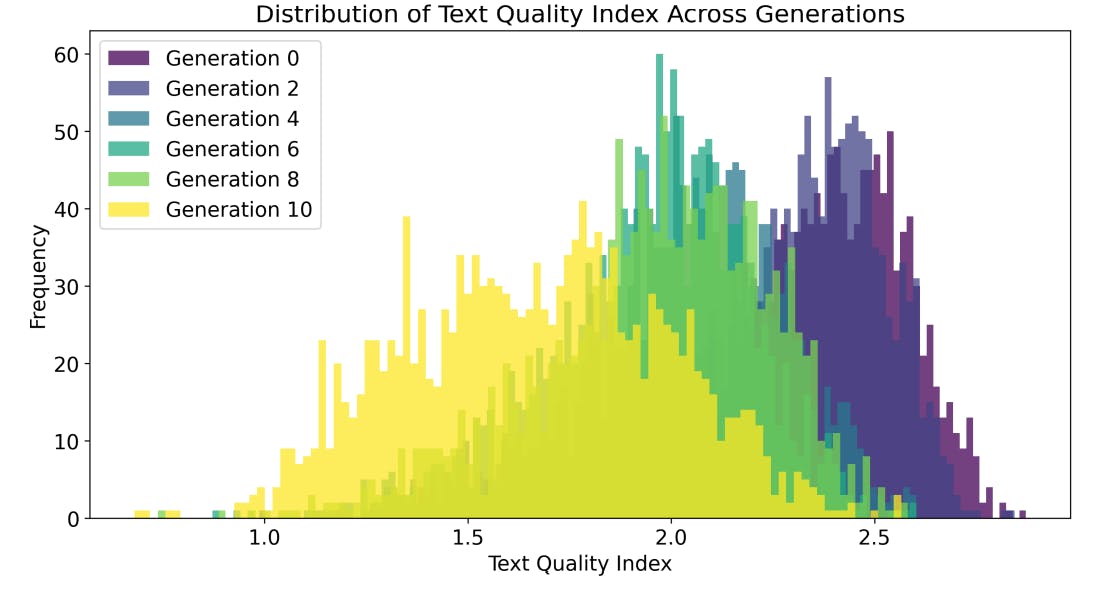
The rise of AI is causing 'model collapse' due to the dilution of quality in generated content.
Pre-ChatGPT data is becoming increasingly valuable amidst the flood of generative AI content.
Artificial intelligence
fromCreative Bloq
11 months agoI just discovered an AI art app that's changing how artists work - it has every AI model in one infinite canvas
Flora AI aspires to reshape creative processes with an intuitive platform for generative art and videos, promoting accessibility and collaboration.
[ Load more ]