#knowledge-management
#knowledge-management
[ follow ]
#productivity #enterprise-ai #enterprise-search #artificial-intelligence #collaboration #documentation #ai


Marketing tech
fromTNW | Artificial-Intelligence
1 month agoAtlassian brings AI visual tools and partner agents to Confluence, 1 month after cutting 1,600 jobs
Atlassian launches Remix, a visual AI tool that transforms Confluence content into charts and infographics, enhancing knowledge management efficiency.
Marketing tech
fromTechzine Global
1 month agoQualtrics uses AI to accelerate market research
Qualtrics launched synthetic consumer panels using custom-trained AI and a Research Hub platform to accelerate market research and decision-making by making consumer testing faster and past research searchable.
fromTechCrunch
1 month agoTwo Palantir veterans just came out of stealth with $30 million and a Sequoia stamp of approval | TechCrunch
Companies are sitting on loads of useful operational data - emails, logs, support tickets, chat histories - but have no good way to act on it. Edra says it analyzes that data automatically, builds a knowledge base from it, and keeps it updated.
European startups
Intellectual property law
fromAbove the Law
2 months agoLitera Celebrates Creative Use Of Foundation With Innovation Awards, Crowning Troutman Pepper Locke As Winner - Above the Law
Foundation, Litera's knowledge management platform, enables law firms to centralize data and adopt data-driven approaches through its simple, adaptable interface and seamless integrations.
Online learning
fromeLearning Industry
2 months agoThe Complete Offboarding Checklist: A Strategic Guide For HR And L&D Leaders (With Examples And Templates)
Modern offboarding protects institutional knowledge, ensures compliance, strengthens data security, and preserves employer brand reputation through structured processes.
fromTalentLMS Blog
3 months agoLearning Debt: 7 Workplace Symptoms and How to Tackle Them
Work changes fast. New tools arrive, roles grow, and processes shift. Often, the training just doesn't keep up. That gap is learning debt. It builds up quietly and shows up in small ways. Like a normal week turning into a scramble because one key person is on vacation. Let's look at what this looks like in daily work, why we ignore it, and how to start paying it down.
Education
fromAbove the Law
3 months agoHow Cleary Gottlieb Created A Virtuous Cycle With Tech - Above the Law
A Virtuous Cycle If a legal tech solution has a high degree of adaptability, customers can start small and gradually secure buy-in and expansion. Initial wins create a virtuous cycle, where success leads to growth, and this growth leads to more success. A Cleary Gottlieb team that includes members of its Knowledge Management and Business Development groups has implemented such a cycle at that firm.
Law
Artificial intelligence
fromSocial Media Examiner
3 months agoPersonalizing AI for a Business: Turning Generic Tools into Customized Solutions : Social Media Examiner
Personalize existing AI tools to understand your business, processes, voice, and proprietary unstructured data to produce more relevant outputs.
Artificial intelligence
fromComputerworld
3 months agoAI backlash forces a reality check: humans are as important as ever
Maximize AI by integrating it into operations and making employees collaborators rather than replacing the workforce, while building governance and team structures for safe, effective use.
fromLawSites
4 months agoLegal Tech Spending Surges 9.7% As Firms Race to Integrate AI, Says Report On State Of Legal Market
Law firms dramatically accelerated their technology investments in 2025, with spending on tech and knowledge management tools growing 9.7% and 10.5% respectively - the fastest real growth likely ever experienced in the legal industry, according to the newly released 2026 Report on the State of the US Legal Market from Thomson Reuters and Georgetown Law's Center on Ethics and the Legal Profession.
Law
fromThe Drum
4 months agoThe Sisyphean struggle of being an explainer in 2023 is causing burn-out
While it doesn't say "explainer" on my resume, maybe it should. Over twenty-ish years, I've held many roles in digital advertising, media, and marketing, but I always wear the same explainer hat. Whenever something new and complex arrives on the scene-these days, that's clean rooms, identity, CTV, and increasingly, AI, I'm one of those people that colleagues turn to for clarification. If you're one of those people, you know what I'm talking about.
Marketing tech
fromeLearning Industry
5 months agoWhat Is The Impact Of Founder Dependence On Growth And Knowledge Sharing?
While passion and personal drive are essential, the common denominator among truly successful organizations is their structured processes and systems. Every project and task is clearly outlined in accessible knowledge bases, empowering employees to take accountability and initiative in their work. However, that rarely applies to organizations that rely heavily on their founder. In these cases, every decision and piece of information comes from a single source. Additionally, there is minimal effort to document knowledge and establish a system for transferring it.
Startup companies

fromAbove the Law
6 months agoHold The Gushing: The Clio AI Announcement Doesn't Necessarily Mean Game Over - Above the Law
As I previously discussed, Clio offered the blockbuster announcement that its AI tools would now work not only on the internal data of a firm but also on external data like cases and statutes. Clio's approach essentially lets customers use one vendor for its AI needs since that vendor can supply the tools for use with internal and external data. This all under one roof one stop concept has everyone gushing as if the world has completely changed and firms will flock to Clio.
Law
fromComputerworld
7 months agoOtter.ai launches features to embed it in the enterprise
[without a] central repository for conversations, valuable insights go untapped. Otter enables organizations to realize the full potential of meetings by creating proprietary intellectual property from all conversations and building a comprehensive corporate knowledge base that scales with business growth.
Artificial intelligence
fromTechCrunch
7 months agoDeta's Surf app is an amalgamation of an AI browser and NotebookLM | TechCrunch
Deta Surf, which is launching in beta today, is both a browser and a research tool that allows you to create notebooks on different topics. You can use AI to get a gist of a certain topic based on your prompt. You'll then get a summary report on a topic in a Notion-styled document, which you can edit. Since the core application is a browser, you can open URLs and surf the web.
Artificial intelligence
fromClickUp
7 months agoAnytype vs. Notion: Which Is Better for Productivity in 2025?
Modern digital workspaces have made knowledge management infinitely easier. Whether you're building a personal knowledge base, organizing research, or planning projects, there are a bunch of platforms that can help. Anytype and Notion are tools that help structure, store, and manage information like a second brain. Anytype is a new entrant that stands out through its promise of a fully local, privacy-focused, and offline-first approach to knowledge management. On the other hand, Notion is a platform known for its powerful note-taking capabilities, collaborative features, and rich databases.
Privacy technologies
fromwww.techzine.eu
7 months agoWorkday acquires Sana for $1.1 billion in ambitious AI strategy
Employees will soon have access to a single integrated platform where enterprise knowledge, data, and actions come together. The new capabilities include searching across all of an organization's key data sources, including Workday's own data cloud, as well as Google Drive, SharePoint, and Office365. AI agents can act proactively by anticipating needs, summarizing insights, and providing support for projects. In addition, these agents are enabled to create presentations, documents, dashboards, and even entire learning courses based on existing company data.
Artificial intelligence

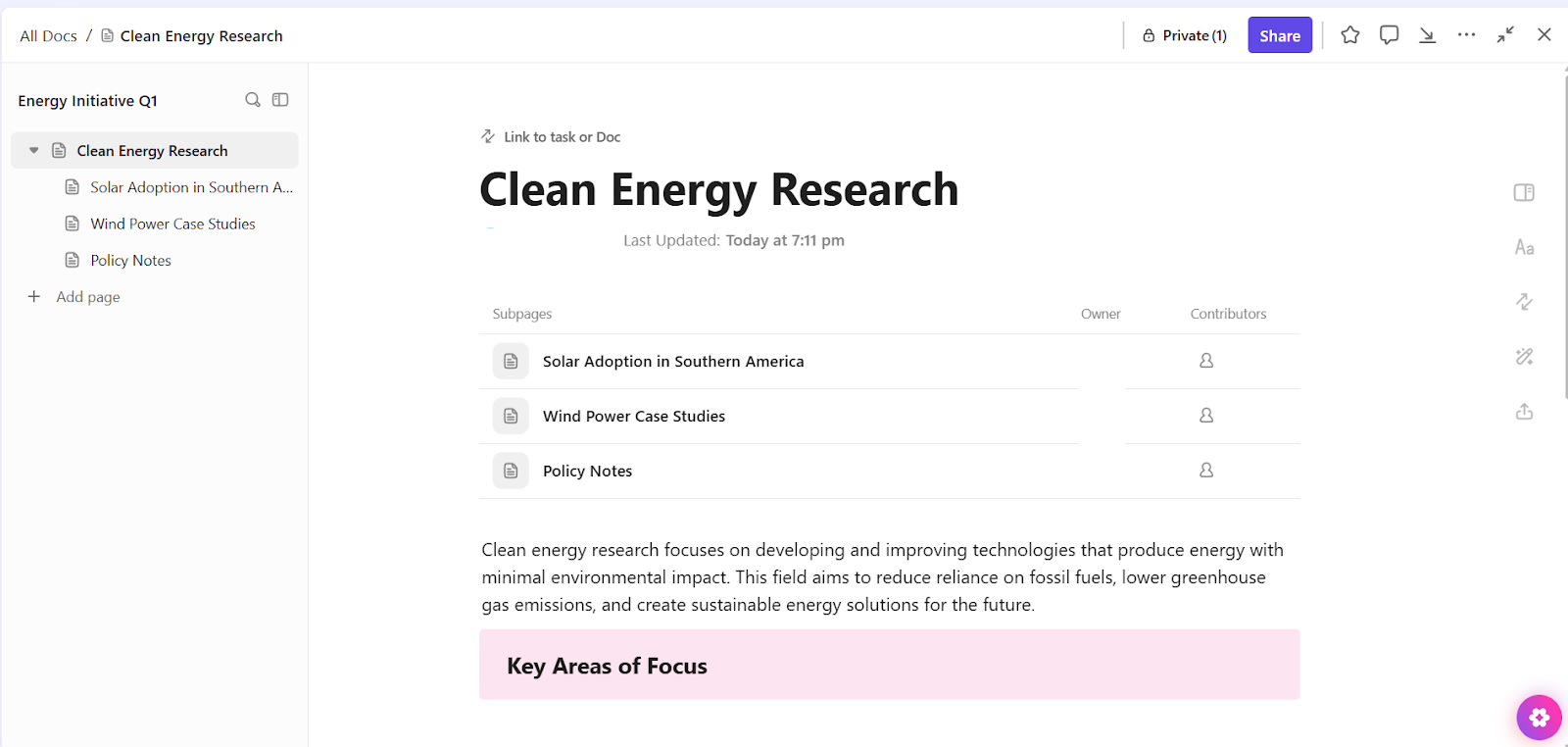

fromClickUp
10 months ago13 Best AI Intranet Search Tools for 2025 | ClickUp
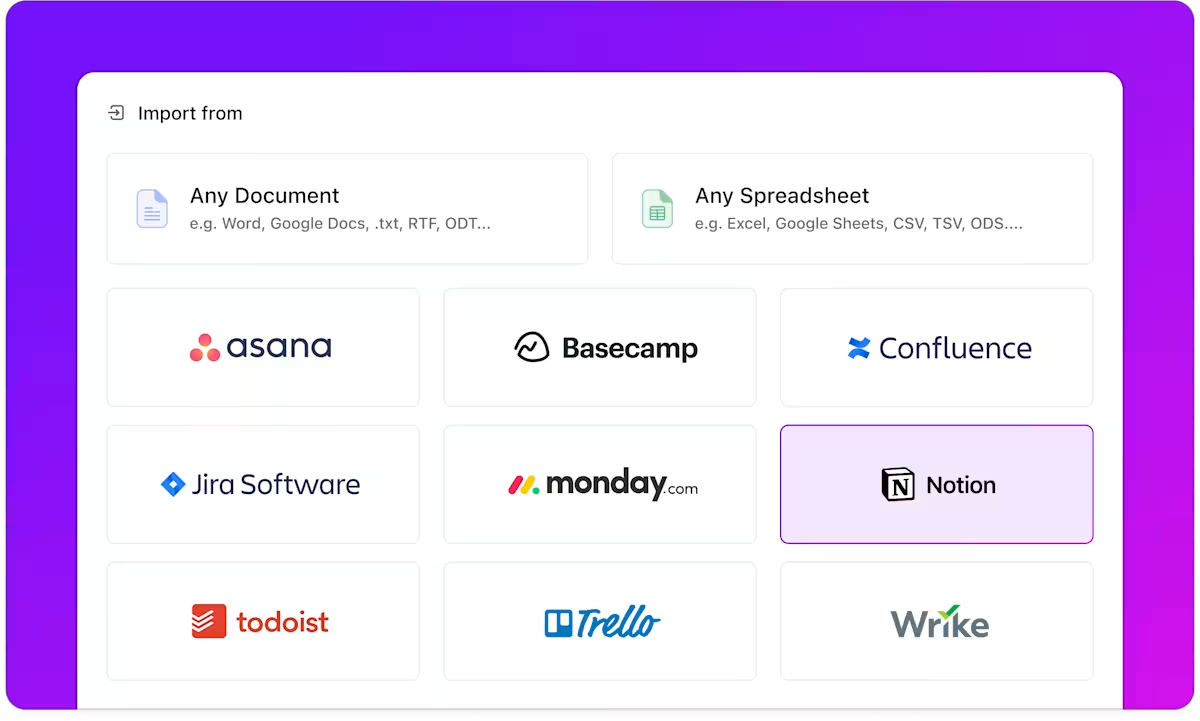
Traditional intranet search engines struggle to keep up with the growing complexity of internal knowledge, with information scattered across tools like Google Drive, Notion, SharePoint, Confluence, Slack, and your project management platform.
Artificial intelligence
Business intelligence
fromNew Relic
11 months agoHow New Relic Catalogs improves developer productivity
Improving documentation and knowledge access can reduce incident response times.
Centralized catalogs can enhance engineering productivity by eliminating knowledge silos.
Onboarding processes can be streamlined with better system clarity and visibility.
Business intelligence
fromLondon Business News | Londonlovesbusiness.com
1 year agoThe power of knowledge management: How companies can improve efficiency and innovation - London Business News | Londonlovesbusiness.com
Knowledge management is crucial for success in modern business by enabling efficient data sharing and fostering a culture of continuous learning.
Artificial intelligence
fromInfoQ
1 year agoDomain-Driven RAG: Building Accurate Enterprise Knowledge Systems Through Distributed Ownership
Modular Retrieval Augmented Generation (RAG) applications enhance accuracy by utilizing dedicated domain experts for ownership.
Effective metadata usage is crucial for routing queries to suitable RAG applications.
Domain experts need to curate content and design system prompts for technical precision.
RAG capabilities should integrate into workflows rather than exist as separate tools.
[ Load more ]