#model-context-protocol
#model-context-protocol
[ follow ]


fromnews.bitcoin.com
1 month ago1inch Business Launches Model Context Protocol for Agentic DeFi Trading
The integration allows developers to build goal-oriented workflows where agents plan and execute swaps across the 1inch network using the Swap Application Programming Interface (API). This update provides rapid access to a suite of 15 APIs, including Portfolio and Gas Price tools, reducing integration time from days to minutes.
Business intelligence
#ai-agents
Marketing tech
fromDigiday
1 month agoHow new infrastructure, like the Model Context Protocol, is reshaping marketing workflows
AI agents require strong foundational infrastructure, structured context, and clear guardrails to deliver marketing value, with the Model Context Protocol emerging as an open standard to connect agents with legacy systems and data sources.

fromInfoQ
6 months agoArtificial intelligence
The Architectural Shift: AI Agents Become Execution Engines While Backends Retreat to Governance
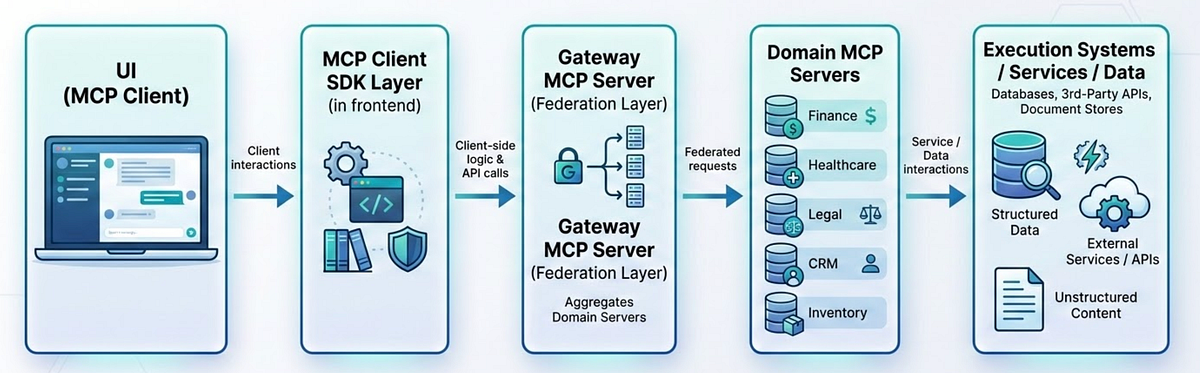
AI agents are becoming primary operational engines in enterprise software, using protocols like MCP to execute actions while backends focus on governance and permissions.
Marketing tech
fromDigiday
1 month agoHow new infrastructure, like the Model Context Protocol, is reshaping marketing workflows
AI agents require strong foundational infrastructure, structured context, and clear guardrails to deliver marketing value, with the Model Context Protocol emerging as an open standard to connect agents with legacy systems and data sources.

#ai-integration
Marketing tech
fromAdExchanger
2 months agoUnderstanding MCP, The 'Universal Adapter' For AI In Advertising | AdExchanger
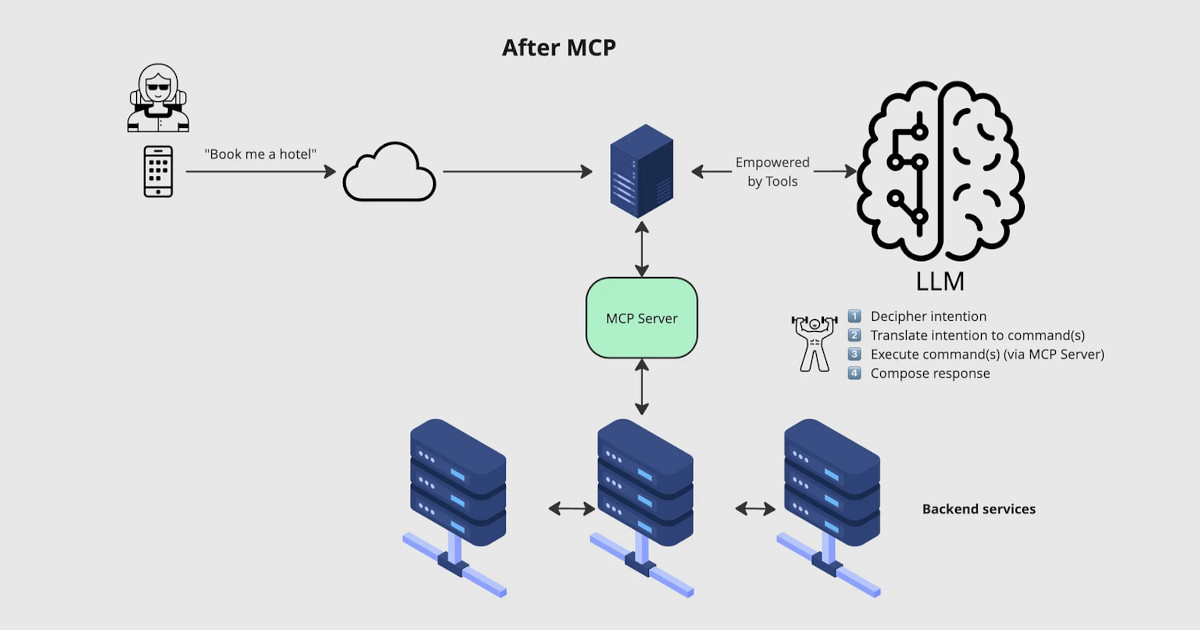
Model Context Protocol (MCP) is an open-source specification enabling large language models to connect with other software predictably, allowing AI to perform tasks across different systems without custom integrations for each use case.

Marketing tech
fromAdExchanger
2 months agoUnderstanding MCP, The 'Universal Adapter' For AI In Advertising | AdExchanger
Model Context Protocol (MCP) is an open-source specification enabling large language models to connect with other software predictably, allowing AI to perform tasks across different systems without custom integrations for each use case.
Artificial intelligence
fromTNW | Artificial-Intelligence
1 month agoRise of model context protocol in the agentic era
Model Context Protocol (MCP) enables communication between AI agents and external data sources, functioning as a protocol for LLMs similar to how APIs facilitate data transfer between systems, but designed specifically for AI agents rather than developers.
#ai-infrastructure


Marketing tech
fromExchangewire
2 months agoFreeWheel Launches AI Agent Infrastructure for Premium Video Ads, Pilots with PMG
FreeWheel launches AI agent infrastructure with Model Context Protocol Server and Intelligence tools to automate streaming advertising workflows and optimize premium video transactions in real time.
Software development
fromInfoQ
2 months agoMicrosoft Launches MCP C# SDK v1.0, Bringing Full Support for Latest Protocol Specification
Microsoft released MCP C# SDK version 1.0 with enhanced authorization, icon support, incremental scope consent, URL mode elicitation, and tool calling capabilities for .NET developers.
Web development
fromInfoWorld
2 months agoMCP C# SDK 1.0 arrives with improved authorization server discovery
Microsoft released MCP C# SDK 1.0 with full support for the 2025-11-25 MCP Specification, enabling developers to build secure MCP servers and clients in .NET with enhanced authorization server discovery capabilities.
fromThe Hacker News
2 months agoAI Agents: The Next Wave Identity Dark Matter - Powerful, Invisible, and Unmanaged
By providing structured access to applications, APIs, and data, MCP enables prompt-driven AI agents that can retrieve information, take action, and automate end-to-end business workflows across the enterprise. This is already showing up in production through horizontal assistants and custom vertical agents like Microsoft Copilot, ServiceNow, Zendesk bots, and Salesforce Agentforce.
Artificial intelligence
Artificial intelligence
fromInfoQ
2 months agoGoogle Brings Its Developer Documentation Into the Age of AI Agents
Google's Developer Knowledge API with Model Context Protocol server enables AI tools to access real-time, accurate developer documentation, preventing outdated or incorrect code generation from language models.
fromMedium
2 months agoTop 7 MCP for Product Designers
Model Context Protocol (MCP) is a technology that enables AI models to connect with external tools and data sources (such as GitHub, Slack, databases, and documentation systems). In this article, I want to explore my top 7 favorite MCPs you can use in your design process. I will cover not only benefits but also limitations of the each MCP so you will have a clear idea about what you can & cannot do with it.
Artificial intelligence








fromTechRepublic
3 months ago10K Claude Desktop Users Exposed by Zero-Click Vulnerability
LayerX researchers found that a single malicious Google Calendar event can trigger remote code execution on Claude Desktop systems, enabling silent takeover at scale. "If exploited by a bad actor, even a benign prompt ("take care of it"), coupled with a maliciously worded calendar event, is sufficient to trigger arbitrary local code execution that compromises the entire system," said LayerX researchers in their analysis.
Information security

fromInfoQ
3 months agoXcode 26.3 Brings Integrated Agentic Coding for Anthropic Claude Agent and OpenAI Codex
The latest release of Xcode, Xcode 26.3, extends support for coding agents, such as Anthropic's Claude Agent and Open's Codex, helping developers tackle complex tasks and improve their productivity. With agentic coding, Xcode can work with greater autonomy toward a developer's goals - from breaking down tasks to making decisions based on the project architecture and using built-in tools. The new release expands the agentic coding capabilities introduced in Xcode 26 by providing coding agents with access to more Xcode's features.
Software development


Artificial intelligence
fromComputerWeekly.com
3 months agoForward Networks claims first network digital twin for enterprises | Computer Weekly
Forward AI is a mathematically accurate network digital twin using agentic AI to provide verified, evidence-backed answers and automate network, security, and cloud operations.
DevOps
fromThe NodeSource Blog - Node.js Tutorials, Guides, and Updates
6 months agoFrom Observability to Pull Request: N|Solid 6.3.1 Brings AI-Driven Performance Fixes to GitHub
N|Solid 6.3.1 integrates MCP and GitHub PR support, allowing its AI optimization engine to securely create benchmarked pull requests for validated performance improvements.

fromMedium
5 months agoBridging AI and AWS: A Deep Dive into Using Model Context Protocol (MCP) for Intelligent Cloud...
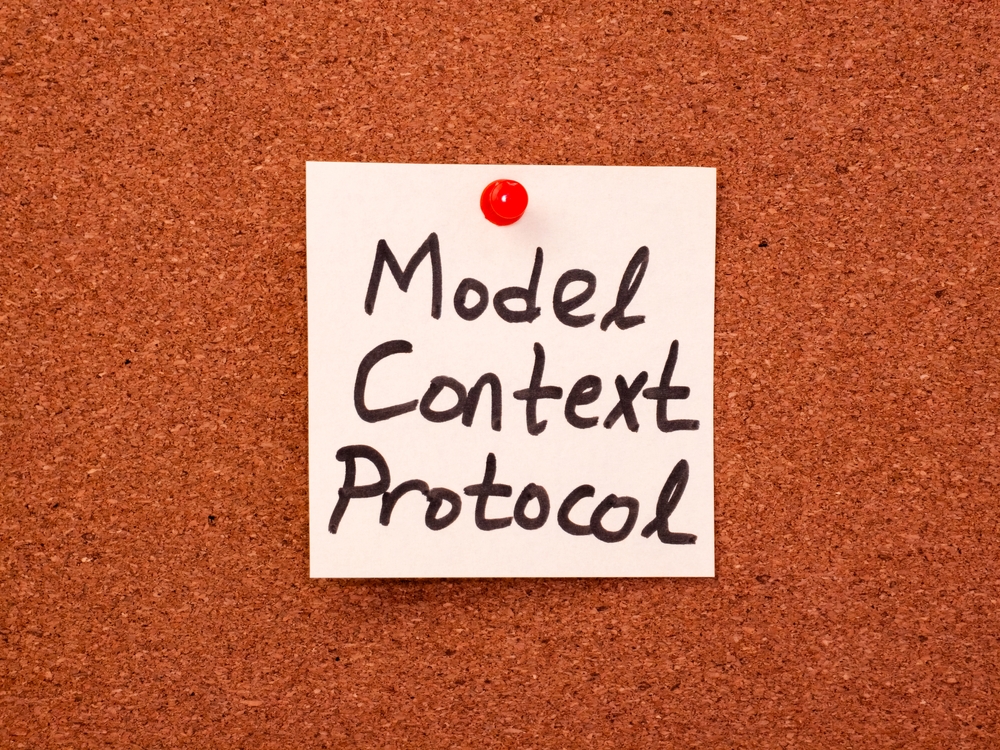
MCP is a standardized protocol that lets AI models securely connect to external data sources and tools. Think of it as a translator between AI models and your infrastructure. Without MCP, you'd need to: Manually format data for AI models Handle authentication and security yourself Build custom integrations for each service Manage complex API interactions With MCP, you get: A standardized way for AI to access your data Built-in security and authentication Real-time data access without exposing credentials Contextual responses based on live infrastructure data
Artificial intelligence


fromTheregister
5 months agoWindows Insiders get a glimpse of Redmond's agentic future
Microsoft has begun rolling out a public preview of native support for the Model Context Protocol (MCP) in the latest Windows 11 Insider builds, edging its much-touted "agentic OS" vision closer to reality. The update is rolling out to Windows Insiders on the Dev and Beta channels as part of build 26220.7344 and provides insight into where Microsoft is going with the technology.
Artificial intelligence
fromInfoWorld
5 months agoThe first building blocks of an agentic Windows OS
One concern many users have about AI is that often their data leaves their PC and their network, with inferencing happening in the cloud. They have big questions about data protection. That's one of the main drivers for Microsoft's Copilot+ PCs; the neural processing units that are built-in to the latest CPU systems on a chip run inferencing locally using small language models (SLMs) and other optimized machine-learning tools.
Artificial intelligence
fromTechzine Global
5 months agoOpenAI Codex CLI contained dangerous MCP security gap
This happened via the Model Context Protocol, intended to integrate external tools into the Codex environment. The CLI loaded MCP configurations from a .codex/config.toml file and executed the commands defined therein immediately upon startup. There was no approval prompt, no validation, and no check when the commands changed. MCP itself does not contain extensive built-in security, even after a series of updates.
Information security
fromInfoQ
5 months agoDocker Releases Desktop 4.50, Adds Free Debugging Tools and AI-Native Enhancements
Docker recently announced the release of Docker Desktop 4.50, marking another update for developers seeking faster, more secure workflows and expanded AI-integration capabilities. The release introduces a free version of Docker Debug for all users, deeper IDE integration (including VSCode and Cursor), improved multi-service to Kubernetes conversion support, new enterprise-grade governance controls, and early support for Model Context Protocol (MCP) tooling.
DevOps
fromIT Pro
5 months agoWant to get the most out of Anthropic's Claude AI assistant? This new training course will give you prompt engineering tips and how to use Claude Code
direct, hands-on experience with Claude and help them build the confidence and skills to collaborate effectively with AI
Artificial intelligence
fromMedium
5 months agoDear LLM, here's how my design system works
They're brilliant, frankly, work all hours and can write boilerplate code in their sleep. They're also a bit... literal. This new team member is an AI agent, and it's changing how we go from design to code. But here's the reality check as Figma's recent AI report ↗ found that while 68% of developers are using AI to write code, only 32% actually trust the output. The problem isn't the AI's ability to write code, it's the AI's ability to understand context.
UX design
fromTechzine Global
5 months agoGoogle gives concrete guidance with Unified Security Recommended
There are plenty of choices for businesses when it comes to security. One could say there are too many of them in the public cloud domain for little overall gain. Google wants to ensure that customers can trust those choices by guaranteeing interoperability and integration. In said attempt, it has unveiled the newly launched Unified Security Recommended program. CrowdStrike, Fortinet, and Wiz are the first to join in.
Information security
fromGitHub
6 months agoGitHub - mcpland/testing-mcp: Let LLMs author your integration tests-E2E-style.
Testing MCP solves this by giving AI assistants live access to your test environment: AI sees actual page structure (DOM), console logs, and rendered output AI executes code directly in tests without editing files AI knows exactly which testing APIs are available (screen, fireEvent, waitFor, etc.) You iterate faster with real-time feedback instead of blind guessing View live page structure snapshots, console logs, and test metadata through MCP tools. No more adding temporary console.log statements or running tests repeatedly.
Software development
fromZDNET
6 months agoSUSE Linux Enterprise Server 16 lands - with AI and EU support baked in
Lots of companies are announcing AI this and AI that, but few of them offer more than new AI lipstick on an old pig when you look at them closely. Then, there's what SUSE is doing with its release of SUSE Linux Enterprise Server 16 (SLES 16), available today. This new version is positioned as an AI-ready operating system tailored to the demands of today's hybrid cloud, data center, and edge computing environments.
EU data protection
fromMedium
1 year agoAI Coding Assistants: MCP-Powered Extensions vs. Fully Integrated Platforms
The Model Context Protocol (MCP) is an open standard from Anthropic, designed to facilitate seamless integration between AI models and external systems. By using standardized interfaces, MCP enables AI coding assistants to interact with various tools, such as version control systems, CI/CD pipelines, and even web browsers, without requiring native support for each integration. MCP ensures extensibility and interoperability, making it a flexible solution for developers who need AI-powered coding assistance beyond predefined environments.
Artificial intelligence
fromInfoQ
6 months agoMCP Support in Visual Studio Reaches General Availability
Microsoft announced in August 2025 that support for the Model Context Protocol (MCP) is generally available in Visual Studio. MCP enables AI agents within Visual Studio to connect to external tools and services via a consistent protocol. The announcement notes that Visual Studio now provides new means to configure and manage MCP servers. MCP, introduced by Anthropic in 2024, is an open standard that simplifies interactions between AI‑enabled development workflows and external systems such as databases, code search engines and deployment pipelines.
Software development
Artificial intelligence
fromInfoQ
6 months agoGoogle's Open Source Gemini CLI Extensions Let Developers Build Custom AI-Powered Workflows
Gemini CLI Extensions provide an open-source playbook-based framework enabling modular, contextual AI integrations with external developer tools and a community extension catalog.
fromInfoQ
6 months agoPaper2Agent Converts Scientific Papers Into Interactive AI Agents
A research team from Stanford University has released Paper2Agent, a framework that automatically converts scientific papers into interactive AI agents. The system, introduced in a recent paper, aims to make research methods more accessible by transforming traditional publications into dynamic entities that can execute analyses, reproduce results, and respond to new scientific queries through natural language interaction. Paper2Agent builds on the Model Context Protocol (MCP), a standard that allows large language models to connect with external tools and datasets.
Artificial intelligence
fromTechzine Global
7 months agoOpenAI introduces no-code agent builder AgentKit and Apps in ChatGPT
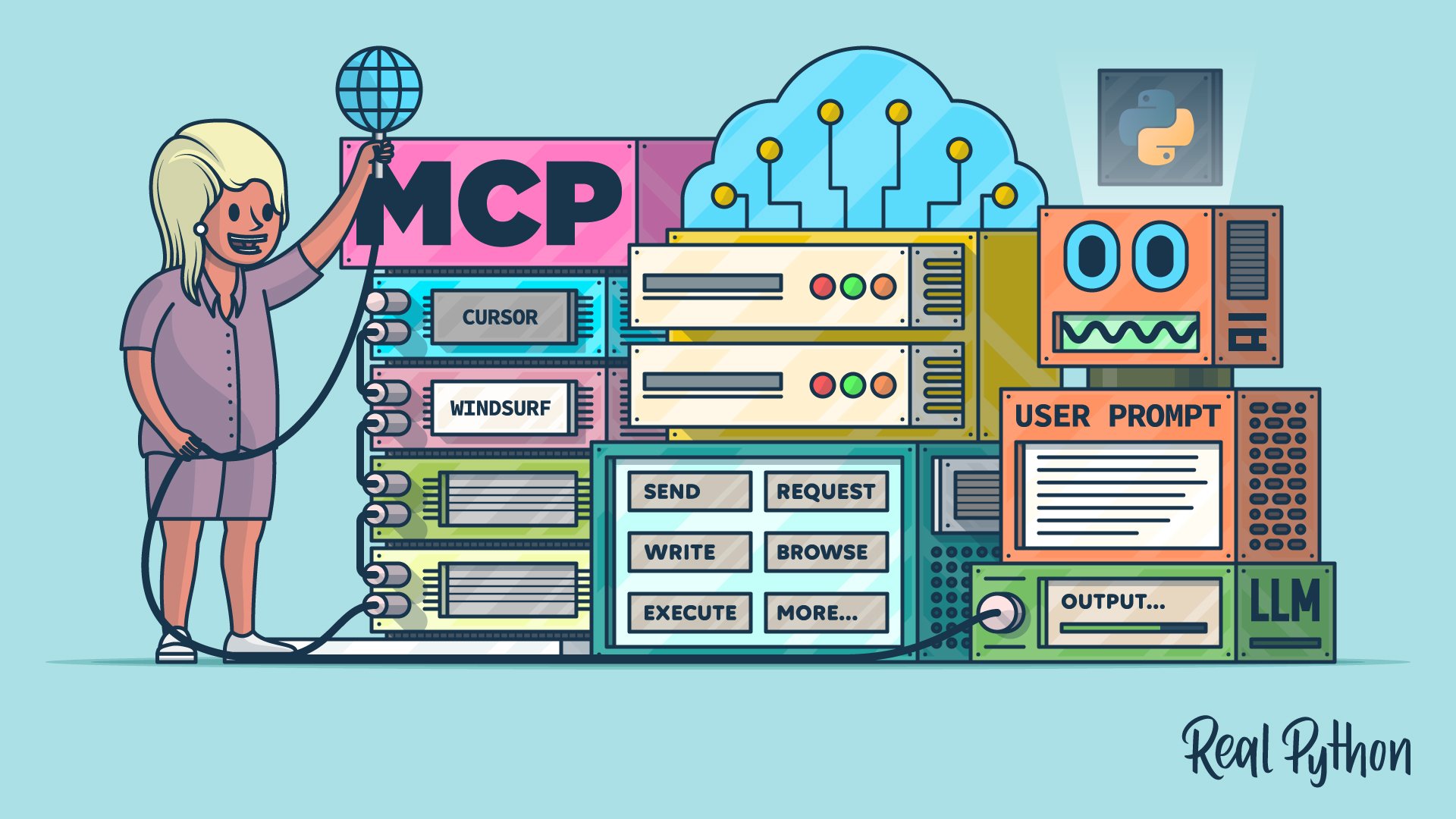
According to OpenAI CEO Sam Altman, AgentKit is a visual tool for quickly building AI agents. "AgentKit is a complete set of building blocks available in the OpenAI platform designed to help you take agents from prototype to production. It is everything you need to build, deploy, and optimize agent workflows." He further states that AI is becoming increasingly capable, from a system you can ask anything to a system that can do everything for you. According to Altman, there is a lot of talk about AI agents, but they remain underutilized. He wants to solve that with AgentKit.
Artificial intelligence

Artificial intelligence
fromTechCrunch
7 months agoGoogle makes real-world data more accessible to AI - and training pipelines will love it | TechCrunch
Google's Data Commons MCP Server enables natural-language access to structured public datasets, grounding AI with verifiable real-world statistics for improved training and reduced hallucinations.
Artificial intelligence
fromRealpython
7 months agoEpisode #266: Dangers of Automatically Converting a REST API to MCP - The Real Python Podcast
Convert REST APIs to MCP by adapting endpoints to agent interaction models, avoiding polluting agent context with irrelevant state and focusing on context-aware operations.


fromTheregister
7 months agoFull MCP support beta for ChatGPT 'powerful but dangerous'
OpenAI has added a beta of Developer mode to ChatGPT, enabling full read and write support for MCP (Model Context Protocol) tools, though the documentation describes the feature as dangerous. Developer community lead Edwin Arbus said that "in developer mode, developers can create connectors and use them in chat for write actions (not just search/fetch). Update Jira tickets, trigger Zapier workflows or combine connectors for complex automations." Limitations in the initial beta are that developer mode does not work in Team workspaces or in project chats.
Artificial intelligence
[ Load more ]