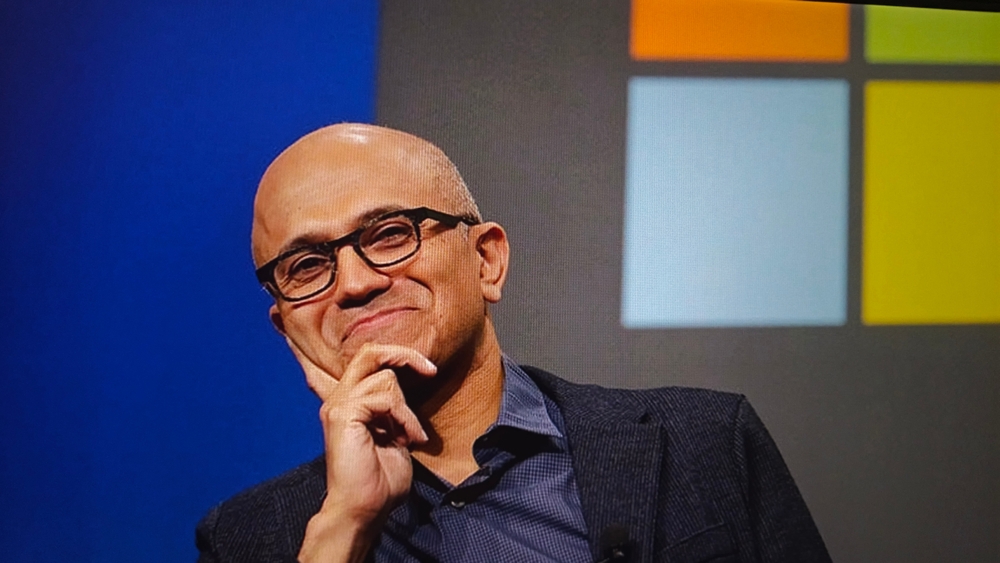
Google has been on a three-month tear since its last check-in, launching Gemini 3 to much fanfare and joining the $4 trillion market-cap club. The string of successes put it at the front of the highly competitive AI race. (A quick aside on these arbitrary rankings. You could argue Nvidia's the biggest winner of the AI race, but it's really in its own bucket. I'm talking about companies with competing chatbots. No further questions at this time.)
Amazon has announced that its generative AI-powered digital assistant Alexa Plus is now available to all Prime members in the US via any Alexa-enabled device, Alexa.com, and the Alexa mobile app. If you don't have Prime, you can access the assistant on a new free tier on the web and app, or pay $20 a month for unlimited access to Alexa Plus, without Prime.
That was a year or so ago, and my first brush with what generative AI could do. Like many, I started using it for fun: planning trips, finding nineteenth century authors I could recommend to fantasy-loving students (a genre I don't read), and making a holiday card starring my dog, Harry. But as work piled up, I didn't have time for new toys, so now I use AI for work.
Kennedy has also called for overhauling the current safety monitoring system for vaccine injury data collection, known as Vaccine Adverse Event Reporting System, or VAERS, claiming that it suppresses information about the true rate of vaccine side effects. He has also proposed changes to the federal Vaccine Injury Compensation Program that could make it easier for people to sue for adverse events that haven't been proven to be associated with vaccines.
Sounds radical, doesn't it? The Touch Bar was such a waste of space on the MacBook Pro when it was first introduced exactly a decade ago in 2016. It shipped with a lot of potential but barely any real-world use, and Apple even considered swapping it out for a slot that housed the Apple Pencil back in 2021. While that feature never really came to pass, something else happened in 2021 that blew everyone's minds - OpenAI's Dall-E.
As Valentine's Day approaches, finding the perfect words to express your feelings for that special someone can seem like a daunting task - so much so that you may feel tempted to ask ChatGPT for an assist. After all, within seconds it can dash off a well-written, romantic message. Even a short, personalized limerick or poem is no sweat. But before you copy and paste that AI-generated love note, you might want to consider how it could make you feel about yourself.
Much of the conversation about how to work effectively with generative AI has focused on prompt engineering or, more recently, context engineering: the semi-technical skill of crafting inputs so that large language models produce useful outputs. These skills are helpful, but they are only part of the story.
OPINION - A few weeks ago, Al Jazeera Google Cloud as its primary technology provider for "The Core," a sweeping program designed to integrate generative artificial intelligence (AI) throughout its production process. The move, which further deepened the relationship between the two companies, should sound alarm bells for policymakers and anyone concerned with the accuracy, credibility, and transparency of the news media and information space, which impacts nearly every aspect of society.
An obvious and important caveat: neither our respondents nor we have a crystal ball, and nobody knows for sure what the future holds. Nonetheless, we found five recurring themes in their forecasts: Audiences will increasingly access news through AI There will be increased demand for verification work Automation and agents will reshape newsrooms Newsrooms will upskill and build AI infrastructure AI will further empower data journalists
At a time when memories are increasingly flattened into folders, feeds, and cloud backups, a new experimental device from MIT Media Lab proposes a far more intimate archive: scent. Developed by Cyrus Clarke, the Anemoia Device is a speculative yet functional prototype that translates photographs into bespoke fragrances using generative AI, inviting users not to view memories, but to inhabit them through the body.
Pantone's Color of the Year Concept: The Pantone company produces the Pantone Matching System (PMS) and the Pantone Fashion, Home + Interiors (FHI) System, proprietary color spaces. PMS is used primarily in graphics for printing, packaging, and digital media. FHI is used in a wide range of other industries including fashion, cosmetics, fabric, plastics, and paints. When Pantone PMS inks are applied to a physical color reproduction process, it is frequently possible to accurately match the colors from your digital data visualization to hard copy output...
A few years ago, engineering inside a company meant this:solve the problem that exists here. Even if the same problem had been solved elsewhere, we often didn't know.We didn't have access to that knowledge.We didn't have the tools.So we engineered our way through it. Engineering is always defined by the tools available and the impact they allow. And that's exactly why Generative AI changes things so fundamentally.
It did so with the blessing of engineers at NASA's Jet Propulsion Laboratory (JPL), who decided to delegate the meticulous work of route planning to Anthropic's AI model. This involves consulting orbital and surface imagery of Mars in order to set a series of waypoints to guide the rover's movements. Once plotted, this data gets transmitted about 140 million miles or 225 million kilometers - the average distance from Earth to Mars - where it's received by Perseverance as a navigational plan.
This article is not about AI. It's about why memory, not models, is the difference between compounding value and constant reset. It is about what happens when systems that sound intelligent cannot sustain continuity, and why that failure quietly breaks the economic logic of advertising. When continuity disappears, compounding stops. When meaning stops compounding, efficiency collapses. Spending rises, trust erodes, and the system looks like it is working right up until the moment it becomes unaffordable.
The stock prices of some major video game companies, including Take-Two Interactive, Roblox, and Unity, had notable declines on Friday, just a day after Google announced its Project Genie tool that lets users prompt AI to generate interactive experiences, Reuters reports. Take-Two's stock price closed at $220.30 (down 7.93 percent from yesterday), Roblox's closed at $65.76 (down 13.17 percent), and Unity's closed at $29.10 (down 24.22 percent).
The US is now leading a global surge in new gas power plants being built in large part to satisfy growing energy demand for data centers. And more gas means more planet-heating pollution. Gas-fired power generation in development globally rose by 31 percent in 2025. Almost a quarter of that added capacity is slated for the US, which has surpassed China with the biggest increase of any country.
The advertising industry has always been in the business of making things, such as the OOH billboard, the 30-second spot, the snappy social post, the standard website: final, finite assets polished and pushed into the world. Agencies were paid, often by the hour, for producing final versions of these things and then moved on to the next project. Even with generative AI entering the picture, much of the conversation remains focused on making those same things faster or cheaper.
In 2025, we rebuilt the foundations of our AI program [and] over the coming months, we're going to start shipping our new models and products, and I expect us to steadily push the frontier over the course of the new year. Our world-class recommendation systems are already driving meaningful growth across our apps and ads business, but we think that the current systems are primitive compared to what will be possible soon. Today, our systems help people stay in touch with friends, understand the world, and find interesting and entertaining content.
Federal and state governments have outlawed "revenge porn," the nonconsensual online sharing of sexual images of individuals, often by former partners. Last year, South Carolina became the 50th state to enact such a law. The recent rise of easy-to-use generative AI tools, however, has introduced a new wrinkle: What happens when those images look real but have been created by AI? What's lawful in the U.S. and who's responsible is not yet clear.
But as schools seek to navigate into the age of generative AI, there's a challenge: Schools are operating in a policy vacuum. While a number of states offer guidance on AI, only a couple of states require local schools to form specific policies, even as teachers, students, and school leaders continue to use generative AI in countless new ways. As a policymaker noted in a survey, "You have policy and what's actually happening in the classrooms-those are two very different things."
Publishers' adoption of generative AI is reducing the friction between content and format, making it easier for the same story to appear as shorter summaries, audio, or video, often in real time. To some publishers, a text article may soon be more of a vehicle for original reporting, not a final product. That information could become no longer available strictly in a static piece of content, but transformed into different shapes and formats, based on a reader's signals and preferences.
Adobe has improved the tools for Generative Fill, Generative Expand and Remove that are powered by its Firefly generative AI platform. Using these tools for image editing should now produce results in 2K resolution with fewer artifacts and increased detail all while delivering better matches for the provided prompts.
It can be hard sometimes to keep up with the deluge of generative AI in Google products. Even if you try to avoid it all, there are some features that still manage to get in your face. Case in point: AI Overviews. This AI-powered search experience has a reputation for getting things wrong, but you may notice some improvements soon. Google says AI Overviews is being upgraded to the latest Gemini 3 models with a more conversational bent.
Yahoo may not be the most headlined company in tech anymore, but its reach can't be denied. With nearly 250 million monthly users across the country and 700 million globally, it's still the second most popular email client in the world, and the third most popular search engine in the U.S. (even though that search engine has technically been powered by either Bing or Google since 2009).
Naturally, you might be inclined to perceive content creation as social media savviness and posting influencer-style content online, but that's not exactly what these professionals are after. By "content creation," it means turning leadership and industry-standard thinking into creative output that is structured in a way to grab attention and generate leads. It involves the ability to communicate and express ideas clearly online through multimodal formats and across texts and visuals.