#police-violence
#police-violence
[ follow ]
#ice #immigration-enforcement #minneapolis #nypd #protest #protests #alex-pretti #brooklyn #border-patrol


fromwww.aljazeera.com
1 month agoAt least eight killed as Brazilian police carry out lethal favela raid
Military police chief Marcelo Menezes Nogueira said that the raid resulted in a major armed confrontation. Dos Santos and six other suspected criminals were killed, and a local resident was reportedly caught in the crossfire after being taken hostage.
World news
Social justice
fromABC7 San Francisco
2 months agoNew Oakland exhibit throws 40th birthday celebration for Oscar Grant, years after fatal shooting
A new exhibit at the Black Panther Party Museum in Oakland presents Oscar Grant as a complete person through family photos and personal messages, countering mainstream narratives about his life and death.
fromwww.mercurynews.com
2 months agoBay Area mom fights for people with mental illness after son's police killing
Hall's son Miles was shot and killed by police a block from their home in Walnut Creek on June 2, 2019. The 23-year-old was gripped by symptoms of psychosis, believing he was Jesus and running around the neighborhood with a gardening tool that he said was his staff of God. Hall called 911 to get him medical help as a necessary step toward a conservatorship.
Mental health
fromwww.theguardian.com
2 months agoAn impossible' situation or unhinged' police? Inside the chaos at Sydney's anti-Herzog protest
A man in a white button-up shirt and suit trousers puts his hands in the air as a police officer grabs him. He appears to steady himself on the officer's shoulders. He's then punched multiple times by multiple officers. People watching on scream. It's one of the first violent acts that take place as New South Wales police attempt to disperse protesters demonstrating in central Sydney on Monday against the visit of the Israeli president, Isaac Herzog.
World news



fromwww.theguardian.com
3 months agoFrench riot officers go on trial accused of beating gilets jaunes protesters
Nine officers from the French riot police have gone on trial in Paris accused of beating peaceful protesters who were sheltering from teargas during the gilets jaunes (yellow vests) anti-government demonstrations in 2018. The case at Paris's criminal court is one of the biggest trials over alleged police violence during the unrest in 2018 and 2019, when hundreds of thousands of protesters in fluorescent jackets took to the streets over rising fuel taxes in what morphed into broader anti-government protests against the president, Emmanuel Macron.
France news

US politics
fromwww.theguardian.com
3 months agoI knew Trump would target Minnesota. I didn't expect this level of violence | Rachel Leingang
Aggressive federal immigration enforcement in Minnesota resulted in deaths, mass detentions and deportations, and sparked widespread local resistance and international condemnation.
Left-wing politics
fromConsequence
3 months agoThe Lesson of Niemoller, Rewritten on the Streets of Minneapolis (Guest Editorial)
A Minneapolis execution triggered Holocaust memories for Steve Rapport, connecting contemporary violence to historical trauma while revealing differences in who is targeted by state violence.
fromwww.mercurynews.com
3 months agoAs officials disparage Pretti and Good, families of Black people killed by police have deja vu
Black families who have lost loved ones to police violence said the killings in Minnesota have brought back painful memories of their own fights for justice as law enforcement agencies spun up narratives to suggest officers had no other choice but to kill their relatives. And these law enforcement agencies often make no effort to publicly correct misstatements or falsehoods that might have impact on a fair justice process, experts said.
Social justice
fromKqed
3 months agoA New Art Installation Celebrates Oscar Grant's 40th Birthday | KQED
The installation takes the form of a phone booth that displays intimate family photos and birthday balloons. By lifting the phone receiver, audiences are able to hear audio recordings submitted by loved ones and community members, sharing their sentiments about the man whose life was stolen 17 years ago. "If you want to see something that's amazing," Johnson tells me during a recent conversation, "go look at the booth."
Social justice
US politics
fromAdvocate.com
3 months agoTim Cook and Sam Altman refuse to condemn Trump admin. after Alex Pretti's killing
U.S. tech leaders publicly balance conciliatory messages to employees and engagement with President Trump after a contentious White House screening and a fatal Minneapolis shooting.
fromThe New Yorker
3 months agoMinneapolis Is Standing Up for America
"Stand up for America," Jacob Frey, the mayor of Minneapolis, implored on Saturday, after federal agents shot to death another one of his constituents. "Recognize that your children will ask you what side you were on. Your grandchildren will ask you what you did to act to prevent this from happening again-to make sure that the foundational elements of our democracy were rock solid. What did you do to protect your city? What did you do to protect your nation?"
US politics
fromTruthout
3 months agoHouse Democrat Says Abolishing ICE Isn't Enough - DHS Must Go, Too
In a social media post on Monday about federal officers' killings of Renee Nicole Good and Alex Pretti, Rep. Delia C. Ramirez, a Democrat representing part of Chicago, pointed out that DHS's purpose since its inception in 2002 has been to oppress those in the U.S. "The officer who shot Alex worked for DHS for 8 years. The officer who shot Renee worked for DHS for over 10 years.
US politics


fromLGBTQ Nation
3 months agoFeds peppersprayed this award-winning out journalist while she reporterd on Alex Pretti's death - LGBTQ Nation
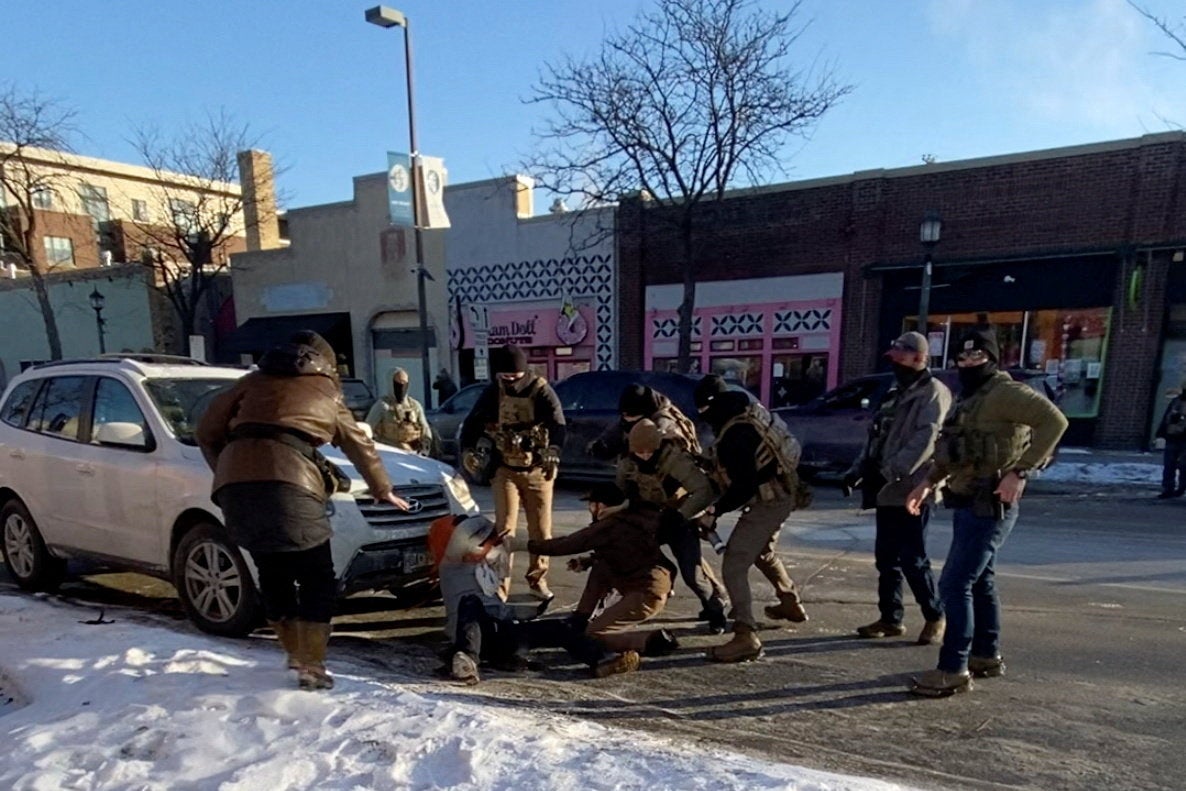
As has been widely reported, Pretti, a 37-year-old U.S. citizen and intensive care nurse who worked at the Minneapolis VA hospital, was killed Saturday morning by federal agents who reportedly shot him 10 times after they'd already wrestled him to the ground and disarmed him. Pretti's death - the second at the hands of federal agents in Minneapolis this month - and the Trump administration's lies about the circumstances that led to it have sparked outrage and protest, both in Minnesota and around the country.
LGBT
fromThe Local France
3 months agoThousands protest in Paris over death of migrant worker
The demonstration gathered at the shelter in the northeast of the capital where the man, El Hacen Diarra, 35, had been living and in front of which he was violently arrested by police on the night of January 14th. Video filmed by neighbours, shared on social media, showed a policeman punching what appears to be a man on the ground as another officer stands by and watches.
France news
fromSCSJ
3 months agoCharges Dropped against UNCG Student, Partner After Violent Arrest
"Dismissal of the criminal charges is the appropriate outcome here," said Dominique Erney, Counsel, Justice System Reform at SCSJ. "Overly aggressive policing undermines public safety. Here, it placed our clients in a dangerous situation that was not of their making. They should never have been forced to endure this ordeal."
Law
fromInside Higher Ed | Higher Education News, Events and Jobs
3 months agoIn Times of Crisis, Actions Speak Louder Than Words
Colleges and universities hold huge influence in their communities. They can mediate differences and foster healthy debate. Indeed, several institutions have established schools of civic life that would, presumably, raise the alarm when constitutional rights are being violated. Academic research influences policy and informs public conversations. Scholars can put this violence into context and help remind us that this is not OK.
Higher education
US politics
fromwww.theguardian.com
3 months agoAfter the shooting of Renee Good, we see dissent can be fatal in Trump's America all bets are off | Emma Brockes
Casual sarcasm directed at law enforcement can lead to escalation and deadly outcomes, reflecting unequal civic protections and fear of authorities for marginalized people.

[ Load more ]