Online learning
fromMedium
6 hours agoDesigning adaptive teams
Organizations must cultivate a collective capacity to learn faster than competitors to achieve sustainable competitive advantage.
The most dangerous assumption in quality engineering right now is that you can validate an autonomous testing agent the same way you validated a deterministic application. When your systems can reason, adapt, and make decisions on their own, that linear validation model collapses.
Microsoft did not send me any emails or prior warnings. I have received no explanation for the termination and their message indicates that no appeal is possible. I have tried to contact Microsoft through various channels but I have only received automated replies and bots. I was unable to reach a human.
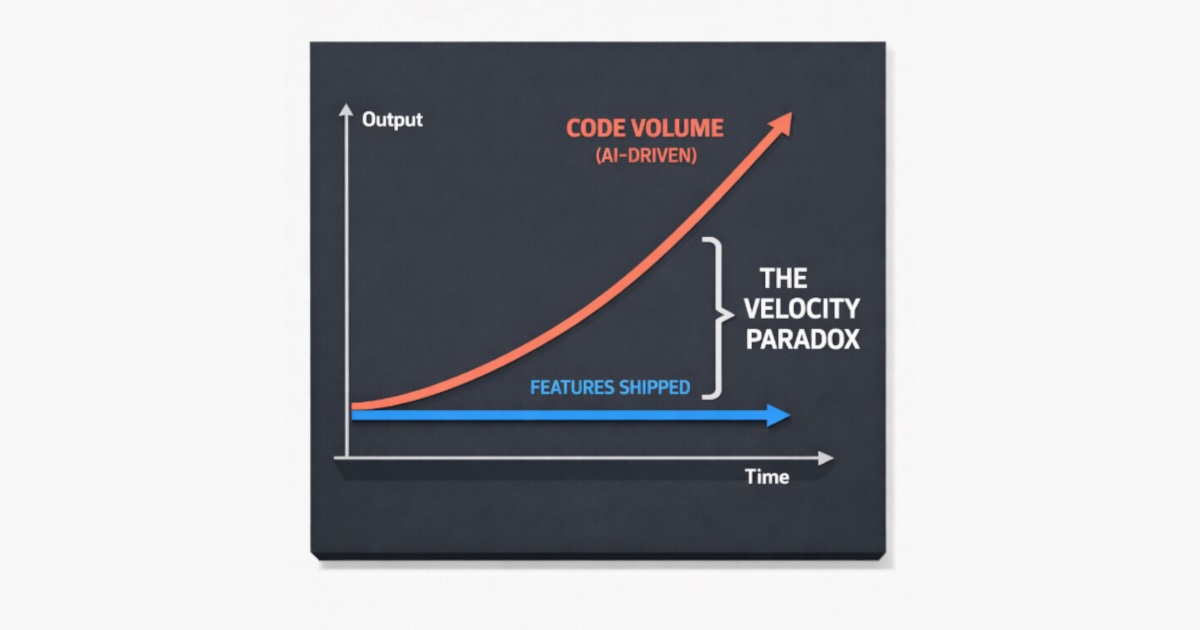
This extends to the software development community, which is seeing a near-ubiquitous presence of AI-coding assistants as teams face pressures to generate more output in less time. While the huge spike in efficiencies greatly helps them, these teams too often fail to incorporate adequate safety controls and practices into AI deployments. The resulting risks leave their organizations exposed, and developers will struggle to backtrack in tracing and identifying where - and how - a security gap occurred.
The real cost of poor observability isn't just downtime; it's lost trust, wasted engineering hours, and the strain of constant firefighting. But most teams are still working across fragmented monitoring tools, juggling endless alerts, dashboards, and escalation systems that barely talk to one another, which acts like chaos disguised as control. The result is alert storms without context, slow incident response times, and engineers burned out from reacting instead of improving.
Software development used to be simpler, with fewer choices about which platforms and languages to learn. You were either a Java, .NET, or LAMP developer. You focused on AWS, Azure, or Google Cloud. Full-stack developers learned the intricacies of selected JavaScript frameworks, relational databases, and CI/CD tools. In the best of times, developers advanced their technology skills with their employer's funding and time to experiment. They attended conferences, took courses, and learned the low-code development platforms their employers invested in.
Industry professionals are realizing what's coming next, and it's well captured in a recent LinkedIn thread that says AI is moving on from being just a helper to a full-fledged co-developer - generating code, automating testing, managing whole workflows and even taking charge of every part of the CI/CD pipeline. Put simply, AI is transforming DevOps into a living ecosystem, one driven by close collaboration between human judgment and machine intelligence.
For years, reliability discussions have focused on uptime and whether a service met its internal SLO. However, as systems become more distributed, reliant on complex internet stacks, and integrated with AI, this binary perspective is no longer sufficient. Reliability now encompasses digital experience, speed, and business impact. For the second year in a row, The SRE Report highlights this shift.
Central to the GA release is Agentic Chat. This functionality builds on the previously introduced Duo Chat but goes a step further by leveraging context from virtually every part of GitLab. Think of issues, merge requests, CI/CD pipelines, and security findings. Agentic Chat can not only advise, but also actually perform actions on behalf of developers, depending on the rights and approvals that have been set.