World politics
fromwww.aljazeera.com
8 hours agoChina's Xi expected to press Trump on Taiwan, tariffs during summit
Xi Jinping is expected to seek concessions on Taiwan and US tariffs during a summit with Donald Trump.
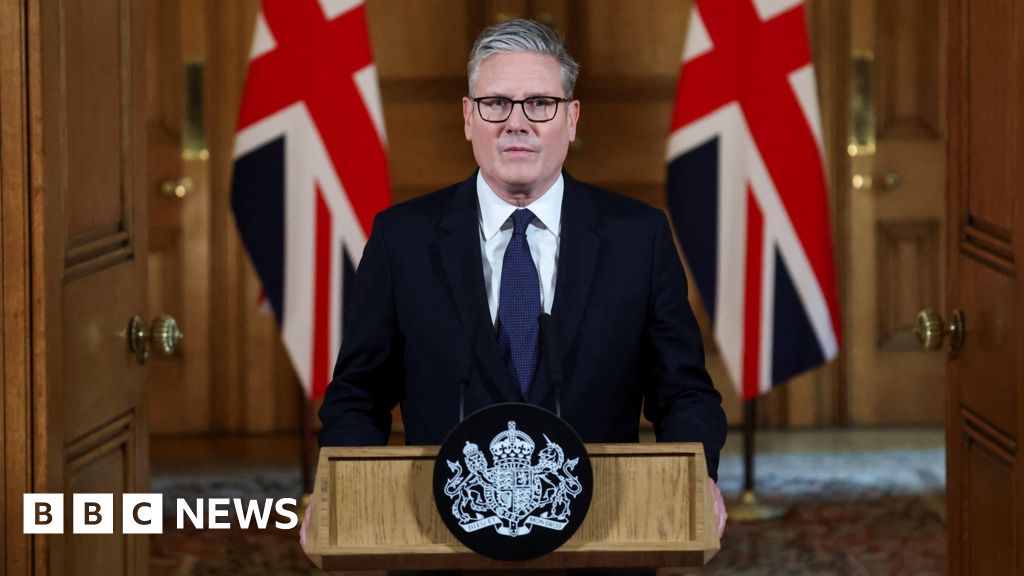
High-level diplomatic talks are underway after Donald Trump announced a global tariff increase to 15%, raising fresh uncertainty for British exporters. The UK Government says it is aiming to secure the "strongest possible trading position" for British firms amid what ministers describe as an evolving situation. Education Secretary Bridget Phillipson said businesses may face short-term uncertainty but insisted Britain expects preferential trade treatment to continue.
We're in a new phase of trade war uncertainty, after the supreme court blocked Donald Trump's sweeping global tariffs last Friday. With the president hitting back over the weekend, announcing a new temporary global tariff of 10%, then 15%, its clear that the White House is persisting with its policy of using trade levies to gain leverage over other countries.
Poilievre said Tuesday that he didn't agree with Jivani's assessment. "Canadians are legitimately upset by the unjustifiable tariffs and comments that the president has made," Poilievre told reporters on Parliament Hill. When asked if Jivani's comments might muddle the Conservative message on U.S. tariffs, Poilievre said the MP "speaks for himself, I speak for the party."
Following what was a period of high sales and rapid expansion, the market is contracting for a number of reasons. Alcohol consumption has declined in recent years, for one thing, but international response to U.S. tariffs has also hit bourbon sales hard, with exports of the liquor dropping significantly in 2025. Many icons of American whiskey have been affected, with Brown-Forman - parent company to Jack Daniel's, Woodford Reserve, and Old Forester, among others - laying off a significant portion of its workforce.
Honda reported Tuesday a 42% drop in profit for the nine months through December, compared to a year earlier, as U.S. President Donald Trump's tariffs hurt the Japanese automaker's earnings.Tokyo-based Honda Motor Co.'s profit over the three quarters totaled 465.4 billion yen ($3 billion), down from 805.2 billion yen.That marked the second straight year that profit declined during the period at Honda, the maker of the Accord sedan, Civic compact and Odyssey minivan.
The Wall Street Journal reported late last month that President Donald Trump's administration is "emboldened" by its kidnapping of Venezuelan President Nicolás Maduro and is now "searching for Cuban government insiders who can help cut a deal to push out" the government of Cuban President Miguel Díaz-Canel, who has expressed openness to talks with the US - but not under economic coercion.
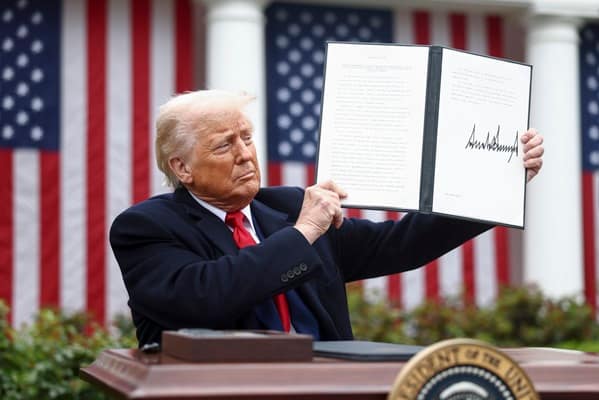
Mexico's president, Claudia Sheinbaum, has warned that Donald Trump's move to slap new tariffs on countries sending oil to Cuba could trigger a humanitarian crisis on the island, which is already suffering from chronic fuel shortages and regular blackouts. The US president signed an executive order on Thursday declaring a national emergency and laying the groundwork for such tariffs, ratcheting up the pressure to topple the communist government in Havana.
The mother of all trade deals' comes months after the United States slapped tariffs on India and the European Union. One of the biggest trade deals in history has been struck by India and the European Union, months after United States President Donald Trump hit both with tariffs. What's in the agreement and how much is driven by Washington's unpredictable measures?
By now we have grown accustomed to Trumps strategy of threatening nations with tariffs in a bid to get what he wants, but this occasion appears to have taken it a step too far. For many of the European leaders, this is a warning sign that their US partners are no longer reliable for as long as Trump is in power.
From reproductive rights to climate change to Big Tech, The Independent is on the ground when the story is developing. Whether it's investigating the financials of Elon Musk's pro-Trump PAC or producing our latest documentary, 'The A Word', which shines a light on the American women fighting for reproductive rights, we know how important it is to parse out the facts from the messaging.
We knew the story of the international rules-based order was partially false. That the strongest would exempt themselves when convenient. That trade rules were enforced asymmetrically. ... That international law applied with varying rigor depending on the identity of the accused or the victim,
From reproductive rights to climate change to Big Tech, The Independent is on the ground when the story is developing. Whether it's investigating the financials of Elon Musk's pro-Trump PAC or producing our latest documentary, 'The A Word', which shines a light on the American women fighting for reproductive rights, we know how important it is to parse out the facts from the messaging. At such a critical moment in US history, we need reporters on the ground.
Donald Trump's threat to impose fresh tariffs on eight European countries UK, Norway and six EU member states is a wrecking ball to the carefully stitched deals he concluded with those countries last summer. The two biggest voting blocs in the European parliament, the European People's Party (EPP) and the Socialists & Democrats (S&Ds), said on Saturday night the deal with the EU cannot be approved in the present circumstances.
The first year of Donald Trump's second term has been anything but calm amid a flurry of executive orders by the US president targeting alleged "opponents" at home and abroad, and negatively affecting transatlantic trade and business. Trump's so-calledLiberation Day announcement of "reciprocal tariffs" last April shocked governments and companies alike across the world, as did his crackdown on corporate diversity, equality and inclusion (DEI) initiatives.
Less than a year ago, automakers found themselves on the cusp of tariff hell. Car companies were suddenly hit with a gut-punch of tariffs on their supply chains and completed vehicles. The U.S. imposed some hefty import duties on all things China in the hopes of protecting domestic manufacturers. Now President Trump is welcoming Chinese cars into the U.S.as long as they build them here.
2026 is already shaping up to be a challenging year. Soft seasonal peak sales through November and December last year and increased staffing costs don't give a sturdy foundation for retailers and manufacturers to build on. However, there are some significant gains to be made, especially around tech improvements. In fact, Parcelhero will be unveiling its own AI-powered tracking and messaging services this year for individuals and growing businesses.
The deal, which comes as Brussels seeks new markets to offset US tariffs and reduce reliance on China for critical minerals, will open free trade with four South American countries. European Union ambassadors have given a provisional nod to the bloc's largest-ever agreement in terms of erased tariffs, opening the way to free trade with the Mercosur group of South American countries.
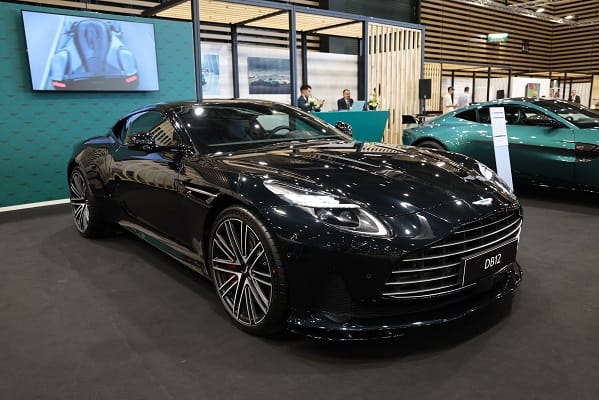
A report on the company's wholesale and retail sales reveals both decreased in the third quarter of fiscal year 2026 (FY26). Wholesales were down 43.3% compared to Q3 FY25 (at approximately 59,200 units), while retail sales were down 25.1% (at approximately 79,600 units). Although the report states this decrease was partially influenced by a "planned wind down of legacy Jaguar models ahead of the launch of new Jaguar," it also notes that production disruption caused by the previous year's cyberattack impacted these numbers.
Every morning at 7am, women gather outside clothing factories in Maseru, the capital of the southern African mountain kingdom of Lesotho, hoping to be offered work. However, since Donald Trump imposed swingeing global tariffs in April 2025, those opportunities have been fewer and farther between. Moleboheng Matsepe lost her full-time job sewing sports leggings for the California brand Fabletics in 2023. She was initially able to pick up three-month contracts, but has not had any work since September.
Copper had its best year since 2009, fueled by near-term supply tightness and bets that demand for the metal key in electrification will outpace production. The red metal has notched a series of all-time highs in an end-of-year surge, rallying 42% on the London Metal Exchange this year. That makes it the best performer of the six industrial metals on the bourse. Prices dipped 1.1% Wednesday, the last trading day of 2025.
Since returning to the White House in January, President Donald Trump has overturned decades of U.S. trade policy - building a wall of tariffs around what used to be a wide open economy. His double-digit taxes on imports from almost every country have disrupted global commerce and strained the budgets of consumers and businesses worldwide. They have also raised tens of billions of dollars for the U.S. Treasury.
The Scottish whisky market has slipped into a supply glut as US tariffs and falling demand weigh on the country's distilleries. Global scotch sales fell 3% in the first half of 2025, marking the third consecutive year of decline after decades of growth, according to the alcohol data provider IWSR. The slowdown comes as distilleries grapple with uncertainty around Donald Trump's trade tariffs, as well as declining rates of alcohol consumption.
The Canadian economy shrank by a greater-than-expected 0.3 per cent in October, the largest drop in almost three years, on weakness in both the goods and services sectors, official data showed on Tuesday. Analysts had forecast that growth would dip by 0.2 per cent from September as the economy continues to adjust to U.S. trade measures. Last month, Statistics Canada reported 0.2 per cent GDP growth for September, and Canada avoided a technical recession largely due to a surge in defence spending.