#higher-education-funding
#higher-education-funding
[ follow ]
#hispanic-serving-institutions #artificial-intelligence #student-loans #academic-freedom #philanthropy #hbcus

Higher education
fromInside Higher Ed | Higher Education News, Events and Jobs
1 month agoCalif. Community Colleges Scale Credit for Prior Learning
California is investing $15 billion in community colleges to implement AI-powered credit for prior learning at scale across 116 colleges serving 2.2 million students.
Higher education
fromInside Higher Ed | Higher Education News, Events and Jobs
1 month agoLabor Soliciting Applications for TRIO Grant on ED's Behalf
The Labor Department will administer TRIO Talent Search grants worth $175.2 million on behalf of Education Department to support disadvantaged youth in completing high school and college.
.png?trim=0,0,0,0&width=1200&height=800&crop=1200:800)





fromInside Higher Ed | Higher Education News, Events and Jobs
2 months agoHow Congress's Budget Could Hamper Trump ED Agenda
These new restrictions-which can be found throughout the appropriations bill for the Department of Education and other sections of the 11-part funding package that was signed into law last week-are part of what policy experts describe as a bipartisan attempt to rebuke the Trump administration's budget proposal and restore Congress's power of the purse. Historically, the language of these budget bills has largely stayed the same, serving as little more than a template into which lawmakers plug that year's dollar amounts and policy riders.
US politics
fromNature
3 months agoAI could transform research assessment - and some academics are worried
In 2023, Australia abandoned its expensive and bureaucratic scholar-led research-assessment programme. New Zealand followed suit soon after. The hope, according to a transition plan unveiled by the Australian federal government's Department of Education and the research sector, was to find a "more modern, data-driven approach". In the United Kingdom, where financial pressures on universities are especially acute, there are similar calls to reform the Research Excellence Framework (REF), the country's performance-based research-funding system.
Higher education
fromwww.npr.org
3 months agoBrown University pays out first workforce grants under deal with Trump
Brown reached an agreement with the Trump administration last summer to restore millions of dollars in federal research funding and to end federal investigations into the institution. In exchange, the university agreed to pay $50 million to organizations in Rhode Island focused on workforce training over the next 10 years. Several other universities reached similar deals with the administration to restore federal funding, though the details of what the schools would pay vary greatly.
US news
Higher education
fromInside Higher Ed | Higher Education News, Events and Jobs
3 months agoUniversity of Wisconsin-Madison Chancellor to Lead Columbia
Jennifer Mnookin will become Columbia University's next president, leaving her role as chancellor of the University of Wisconsin-Madison where she has served since 2022.


fromInside Higher Ed | Higher Education News, Events and Jobs
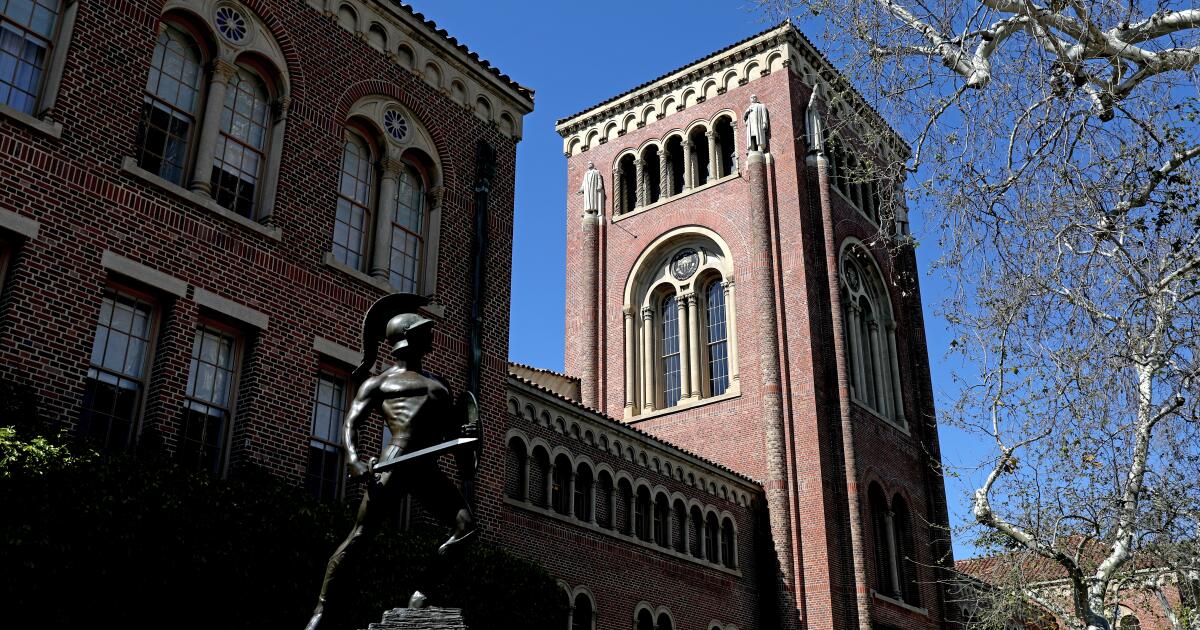
3 months agoUC Enrollment Reaches Record High
"These numbers reflect California's commitment to academic excellence, access, and innovation, values that have made the University of California the world's greatest research university," said UC president James B. Milliken. "The value of a UC degree is abundantly clear. An investment in UC is the best investment in the future of our students, California's workforce, and the state's economy."
Higher education
fromLos Angeles Times
4 months agoUC sets new record in California student enrollment as it weathers Trump challenges
These numbers reflect California's commitment to academic excellence, access, and innovation, values that have made the University of California the world's greatest research university,
Higher education
Higher education
fromInside Higher Ed | Higher Education News, Events and Jobs
5 months agoTexas Technical College Gets "Transformational" Endowment
Texas State Technical College will receive an $850 million endowment to fund capital improvements and expand workforce-focused programs despite outdated facilities and funding constraints.
Philosophy
fromThe Conversation
5 months agoColleges teach the most valuable career skills when they don't stick narrowly to preprofessional education
Professional graduate degrees generate substantial tuition revenue and prioritize workforce advancement, but they widen a divide with disciplines that foster critical thinking and civic capacities.


Higher education
fromInside Higher Ed | Higher Education News, Events and Jobs
5 months agoFor One Tribal College, $5M Gift is Transformative
Little Priest Tribal College received a $5 million unrestricted donation from MacKenzie Scott that will transform finances, expedite campus expansion, and expand trade and degree programs.




fromwww.independent.co.uk
5 months agoRachel Reeves urged to scrap international student levy over concerns for growth
Whether it's investigating the financials of Elon Musk's pro-Trump PAC or producing our latest documentary, 'The A Word', which shines a light on the American women fighting for reproductive rights, we know how important it is to parse out the facts from the messaging. At such a critical moment in US history, we need reporters on the ground. Your donation allows us to keep sending journalists to speak to both sides of the story.
UK politics
fromInside Higher Ed | Higher Education News, Events and Jobs
5 months agoED Grants Spark Concern Over Congressional Intent
A new grant competition from the Department of Education redirects federal funding intended for college student success programs to four areas aligned with the president's priorities. Critics say those four areas have little to do with access and retention. Congress appropriated $171 million for the Fund for the Improvement of Postsecondary Education (FIPSE) to be used toward seven established programs, including Basic Needs, Veteran Student Success and Rural Postsecondary Education Development.
Education
US politics
fromwww.mediaite.com
6 months agoTrump Defends Plan to Bring in Hundreds of Thousands of Chinese Students: I Know What MAGA Wants Better Than Anybody Else'
Trump defended admitting large numbers of Chinese students, arguing international enrollment is necessary to sustain many U.S. colleges and universities.
fromHarvard Gazette
6 months agoLeading FAS in period of major challenges, opportunity for change - Harvard Gazette
Leadership is a team sport," said Hoekstra, Edgerley Family Dean of the FAS. "In the FAS we have been working on big issues, from the state of discourse on our campus to academic rigor to real financial challenges. These aren't problems that any one person can solve. It's about working together and rowing in the same direction.
Higher education
fromInside Higher Ed | Higher Education News, Events and Jobs
6 months agoState Financial Aid Increased 12% in 2023-24
States awarded $18.6 billion in aid to students during the 2023-24 academic year, a 12 percent increase from the previous academic year, according to the National Association of State Student Grant and Aid Programs' annual report.
Higher education
fromInside Higher Ed | Higher Education News, Events and Jobs
6 months agoSurvey: Americans Overwhelmingly Oppose Trump Higher Ed Cuts
"There are a variety of very significant concerns that Americans have with higher education that are not unrelated to the topics the Trump administration cites or references as justifications for their crackdown," said Matt Baum, the Marvin Kalb Chair of Global Communications at the Harvard Kennedy School, a public policy professor and one of the survey researchers. Still, "the fact that Americans have these concerns doesn't necessarily translate to agreeing with the corrective measures the Trump administration is advocating and implementing."
US politics
fromwww.mercurynews.com
6 months agoBay Area universities losing millions in minority grant funding
Bay Area universities lost more than $2 million in funds after the Trump administration announced it was rerouting money meant for minority-serving institutions to charter schools and other educational programs, an analysis by Bay Area News Group has revealed. In September, the Department of Education announced it was ending $350 million in discretionary funding for several minority-serving grant programs, alleging the programs were racially discriminatory because qualifying schools must maintain a percentage of minority students in their total student enrollment.
Higher education




fromwww.mercurynews.com
7 months agoLetters: Gavin Newsom's funding threat sounds like simple extortion
Gov. Newsom is acting like an extortionist. His threat to withhold university funding unless schools publicly oppose President Trump's demands is political coercion. Public universities should not be strong-armed into adopting the governor's preferred positions. Their mission is education and open inquiry, not serving as instruments of partisan pressure. What makes this especially troubling is the hypocrisy. Newsom built his political brand by criticizing Trump for using federal funds as a political weapon.
US politics
fromInside Higher Ed | Higher Education News, Events and Jobs
7 months ago2 Institutions Receive Historic $50M Gifts
"Our 'why' is simple: to level the playing field in West Virginia and Appalachia," the Smiths said in a statement. "We hope this gift ensures that every student with the dream of an advanced degree has the opportunity and support to achieve it-while also showing what's possible for the future of higher education in our region and beyond."
Fundraising
fromInside Higher Ed | Higher Education News, Events and Jobs
7 months agoAI Teaching Learners Today: Pick Your Pedagogy
University budgets across the country are broken. Overall revenue and accumulated financial support appear to be declining for a wide variety of reasons. New funding policies, administrative reorganizations such as those at the Department of Education, lean fiscal times for states, diminished regard for higher learning, fewer requirements for degrees among employers hiring for entry-level positions and the impact of artificial intelligence all come together to reduce the pool of new students, tuition revenues and grants.
Higher education
US politics
fromInside Higher Ed | Higher Education News, Events and Jobs
8 months agoWhat to Know About House Republicans' Education Budget
House spending plan cuts the Education Department budget 15%, preserves Pell and TRIO, trims NIH funding, and advances some Trump priorities while blocking others.
fromInside Higher Ed | Higher Education News, Events and Jobs
11 months agoState Higher Ed Funding Rose Slightly Last Year
"State appropriations per student at community colleges dropped by 3 percent and rose 1.8 percent at four-year institutions, indicating a disparity in funding allocation."
Higher education
Non-profit organizations
fromNon Profit News | Nonprofit Quarterly
11 months agoAdvocates Mobilize to Stave Off Cuts to Federal Student Loan Programs - Non Profit News | Nonprofit Quarterly
The recent legislative changes threaten public service workers' access to loan forgiveness programs, impacting students and low-income communities.
[ Load more ]