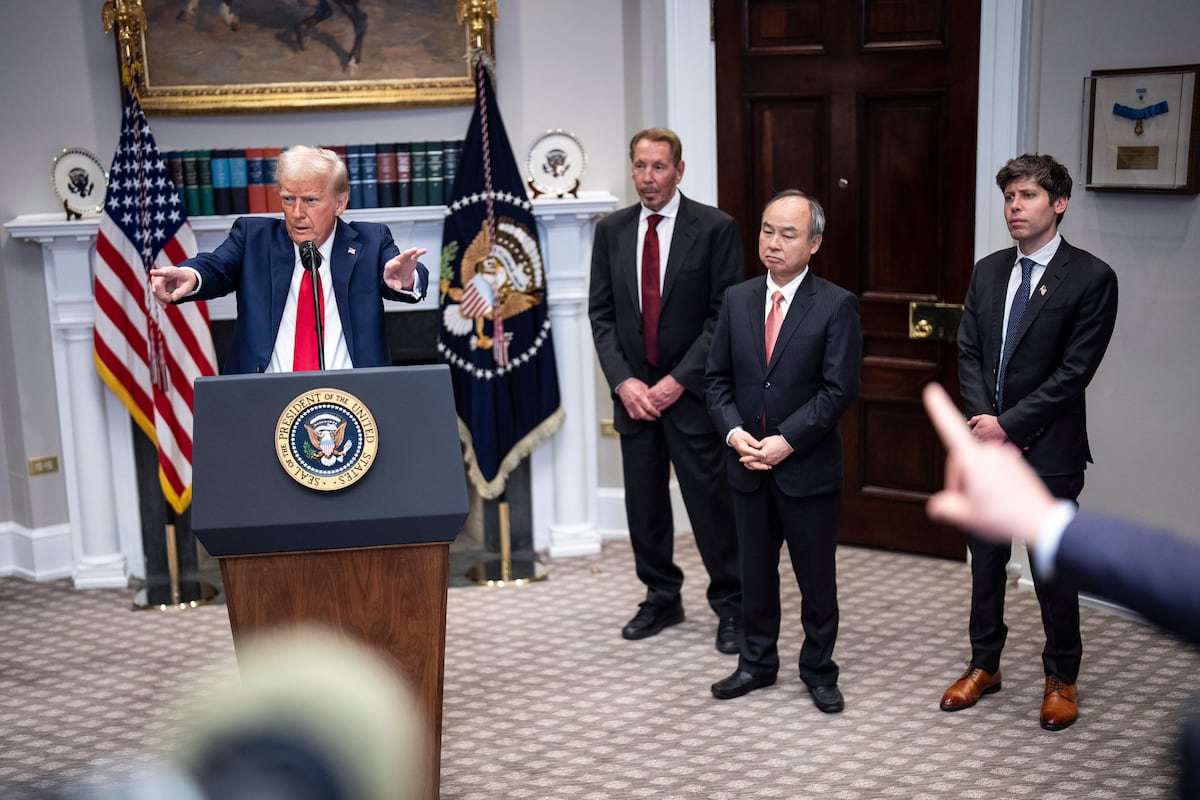
Intel executed a credible turnaround under challenging conditions. The company reported Q3 2025 revenue of $13.7 billion, up 3% year-over-year, with non-GAAP EPS of $0.23 crushing estimates of $0.01. Client Computing grew 5% to $8.5 billion, while Data Center and AI revenue of $4.1 billion declined 1%. Intel secured a $2 billion investment from SoftBank and announced a collaboration with NVIDIA, signaling industry validation of its foundry ambitions.
The U.S. stock market is drifting near its record levels on Wednesday following mixed reactions to profit reports from Macy's, Marvell Technologies, and other companies. The S&P 500 rose 0.2% and pulled within 0.7% of its all-time high set in late October. The Dow Jones Industrial Average was up 174 points, or 0.6%, as of 11:50 a.m. Eastern time, and the Nasdaq composite was virtually unchanged.
SoftBank Group confirmed on Wednesday that it has completed its acquisition of Ampere Computing. Through its subsidiary Silver Bands 6 (US) Corp., the group has acquired all shares in the American semiconductor company. The transaction, valued at $6.5 billion, was announced in March and has now been fully completed. Ampere will become a wholly owned subsidiary of SoftBank and will continue to operate under its own name.
Arizona's economy was once dominated by the "five C's": cotton, cattle, citrus, copper, and climate. But a new C has emerged that could grow to overshadow the rest: chips. New semiconductor manufacturing facilities are springing up across the greater Phoenix area, stretching across blocks of new roads with names like "Processor Parkway" and "Transistor Terrace." Just outside the facilities, developers anticipating an influx of workers are planning mixed-use residential and industrial zones like mini modern-day company towns.
Southeast Asia should be well-placed to thrive in a more geopolitically complex world. The region is rich in natural resources, has a young and increasingly wealthy population, and maintains economic and trade links with major economic powers like the U.S., China, India and the Gulf Cooperation Council. Yet during the Fortune Innovation Forum in Kuala Lumpur on Tuesday, Asia Partners co-founder Nicholas Nash challenged Southeast Asian entrepreneurs to be much more ambitious in their aims.
Global investors are focusing on Samsung Electronics as the group sets out a five-year artificial intelligence investment programme worth $310 billion over the coming five-year period, with analysis from Sunnov Investment Pte. Ltd. highlighting how the plan reshapes expectations for capital spending across the semiconductor industry. The commitment concentrates on AI specific semiconductors and on domestic manufacturing capacity in South Korea.
Even as the investing world continues to debate whether we are or are not in an "AI bubble," there shouldn't be any question whether AI-driven dividend stocks are still enjoying a moment. As artificial intelligence dominates much of the daily conversation in the tech world, these stocks and their shareholders are all enjoying outstanding returns. The good news is that not every AI-driven dividend stock is under the microscope as part of the bubble.
To be clear, YMTC is not an ordinary China-based company. YMTC reached the Entity List after first being placed on the Unverified List in October 2022 when BIS was unable to complete end-use checks to verify that exported technology was being used as declared. Under President Biden, YMTC was added to the Entity List based on findings that the company creates a major risk of diversion (sharing key technology) with other parties on the entities list, including Huawei and Hangzhou Hikvision.
Apple ( NASDAQ:AAPL ) continues to dominate the tech landscape as a powerhouse in consumer electronics and services, with its stock delivering robust returns for investors amid the artificial intelligence (AI) boom. Valued at over $4 trillion, the company thrives on its integrated ecosystem, where custom silicon plays a pivotal role in driving performance gains across iPhones, Macs, and emerging AR/VR devices.
The vital flow of chips from China to the car industry in Europe looks poised to resume as part of the deal struck last week between Donald Trump and his Chinese counterpart, Xi Jinping. The Netherlands has signalled that its standoff with Beijing is close to a resolution amid signs China's ban on exports of the key car industry components is easing.
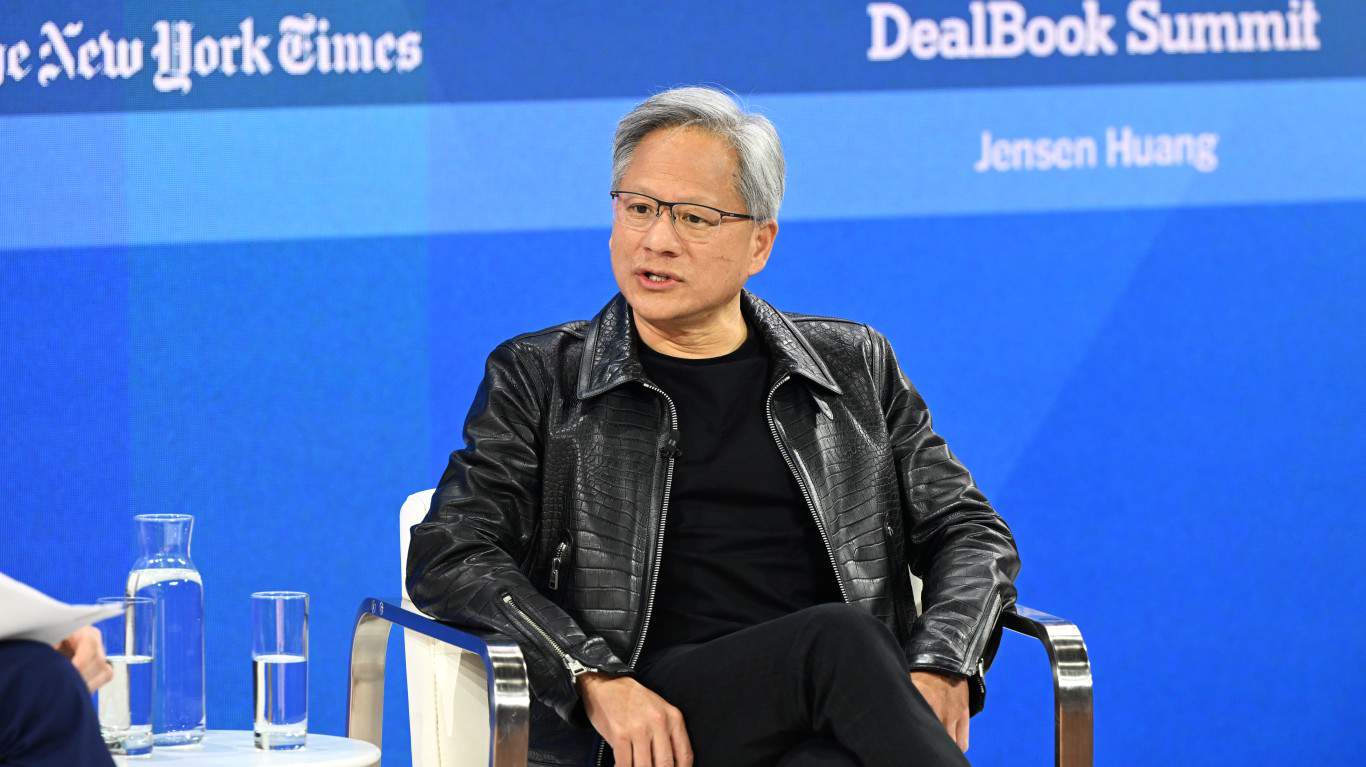
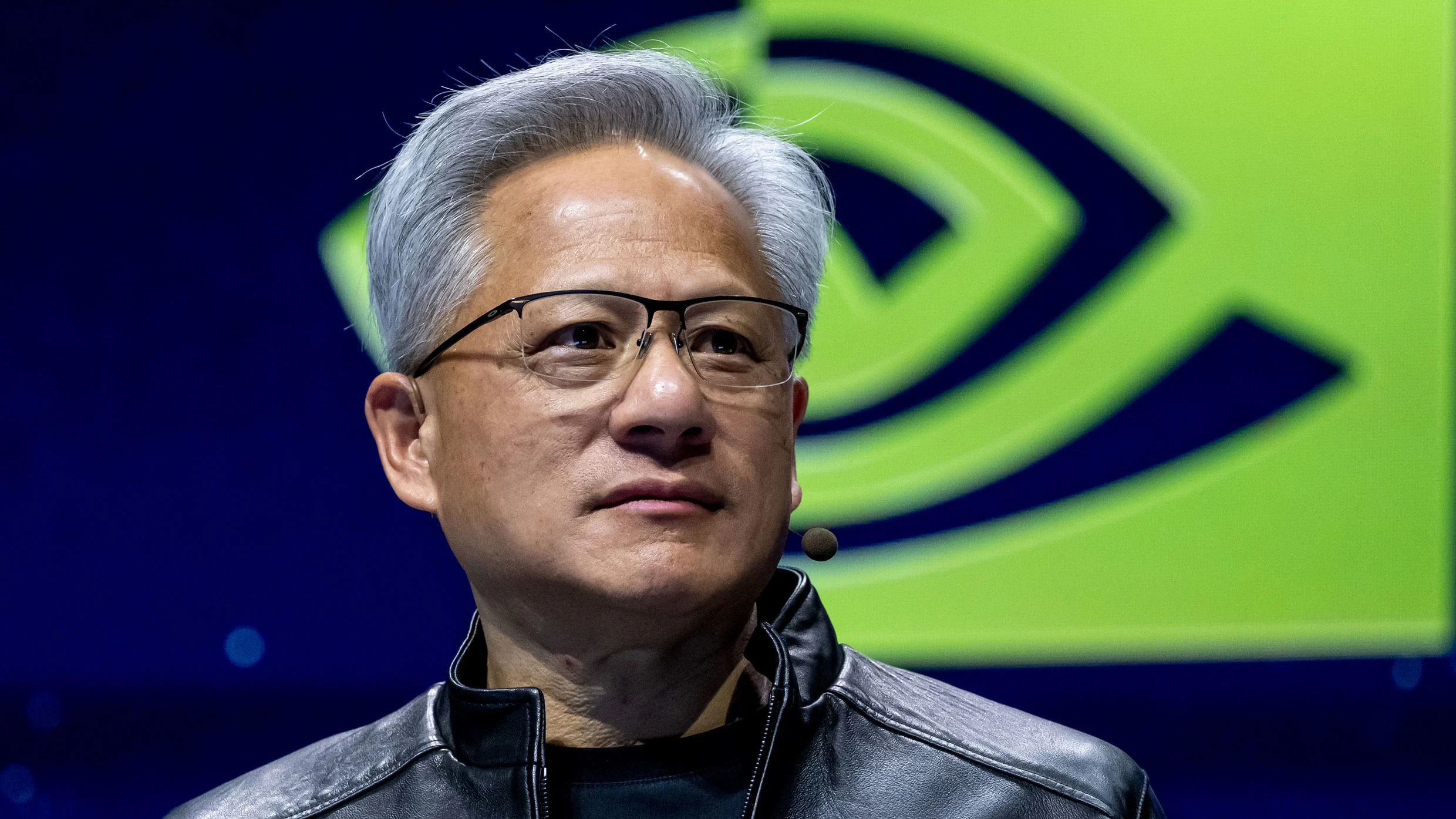
Nvidia CEO Jensen Huang offered a blunt prediction that China will beat the U.S. in the AI race and that Western countries are being held back by cynicism. As the battle over who will dominate in the development of the consequential technology, Huang, whose $5 trillion California-based company is trapped in regulatory crossfire, argued that China is structurally advantaged and pointed to the country's radically lower energy costs and permissive regulatory environment.
With solid earnings, cooling inflation, the potential for interest rate cuts, and hopes for a truce between the U.S. and China, there's not much stopping upside potential. Helping, analysts are incredibly bullish. Apple (NASDAQ: AAPL): Analysts at Baird just reiterated an outperform rating on Apple ahead of earnings, raising its price target to $280 from $230 a share. The firm expects Apple to post solid earnings and guidance. It's also pleased with the latest iPhone 17.
U.S. President Donald Trump touched down in Asia this week, not just for diplomacy, but to sign deals that could shape the next chapter of the global technology race. The U.S. inked Technology Prosperity Deals (TPD) with Japan and South Korea with an eye toward spurring collaboration on AI, semiconductors, quantum computing, biotech, space, 6G, and other technologies. The agreements aim to enhance cooperation, strengthen strategic ties, align regulations, and support economic and national security objectives, among other objectives.
On October 30, Samsung Electronics reported a 32.5% increase in operating profit for the third quarter, driven by rebounding demand for its computer memory chips, which the company expects will continue to grow on the back of artificial intelligence. The South Korean technology giant set a new high in quarterly revenue, which rose nearly 9% to 86 trillion won ($60.4 billion) for the July-September period, fueled by increased sales of semiconductor products and mobile phones.
Small, flat squares of silicon with maze-like patterns etched on their surface are now the backbone of pretty much every major industry. That means that trade barriers and disruptions in semiconductor production can have ripple effects across the world. That's exactly what's happening now, as a major European automotive chipmaker has found itself in the middle of a geopolitical firestorm between China and the West, which could upend car production.
Huang Baorong, a researcher of sustainable development policies at the Chinese Academy of Sciences in Beijing, expects China will increase its science-related investments over the next five years. This could help to offset some of the impact of the US government's anticipated budget cuts to science, particularly in areas such as climate change and public health, Huang says.
"The most lucrative industry in Hsinchu isn't chips. It's kindergartens," a Taiwanese friend quipped when I mentioned my trip to the chip city, 50 miles south of Taipei. He was half-joking, but it's not far from the truth. Hsinchu, home to Taiwan Semiconductor Manufacturing Company and a dense network of tech firms that form the world's chip supply chains, is now the rare place in Taiwan where people are still having babies - if they can afford to.
The total deal value has been estimated at around $90 billion to $100 billion in revenue for AMD. As the deal scales, OpenAI gets warrants to purchase AMD stock at performance thresholds that top out at $600 per share. The math here is fairly straightforward: OpenAI gets ownership of about $100 billion in AMD for buying about $100 billion worth of chips.