Cofounders Chris Lattner and Tim Davis have spent decades building the software plumbing that sits beneath the modern tech industry. Lattner is famous for creating Apple's Swift programming language. He also built the software underpinning Google's TPU AI chips, with Modular cofounder Tim Davis. They're now aiming that expertise at CUDA itself. The attempt borders on madness, but it's the kind of audacious project that could transform the AI industry.
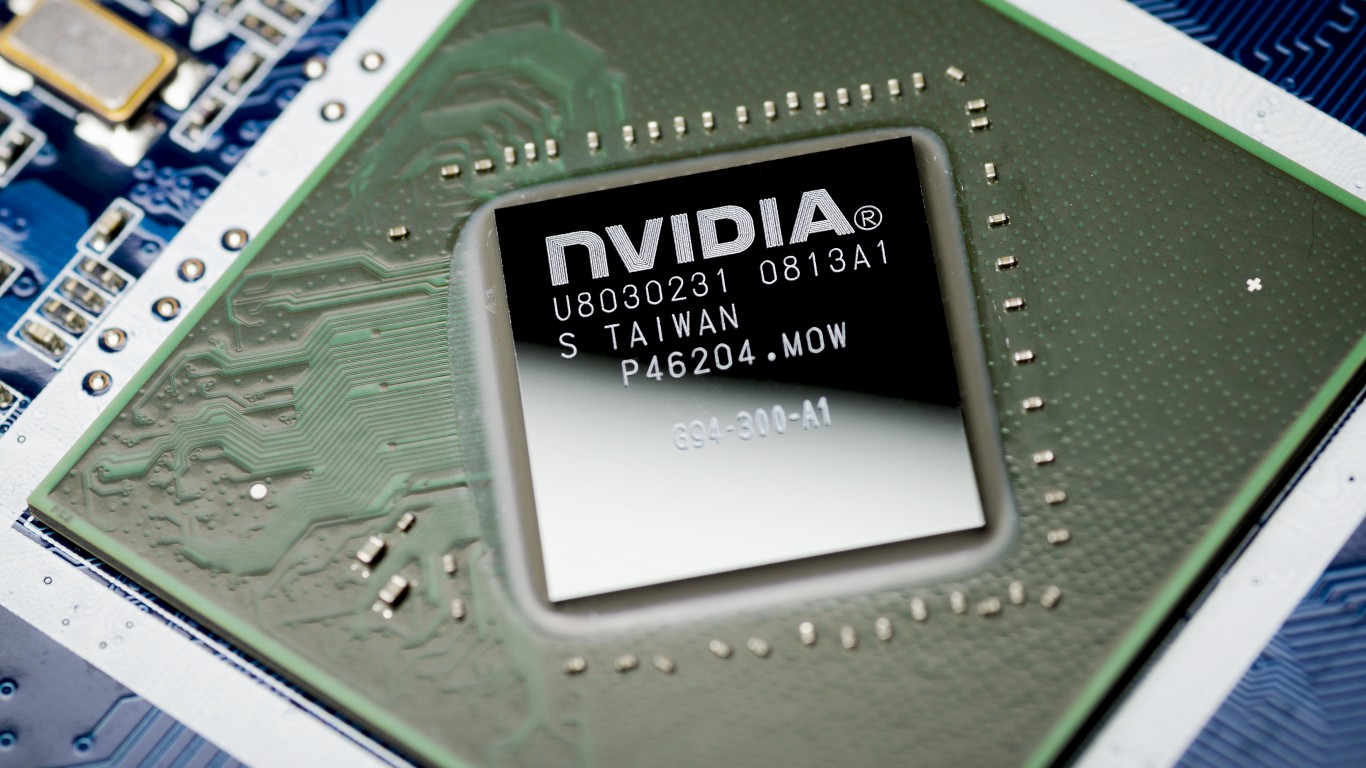
Nicholas J. Ganjei, U.S. Attorney for the Southern District of Texas, said: "These chips are the building blocks of AI superiority and are integral to modern military applications. The country that controls these chips will control AI technology; the country that controls AI technology will control the future." Ganjei's stark warning to anyone plotting to send Nvidia's top end chips to China came as US President Donald Trump gave the green light to Nvidia to ship its H200 parts to China,
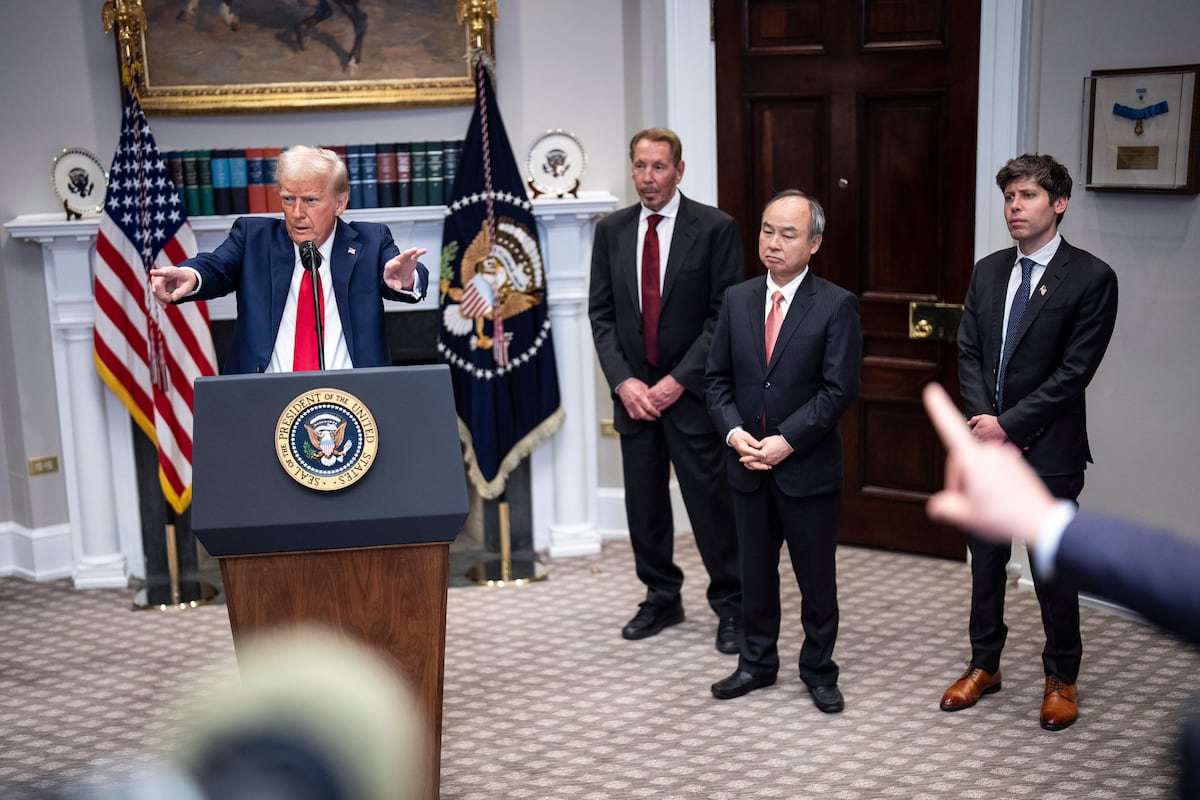
Driving the news: Trump said on Truth Social that he'll allow Nvidia to sell H200 chips - the generation of chips before its current, more-advanced Blackwell lineup - to China, with the U.S. government pocketing a quarter of the revenue. He said he would apply "the same approach to AMD, Intel, and other GREAT American Companies." State of play: It's not dissimilar to a deal from earlier this year in which Nvidia and AMD agreed to give the U.S. 15% of the sales of its less-advanced H20 chip to China in exchange for export licenses.
"I have informed President Xi, of China, that the United States will allow NVIDIA to ship its H200 products to approved customers in China, and other Countries, under conditions that allow for continued strong National Security," Trump wrote in a Monday post to his social network, Truth Social. "President Xi responded positively!" he added, before stating "$25% will be paid to the United States of America" - a seeming reference to past suggestions that the administration would charge license fees on chip exports to China.
Billionaire Peter Thiel runs the hedge fund Thiel Macro and is known for playing a significant role in identifying growth stocks. Based on the recent 13F filing, Thiel sold his entire stake in artificial intelligence (AI) giant NVIDIA Corp. (NASDAQ:NVDA) and reinvested the proceeds in Microsoft (NASDAQ:MSFT) and Apple (NASDAQ:AAPL). While not everyone will agree with the move to abandon NVIDIA Corp. the other AI giants, Microsoft and Apple, are well positioned to benefit from the AI revolution and have made significant gains in the past few years.
Lee and I both agreed that few investors fully appreciate how central SoftBank has become to the global AI capital stack. The company owns stakes in OpenAI, has backed emerging infrastructure projects like the Trump-aligned Stargate initiative, and effectively repositioned itself as the Berkshire Hathaway of AI by reallocating its Nvidia profits into higher-risk frontier plays. Yet unlike traditional cash-rich tech giants, SoftBank must borrow to fund its commitments. That leverage profile is now front and center.
The California Gold Rush left an outsized imprint on America. Some 300,000 people flocked there from 1848 to 1955, from as far away as the Ottoman Empire. Prospectors massacred Indigenous people to take the gold from their lands in the Sierra Nevada mountains. And they boosted the economies of nearby states and faraway countries from whence they bought their supplies. Gold provided the motivation for California a former Mexican territory then controlled by the US military to become a state with laws of its own.
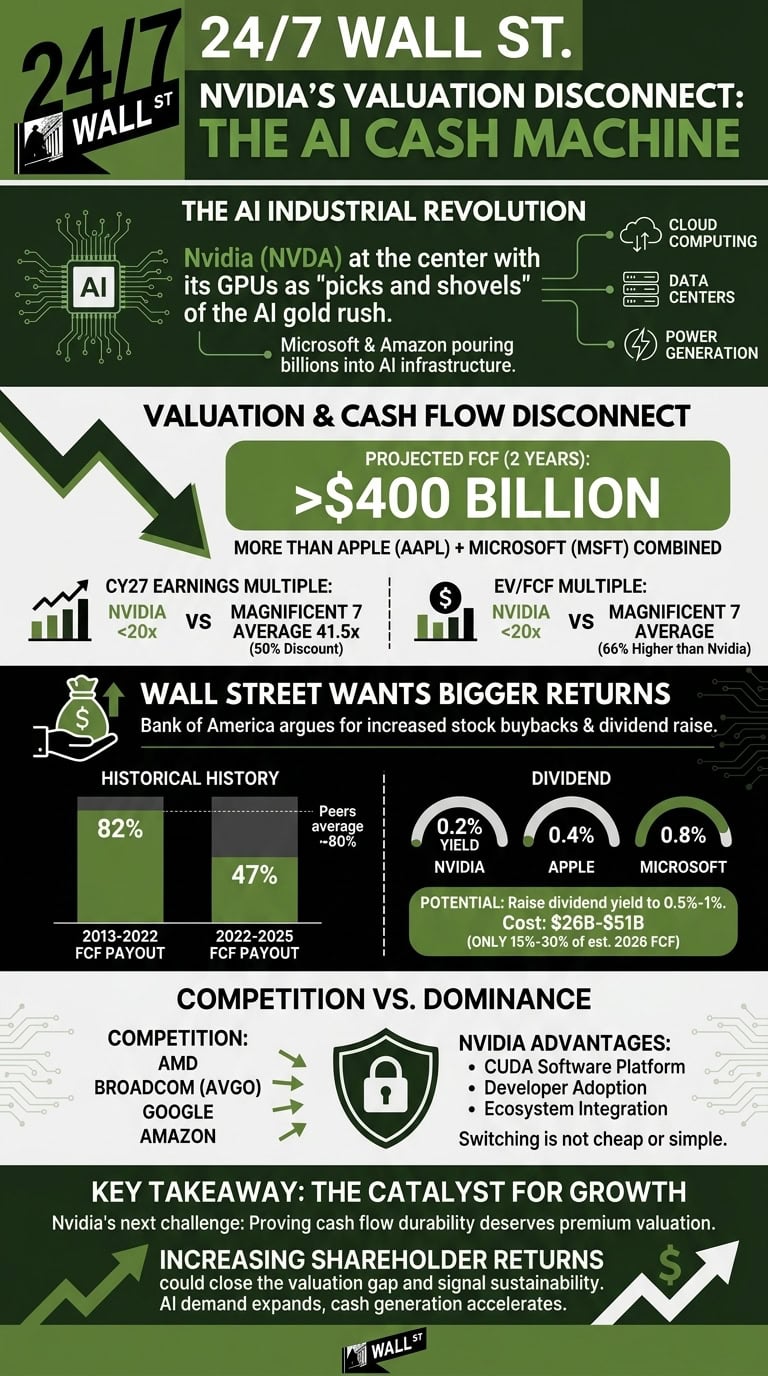
Nvidia's sterling armor was dented this month. After years of meteoric success, the chipmaker and its CEO Jensen Huang have increasingly found themselves playing defense - an unusual position for the company. Nvidia headed into the month with its stock price at an all-time high, bolstered by increasing AI spending from some of its major Big Tech customers like Meta, Microsoft, and Google.
Speaking at an all-hands meeting last Thursday, the day after the chipmaker reported another quarter of record results, Huang reacted sharply to reports that some managers inside the company were urging teams to dial back their AI use. Business Insider listened to the meeting. "My understanding is Nvidia has some managers who are telling their people to use less AI," Huang said. "Are you insane?"