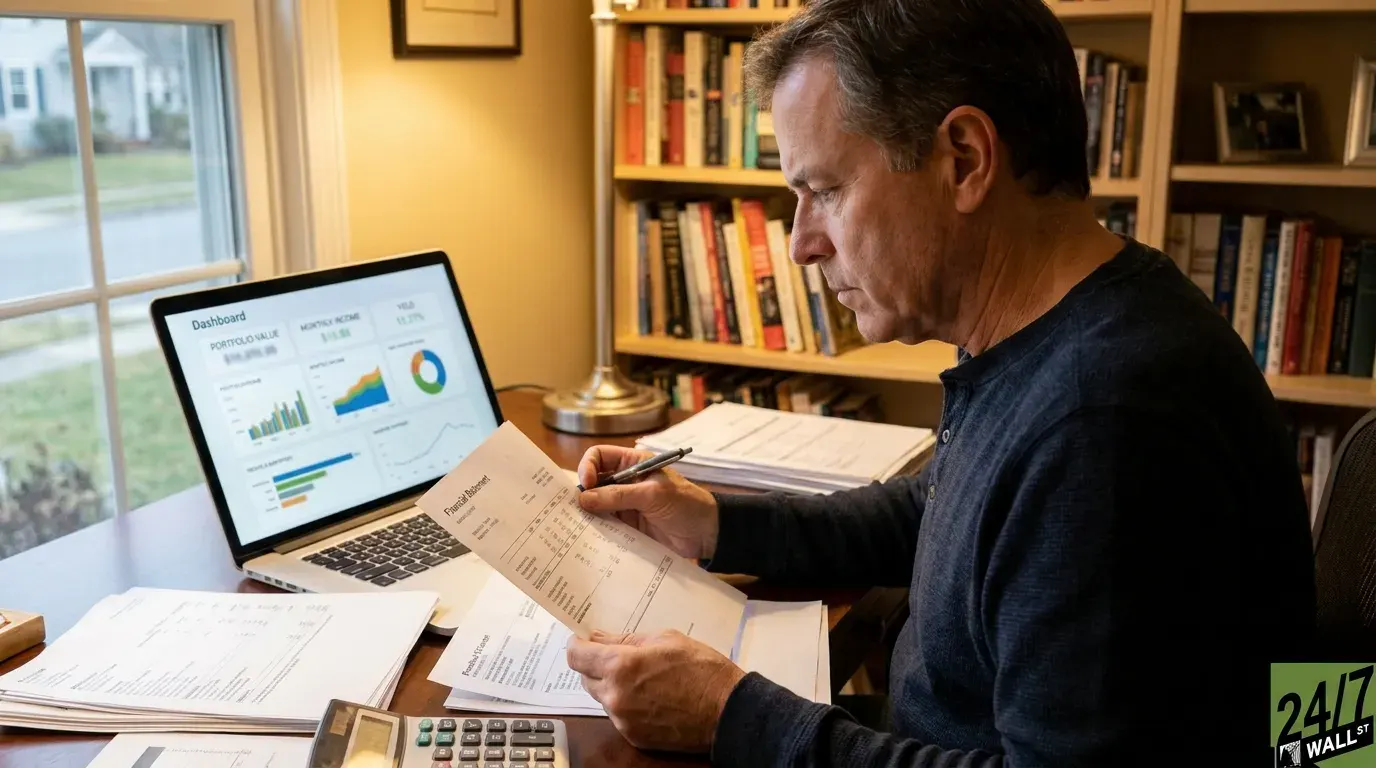
It's safe to say that everyone hopes to have a nice savings and retirement account by the time they turn 45. The dream should always be to retire early enough to still enjoy one's golden years. If you can set aside $1 million by this age, it begs the question of whether you should and can retire early. If you are part of the FIRE movement, which focuses on financial independence and early retirement, any question about early retirement will focus on several factors.
The end of a calendar year is a good time to assess your investment strategy and make sure it's working for you. And if you're in the process of building wealth for retirement, there are two things you could probably use to supercharge your portfolio - growth and regular income. Investing in ETFs, or exchange-traded funds, is a great way to build out a diversified portfolio while limiting the amount of work you have to do.
Retirement requires significant planning. Deciding where to spend your hard-earned days is a consequential decision, and there are dozens of factors to consider, from financial to social. Each year, however, International Living helps point soon-to-be-retirees in the right direction by releasing its Annual Global Retirement Index. The publication takes into account all the elements that make for a "rewarding" retirement overseas; health care, cost of living, housing, and climate are all considered in the final ranking.
Retirement already appears financially realistic once the second trust opens up in the next few years. Both trusts have the potential to grow over time, further increasing the amount available for withdrawal. A 5 percent annual draw from the 10 million dollar trust alone provides 500,000 dollars per year. The Redditor also noted that the current trust provides about 200,000 dollars in tax-free distributions, which brings the total to roughly 700,000 dollars per year.
"I looked ahead at the rest of my life and thought, 'I'll be damned if I spend the next 30 years in New Jersey,'" she told Business Insider. In 2018, at 57, La Valle bought a one-way ticket to Paris. Seven years later, at 64, she lives in Brescia, a city in northern Italy's Lombardy region, near the foothills of the Alps.
Fleeing the Northeast and flying south - usually to Florida - to wait out the winter in warmer weather is a common move for snowbirds. But some retirees aren't flying quite as far south anymore for an escape. Take Diana Cawood, who skipped Florida altogether and relocated to North Carolina from New Jersey at the end of 2019. "Florida was not an option," Cawood told Business Insider, adding that it was important that she be in reasonable driving distance back to New Jersey to see her children and grandchildren. "We can drive back to New Jersey in about nine hours," she said.
The core mistake is retiring without true readiness. Retiring with debt is the biggest issue that Ramsey encounters . "You can't have a $750 F-150 payment," he said. "You can't have a student loan that's been around so long you think it's a pet." If you want to retire, get rid of that debt, and it will be much smoother. Otherwise, that debt can dent your income significantly, especially if you let it compound or if that debt carries a floating rate.
Most people would probably be thrilled to reach the age of 50 with $3 million in investments and a $1 million home. On paper, it sounds like the definition of financial comfort. But for this Reddit poster, the numbers aren't translating into the sense of security they expected. Instead of feeling proud or relaxed, they're second-guessing whether they're anywhere close to "doing well."
All of the cities included on the list have a population that's at least 25 percent 65 and older. The financial website took into account the cost of living, average Social Security benefits, and mean retirement income of each. To hone in on the middle class, only cities with average home values under $500,000 were analyzed. The study excludes small cities and towns that have populations fewer than 15,000 people per the U.S. Census American Community Survey.
Unfortunately, millions of Americans are precisely in this situation, as they haven't been able to follow retirement planning to the T. A Redditor on the r/FinancialPlanning subreddit earlier this year, saying they had only $80,000 in the bank and $40,000 in their 401(k). The individual is now seeking a financial planner, which is a smart idea and almost a must at this stage. However, if you're not looking for a personalized blueprint and you want an approximation, you may benefit from reading on.
It is a curious pattern in human behavior. We trade our time, energy, and even our long-term health for money, yet once we finally accumulate it, many of us do everything possible to avoid spending it. People often cling to their savings long past the point when that money could meaningfully improve their quality of life. Behavioral economists note that this reluctance is rooted in loss aversion, the tendency to fear losing money more than we enjoy gaining it.
Dave Ramsey is a well known American personal finance expert, author, and radio host. He is one of the most recognizable voices in the field because of his practical approach and his focus on giving people in debt simple, meaningful steps they can follow. Many of the individuals who come to him are facing serious financial trouble, and his guidance is designed to help them climb out.
Dave Ramsey is known for keeping his advice simple and clear, offering the kind of tough guidance many people need to get their finances on track. His perspective is not the final word on money, but it is rooted in wanting to help listeners make better choices. A big part of his appeal is that he often puts himself in his audience's position, which makes his advice feel personal and relatable.
Whenever I hear about someone getting a pension from their job, I'll admit - I feel a little jealous. Other than Social Security, every dollar I'll have in retirement is money I'll have to save on my own. Of course, that's the reality for most workers today. Private-sector pensions have mostly disappeared, replaced by 401(k) plans that put the burden of saving squarely on employees. If you're lucky, your company might chip in with a match.
Even though she and her husband built a plan to retire early and fully enjoy the years ahead, she is struggling with the idea of walking away from the career she has spent decades building. She finds her work deeply fulfilling, even intoxicating, and she genuinely enjoys what she does. Here is my guidance for anyone in a similar situation. This is not financial advice, just my perspective:
I was a boy who enjoyed fart humor, pizza, LEGO and rockets. Except for my age, nothing has changed. My parents were fans of Frank Lloyd Wright (FLW) and we visited a couple of his structures. The experiences and his unique designs made an imprint on me. As an adult, I've had the fortune to visit other FLW buildings and interesting examples of architecture. I appreciate modern design. Beautiful spaces that flow well and aren't wasteful light me up.
Do you see the trend? Companies are waiting longer to go public. What does this mean for index investors? Lost upside. Consider Amazon: IPO valuation: 23 billion Current valuation: 2.43 trillion Amazon is 105x bigger now than it was at IPO! If you held VTSAX, you had a piece of this incredible action! If Amazon had IPO'd at 500 billion, the upside would have only been 5x.
Most of our family's income comes from federal funds. My husband and I both have military retirement checks, and he's a federal civilian. Our retirement pensions are not affected by the government shutdown, but my husband's paycheck is. We're on day 37 without his income, and honestly, it's surreal. While our retirements and my job will get us through, the loss of a paycheck has prompted some adjustments in our spending.