#ab-testing
#ab-testing
[ follow ]
#google-search #email-marketing #bing #google-ads #experimentation #statistical-significance #search-ui
#email-marketing


fromVerticalResponse
5 months agoOnline marketing
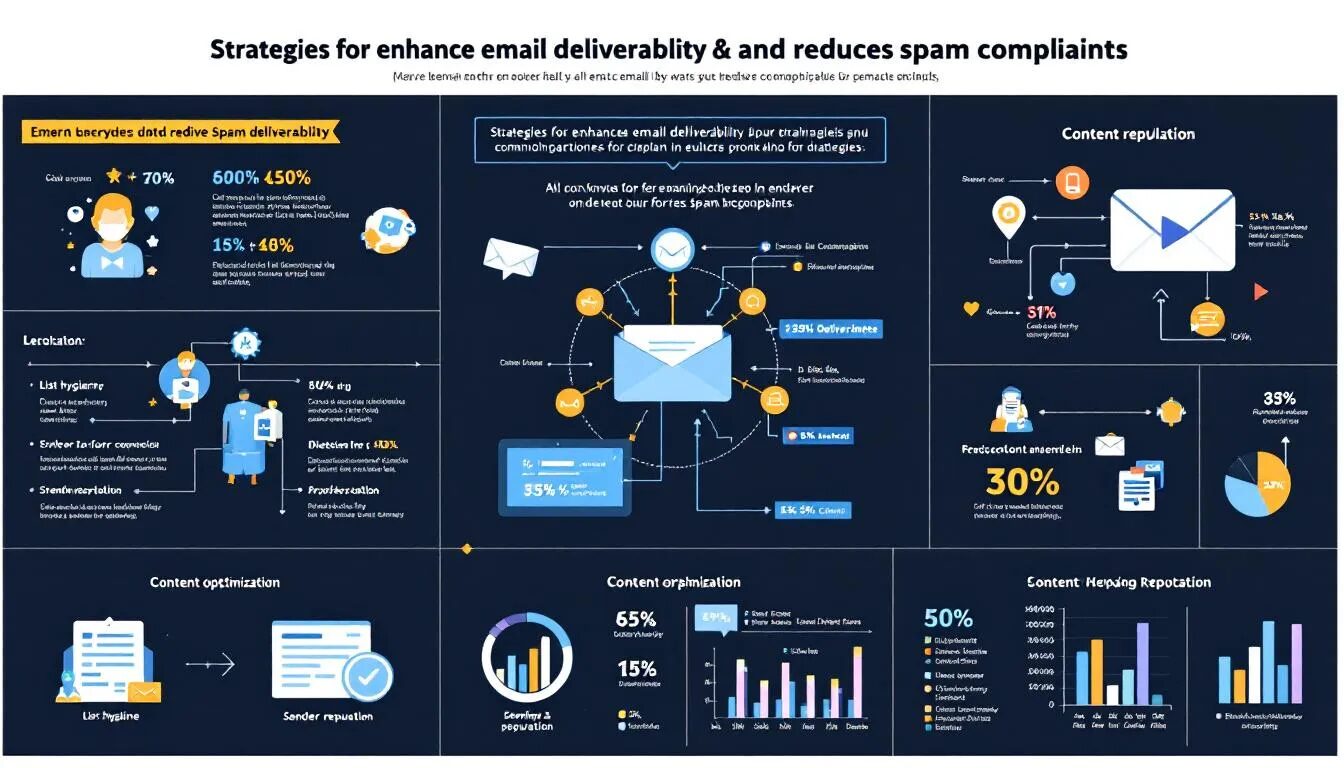
What We Learned From Analyzing 1 Million Emails Sent by Small Businesses: Top Insights and Strategies
Personalization, audience segmentation, A/B testing, and optimized send times increase open and click-through rates, improving engagement and campaign performance for small businesses.

DevOps
fromInfoQ
1 month agoQCon London 2026: Behind Booking.com's AI Evolution: The Unpolished Story
Booking.com evolved from a single MySQL database to 6,800 instances by 2020, implementing a data-driven culture through A/B testing and distributed systems like Hadoop to scale their AI and machine learning capabilities.

Marketing tech
fromThedrum
2 months agoAutomated Creative launches new interface incorporating ChatGPT
Automated Creative's platform enables brands to test, optimize, and scale creative effectiveness across digital media with integrated ChatGPT capabilities for rapid ideation and production of unlimited unique ads.

fromBuffer: All-you-need social media toolkit for small businesses
3 months agoHow We Designed and Built the Buffer.com Homepage Hero
Our old homepage hero technically showed all the platforms we support - but it felt overly corporate, like a feature list wearing a trench coat. The previous hero featured an animated headline that rotated through Buffer's supported social media platforms. While it did the job, it didn't feel very "Buffer-y." We wanted to make a stronger first impression - something with more liveliness and delight.
UX design






fromInfoQ
3 months agoEnhancing A/B Testing at DoorDash with Multi-Armed Bandits
While experimentation is essential, traditional A/B testing can be excessively slow and expensive, according to DoorDash engineers Caixia Huang and Alex Weinstein. To address these limitations, they adopted a "multi-armed bandits" (MAB) approach to optimize their experiments. When running experiments, organizations aim to minimize the opportunity cost, or regret, caused by serving the less effective variants to a subset of the user base.


Growth hacking
fromBusiness Insider
4 months ago'The Diary of a CEO' host Steven Bartlett explains how the '1% rule' has led to big results at his company
Tiny, incremental A/B-tested changes to titles, thumbnails, and small details produced measurable engagement increases and built psychological momentum.





fromPsychology Today
4 months agoA Worthless Headline: How Bing's Idea Was Their Biggest Win
Here's what actually happened: A Microsoft employee working on Bing proposed a seemingly minor change to how the search engine displayed ad headlines. The idea required minimal effort-just a few days of engineering time-but it was buried among hundreds of other proposals. Program managers deemed it insignificant and let it languish. The breakthrough came when an engineer, recognizing the low development cost, decided to test the idea anyway.
Growth hacking
Marketing tech
fromBusiness Insider
5 months agoThis AI startup generates content to help companies retain their customers. Read the pitch deck it used to raise $5 million.
Eikona uses generative AI to create and optimize personalized lifecycle marketing content to improve customer retention; raised a $5M seed led by StageOne Ventures.


Marketing tech
fromwww.socialmediatoday.com
5 months agoGoogle Adds AI-Powered Image and Video Tools to Demand Gen Campaigns
Google expanded Demand Gen ad tools with AI-driven image and video creation, automated aspect ratios, Asset Uplift A/B experiments, suitability controls, and Pathmatics creative integration.
Marketing
fromAcast
6 months agoExperimentation lessons from CRO - a conversation with Ryan Lucht | Business Class Lounge by SearchPilot, hosted by Will Critchlow
Apply CRO experimentation rigor—statistical methods, reliable data pipelines, and production-grade tooling—to scale and mature SEO testing and move teams from reactive to controlled experimentation.
Marketing tech
fromExchangewire
6 months agoAudible & Readpeak Join Forces With a Plug-In Automated AI Solution Set to Change the Premium Native Marketplace
Readpeak's automated native-ad technology enables rapid bespoke templating, real-time A/B testing and publisher-adaptive creatives to elevate mid-funnel engagement and creative efficiency.
fromSmashing Magazine
7 months agoThe Grayscale Problem - Smashing Magazine
Last year, a study found that cars are steadily getting less colourful. In the US, around 80% of cars are now black, white, gray, or silver, up from 60% in 2004. This trend has been attributed to cost savings and consumer preferences. Whatever the reasons, the result is hard to deny: a big part of daily life isn't as colourful as it used to be.
Digital life

fromMarTech
8 months agoB2B marketers at SMBs struggle with conversion rate optimization | MarTech
SMB marketers in the B2B sector say conversion rate optimization (CRO) is their top A/B testing priority in 2025, but a new report found most aren't running A/B tests to improve CRO. The " State of A/B Testing Report " from Unbounce found 56% of SMB marketers in B2B cite CRO as their top testing goal. However, only 32% are running A/B tests on their landing pages.
Marketing
UX design
fromHackernoon
3 years agoFrequentist Stats Are Failing Your UX Decisions-Here's a Better Way | HackerNoon
Frequentist statistics can be misleading; Bayesian methods offer clearer insights, particularly for business applications.
To effectively use Bayesian statistics, practitioners need to familiarize themselves and potentially create their own tools.
[ Load more ]