UK news
fromwww.independent.co.uk
4 hours agoKing's Speech: The full text of Charles' address in House of Lords
The King’s Speech sets UK legislative priorities focused on protecting energy, defence, and economic security amid global instability.
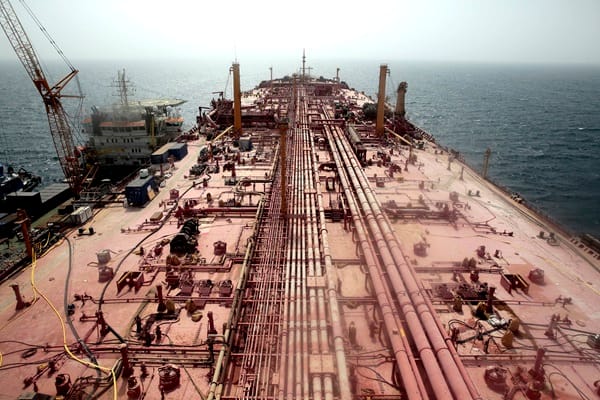
Governments in the Global South are among the least prepared to respond to the oil shock caused by the Iran war. As the blockade of the Strait of Hormuz drives the worst energy crunch in modern history, leading governments to scramble to unload their emergency oil stockpiles, developing countries are among the least prepared to mitigate the shock. Although surging fuel prices due to the fallout of the US-Israel war on Iran have impacted most of the world, import-reliant poorer countries are among the worst affected and the most lacking in energy reserves to cushion the blow.
Australia imports roughly 80 per cent of its refined fuel and holds the lowest fuel reserves of any member of the International Energy Agency, with only 36 days of petrol and 29 days of jet fuel. This situation was starkly highlighted when the Strait of Hormuz was closed, leading to a surge in Brent crude prices and exposing the existential nature of Australia's energy crisis.
Chris Ong, Seatrium's CEO, sees the Iran conflict sharpening what specialists call the energy trilemma, or the trade-off between energy security, affordable supply, and environmental sustainability. "The situation is now even worse because of the destruction of supply, which is still not fully priced in," Ong says. "People don't understand; they have been swung between different stories every day."
OEUK highlighted that natural gas extracted from the North Sea has a significantly lower emissions footprint compared to imported liquefied natural gas (LNG), which often involves more environmentally taxing transportation and processing methods.