#oil-prices
#oil-prices
[ follow ]
#strait-of-hormuz #strategic-petroleum-reserve #iran #supply-and-demand #us-iran-relations #stock-market

fromLondon Business News | Londonlovesbusiness.com
5 hours agoOil prices could rise further, but suppliers adoption might make some balance - London Business News | Londonlovesbusiness.com
Light Crude Oil Futures (WTI) are now at 100.92, down 1.23%. Meanwhile, ICE Brent crude Futures also declined, trading at 106.49, down 1.19%. The upward factors for oil prices remain in place amid the absence of any sign of an imminent diplomatic settlement to the Middle East war, keeping the door open to escalation risks that could deepen the damage to the region's oil production and export infrastructure.
World news
fromThe Art Newspaper - International art news and events
18 hours agoNew York art world spared worst of logistics woes
“The Iran war isn't stopping art shipments into New York-but it's removing flexibility from the global system. Logistics is becoming more fragile, and that's changing how the market plans,” says Robin Eckstein, the regional manager for the Middle East at the logistics firm Hasenkamp. “What used to be flexible is now fragile.”
Arts


Portland
fromFortune
1 day agoOregon Democrats have genius political strategy: raising the gas tax heading into the midterm elections | Fortune
Democrats face a difficult midterm messaging environment as Oregon voters consider repealing recent gas tax and fee increases amid rising national fuel prices.
#gasoline-prices
US Elections
from24/7 Wall St.
1 day agoPresident Trump Wants to Suspend the Federal Gas Tax. Here's Why Consumers May Still Feel Squeezed
Suspending the federal gas tax could lower pump prices slightly, but it would not remove the underlying oil-price-driven cost pressures affecting consumers and the economy.
US Elections
from24/7 Wall St.
1 day agoPresident Trump Wants to Suspend the Federal Gas Tax. Here's Why Consumers May Still Feel Squeezed
Suspending the federal gas tax could lower pump prices slightly, but it would not remove the underlying oil-price-driven cost pressures affecting consumers and the economy.
#stock-market


Business
from24/7 Wall St.
1 week agoHere Are Monday's Top Wall Street Analyst Research Calls: Advanced Micro Devices, Airbnb, Alphabet, Check Point Software, GlobalFoundries, Internatioinal Paper, Trade Desk, and More
Futures are lower as oil prices rise amid geopolitical tensions, while major stock indices showed strong performance at the end of the previous month.
Business
from24/7 Wall St.
1 week agoHere Are Monday's Top Wall Street Analyst Research Calls: Advanced Micro Devices, Airbnb, Alphabet, Check Point Software, GlobalFoundries, Internatioinal Paper, Trade Desk, and More
Futures are lower as oil prices rise amid geopolitical tensions, while major stock indices showed strong performance at the end of the previous month.
#geopolitical-risk

Business
from24/7 Wall St.
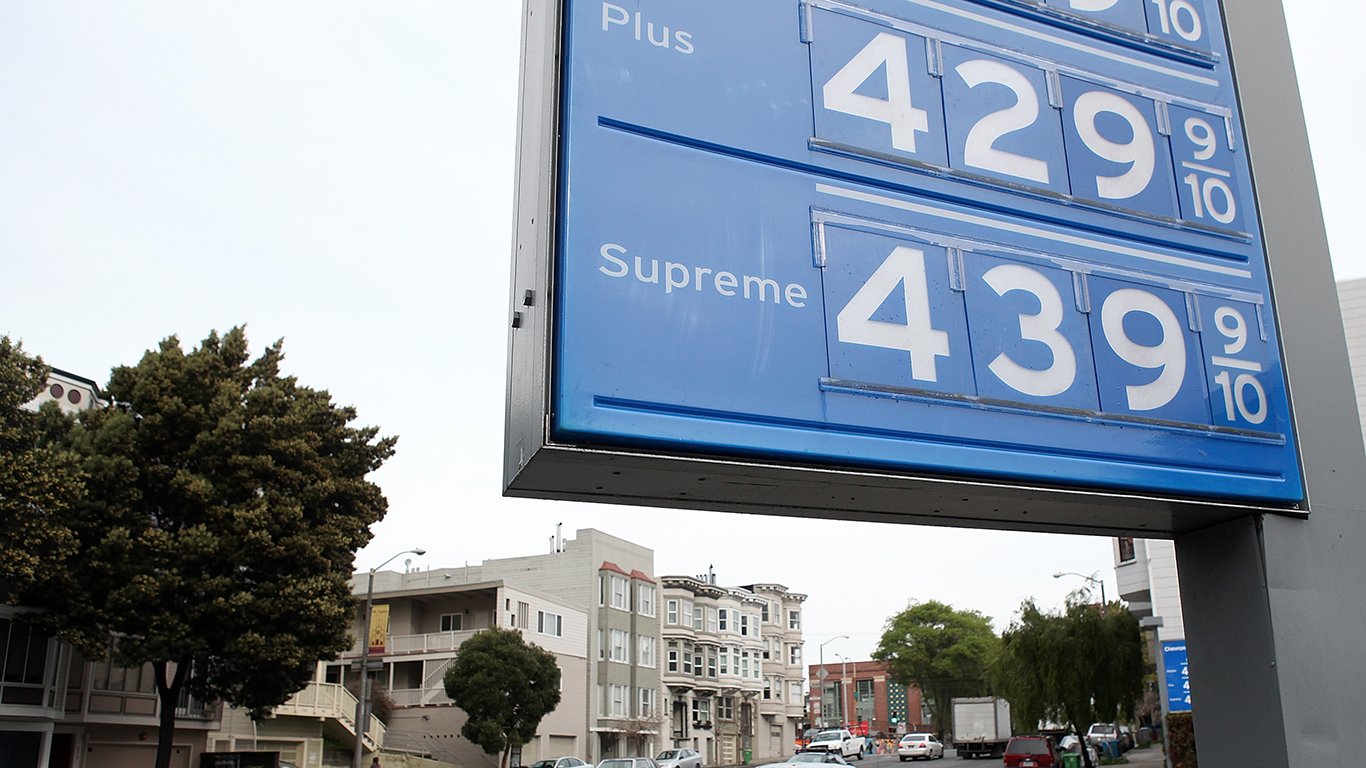
3 days agoWhat Chevron's CEO Just Said About Global 'Supply Outages' Could Derail Trump's Economic Momentum
Rising global oil prices from geopolitical supply disruptions can quickly raise U.S. fuel and broader economic costs despite strong domestic production and low unemployment.
World politics
fromLondon Business News | Londonlovesbusiness.com
2 days agoOil prices surge on a repeated pattern of de-escalation and re-escalation - London Business News | Londonlovesbusiness.com
Oil prices rose sharply as Middle East escalation fears returned after brief de-escalation signals, with negotiations with Iran failing to produce acceptable terms.
fromLondon Business News | Londonlovesbusiness.com
2 days agoDollar volatile amid Middle East concerns, yields firm on oil rebound - London Business News | Londonlovesbusiness.com
The US dollar index was relatively volatile on Monday amid renewed concerns about the geopolitical situation in the Middle East. Markets remained focused on the lack of progress in negotiations between Washington and Tehran, after President Donald Trump rejected Iran's latest proposal. The diplomatic deadlock has kept concerns over energy supply disruptions elevated, supporting higher oil prices and reinforcing inflation expectations. This pushed Treasury yields higher across maturities, underpinning the dollar.
World news
fromwww.aljazeera.com
3 days agoCan Asian economies cope with the fallout from the Iran war?
Fuel costs, inflation and debt pressures are testing Asian economies. Working from home. Fuel queues. Blackouts. This is the fallout from the war on Iran across Asia. Governments are scrambling to shield their economies from the worst of the energy crisis. Some are rationing fuel. Others are reintroducing subsidies or limiting exports altogether. And the longer the Strait of Hormuz remains disrupted, the worse it gets so much so for vulnerable economies.
World news
Europe news
fromFortune
4 days agoThe CEO of Maersk, which ships 14% of everything you buy, said the Iran war is adding $500 million in monthly costs it's trying not to pass down | Fortune
Prolonged war in Iran is raising energy costs and inflation while weakening consumer demand, disrupting global shipping flows and logistics.
fromLondon Business News | Londonlovesbusiness.com
5 days agoFTSE slides as Middle East tensions and Labour turmoil rattle markets - London Business News | Londonlovesbusiness.com
London's benchmark index dropped 55 points to 10,222 in early trading, after briefly falling as much as 80 points to touch 10,196, as traders weighed the impact of Labour's bruising local election results alongside escalating tensions involving the United States and Iran.
UK politics
US Elections
fromwww.mediaite.com
5 days agoTrump Goes on Early-Morning Picture-Sharing Spree, Including Bizarre Meme About Lasers
Trump posted early-morning claims about oil prices, stock gains, and a laser meme about an Iranian military plane, alongside a chart comparing Iran conflict length to past wars.
World news
fromwww.aljazeera.com
5 days agoCan Asian economies cope with the fallout from the Iran war?
Asian economies face severe strain from energy crisis, inflation, and debt as Strait of Hormuz disruption drives oil prices higher, forcing governments to implement rationing, subsidies, and spending cuts.
US Elections
fromwww.mediaite.com
6 days agoFox's Bret Baier Says Trump Economy Cooking' Could Be Running a Lot Harder' If Not for Trump's War
Trump believes an Iran deal could accelerate economic growth by resolving Strait of Hormuz constraints and reducing oil prices, though questions remain about Iranian compliance.
#us-iran-negotiations

World news
fromLondon Business News | Londonlovesbusiness.com
6 days agoDollar retreats amid geopolitical hopes - London Business News | Londonlovesbusiness.com
The dollar weakened as markets priced in a potential US-Iran agreement, while oil prices fell on de-escalation prospects, though the Fed is expected to maintain unchanged interest rates.
World news
fromLondon Business News | Londonlovesbusiness.com
6 days agoDollar retreats amid geopolitical hopes - London Business News | Londonlovesbusiness.com
The dollar weakened as markets priced in a potential US-Iran agreement, while oil prices fell on de-escalation prospects, though the Fed is expected to maintain unchanged interest rates.
#futures

Business
from24/7 Wall St.
1 week agoHere Are Tuesday's Top Wall Street Analyst Research Calls: Applied Materials, Devon Energy, GoDaddy, Home Depot, Lam Research, Lowe's, Roblox, Tractor Supply, Ulta Beauty, and More
Futures rose after a risk-off Monday, influenced by geopolitical tensions and rising oil prices, with major indices closing lower.
Business
from24/7 Wall St.
2 weeks agoHere Are Wednesday's Top Wall Street Analyst Research Calls: Alibaba, Boston Scientific, Brown-Forman, Charter Communications, Franklin Resources, Spotify, T-Mobile, and More
Futures are modestly higher midweek despite major indices closing lower due to mixed earnings and geopolitical tensions.
from24/7 Wall St.
1 week agoThe structural problem no oil price recovery can fix for PRT investors
The May payment, declared April 20, came in at $0.000473 per unit, totaling $5,757 across the entire trust. For context, the January 2026 payment was $0.019386, and as recently as mid 2022, monthly checks ran around $0.10 per unit.
Retirement
fromFortune
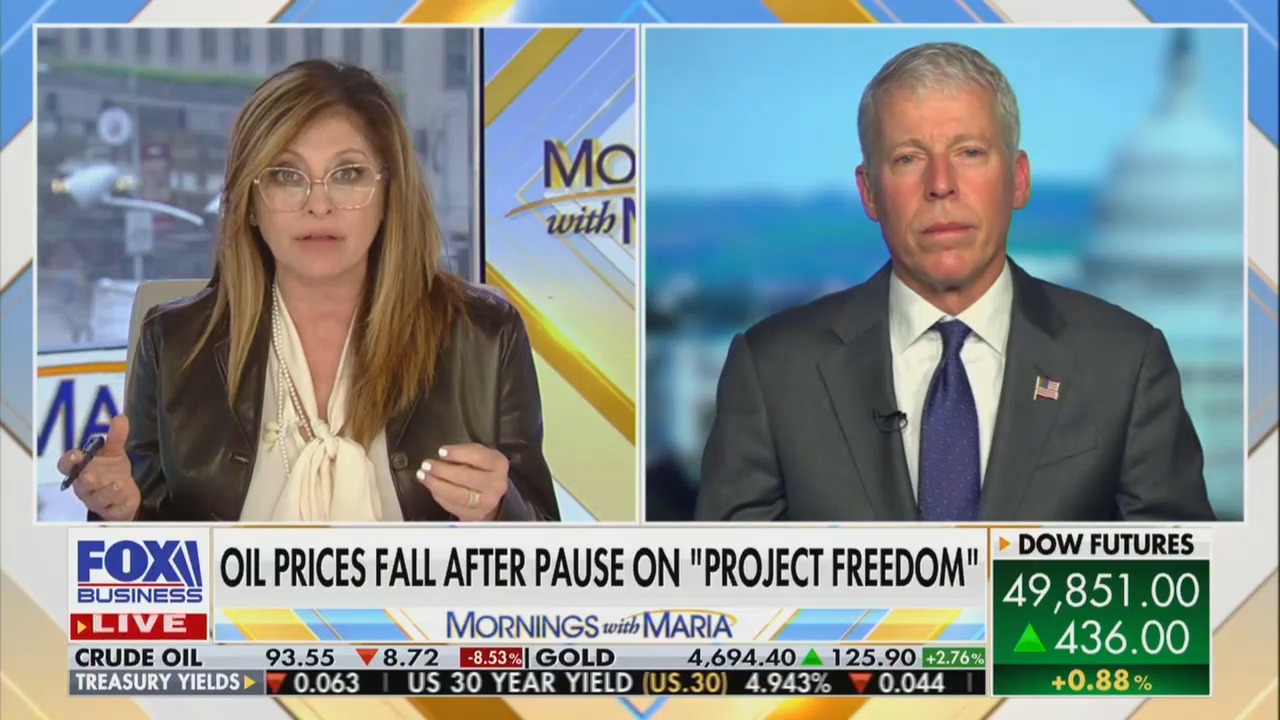
1 week agoMarkets on alert as Trump vows 'Project Freedom' for Hormuz, setting up potential showdown after renewed attacks on ships | Fortune
Trump posted on Truth Social that the U.S. will guide ships from 'neutral and innocent' countries out of the Strait of Hormuz, dubbing the effort Project Freedom. He stated, 'The Ship movement is merely meant to free up people, companies, and Countries that have done absolutely nothing wrong - They are victims of circumstance.'
World news
#middle-east-conflict
World news
fromLondon Business News | Londonlovesbusiness.com
1 week agoOil futures hold with further upside risk ahead - London Business News | Londonlovesbusiness.com
Oil prices rise due to escalating Middle East tensions and concerns over oil infrastructure, with expectations of higher prices persisting longer than anticipated.
Business
from24/7 Wall St.
1 week agoHere Are Thursday's Top Wall Street Analyst Research Calls: AbbVie, Equinix, GE Healthcare, Kratos Defense, Meta Platforms, Oneok, Palantir Technologies, Wingstop, and More
Futures are higher after a volatile trading session, influenced by oil prices, Federal Reserve decisions, and geopolitical tensions with Iran.
fromwww.cbc.ca
1 week agoOil prices rise amid new U.S. threat, few signs of breaking stalemate with Iran | CBC News
The breakdown of talks between the U.S. and Iran, along with President Trump reportedly rejecting Iran's proposal for a reopening of the Strait of Hormuz, has the market losing hope for any quick resumption in oil flows.
World news
[ Load more ]