Medical inflation runs on its own clock, and the coverage decisions you make at 65 determine whether a serious illness costs you a manageable sum or a devastating one. Healthcare is the single most unpredictable variable in retirement planning because it combines three separate uncertainties: how fast costs will rise, how much care you will need, and which coverage structure you choose.
When Sarah finally enrolled at 65, she discovered something that made her stomach drop: because she'd missed her Initial Enrollment Period by a few months, she'd be paying an extra $67 per month in Part B penalties. That's over $800 annually. Forever. For a lawyer who'd spent her career mastering complex legal concepts and advising clients on intricate matters, this felt particularly frustrating. I see variations of this story more often than I'd like to admit.
Medicare has launched a six-year pilot program that could eventually transform access to healthcare for some of the millions of people across the U.S. who rely on it for their health insurance coverage. Traditional Medicare is a government-administered insurance plan for people over 65 or with disabilities. About half of the 67 million Americans insured through Medicare have this coverage. The rest have Medicare Advantage plans administered by private companies.
Lee, a software engineer who previously worked at Google and Uber, recognized those struggles for the first time a few years ago, when her grandmother died after a long battle with dementia. Lee's aunt, who she described as an "alpha daughter," had been her grandmother's primary caretaker for years. "I just, from the sidelines, thought she was a complete superhero. She was an architect, she was raising children, she was taking care of my grandmother," Lee said. "But it was at the memorial service that I realized she actually just fully broke during that whole journey."
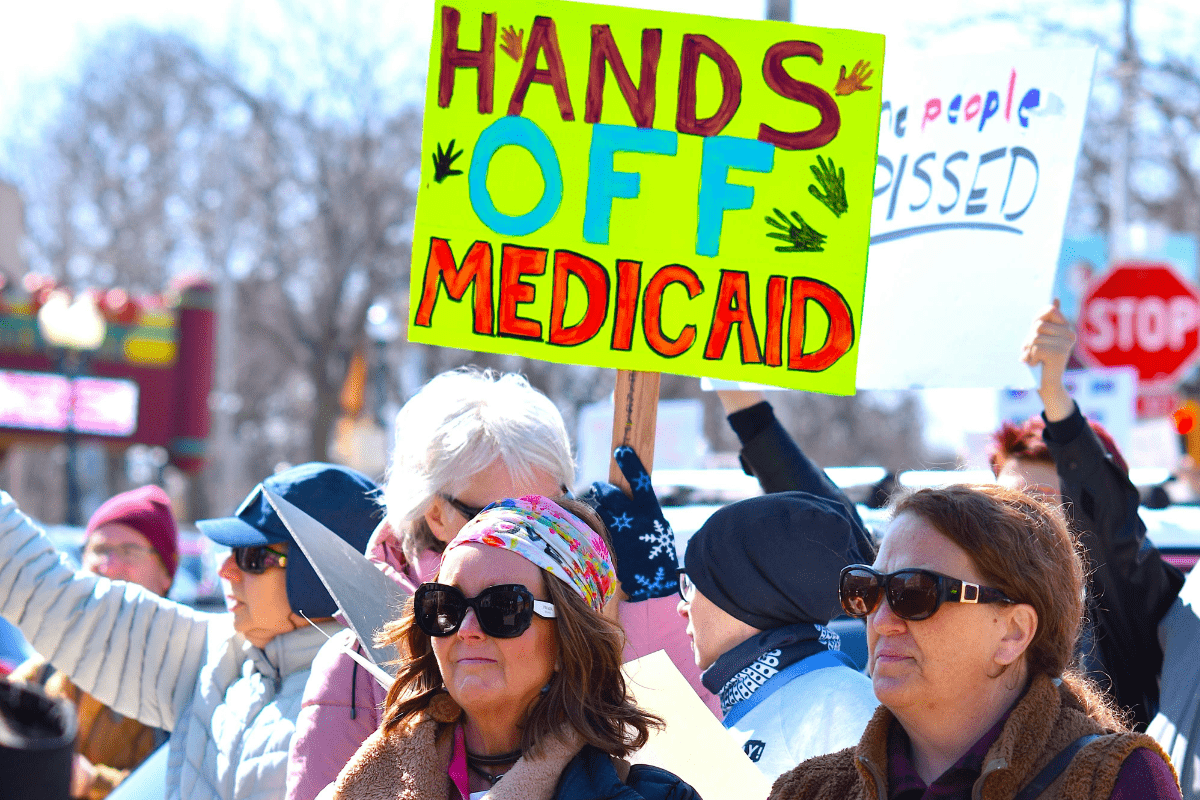
On Tuesday morning in Searsport, Maine, Republican Sen. Susan Collins woke up and decided to do something she very, very rarely does: hold a public press event in her state. The event was in celebration of the completion of two years of construction and renovation on the town's Main Street-though very few people were feeling celebratory. Over 200 protesters showed up to the ribbon-cutting ceremony to express their dismay at the senator, her voting record, and the Trump administration at large.
"There's a lot the state can do-they certainly should not be exacerbating the federal impacts," Williams said. "The most recent budget adopted by the state layers its own medical cuts on top of federal cuts, and that is very concerning. The state needs to take care of its public hospital systems."
CMS proposed a 2.4% increase in Medicare payments for hospital outpatient services and ambulatory surgery centers, reflecting a market basket update and productivity adjustment.

"Policymakers should create evidence-based, condition-specific remote monitoring duration limits and require an active redetermination of medical necessity to continue coverage for these services beyond those limits."