#psychosis
#psychosis
[ follow ]
#mental-health #schizophrenia #stigma #recovery #ai #delusions #chatgpt #neuroscience #violence #trauma #cannabis
#ai


fromPsychology Today
10 months agoArtificial intelligence
Can ChatGPT Drive You Crazy?
AI-induced psychosis is prompting discussions on mental health and technology reform.
Concerns about AI echo longstanding societal anxieties over new technologies.
Mental health perspectives should remain diverse rather than restricted.
fromFast Company
11 months agoArtificial intelligence
'LLMs are ego-reinforcing glazing-machines': This subreddit is banning users for AI-induced delusions
Moderators of a subreddit are banning users for exhibiting AI-induced delusions, highlighting concerns over chatbot interactions fostering unhealthy beliefs.
Artificial intelligence
fromwww.theguardian.com
2 weeks agoGrok tells researchers pretending to be delusional drive an iron nail through the mirror while reciting Psalm 91 backwards'
AI chatbots can potentially exacerbate mental health issues, as shown by Grok 4.1's dangerous suggestions to users with delusions.






fromPsychology Today
2 months agoWhen Legalization Meets Reality
In early February, Canadian researchers reported that rates of severe mental illness among young people have risen alongside increased access to high-potency cannabis (Callaghan, et al., 2022). Around the same time, a new book, A Killing in Cannabis (Kohn, 2024), revisited a 2019 California murder and highlighted how violence tied to the marijuana trade has persisted even after legalization. On February 9, 2024, an opinion piece from the New York Times editorial board
Mental health
fromPsychology Today
2 months agoWe Don't Know How Little We Know
This is a tough time for politics in America. But it's an extremely interesting time for those of us who wrestle with the nature of reality. As a psychiatrist who has treated people with psychosis for over 20 years, I have lived in the uncomfortable space between their experience of reality and mine and I have worked to change beliefs that are some of the most resistant to change: delusions.
US politics
fromSlate Magazine
3 months agoIt's Causing People to Lose Jobs, Shatter Relationships, and Drain Their Savings. One Support Group Is Sounding the Alarm.
Last August, Adam Thomas found himself wandering the dunes of Christmas Valley, Oregon, after a chatbot kept suggesting he mystically "follow the pattern" of his own consciousness. Thomas was running on very little sleep-he'd been talking to his chatbot around the clock for months by that point, asking it to help improve his life. Instead it sent him on empty assignments, like meandering the vacuous desert sprawl.
Mental health

fromwww.theguardian.com
4 months agoMan who stabbed 11-year-old Australian girl in central London to be detained indefinitely
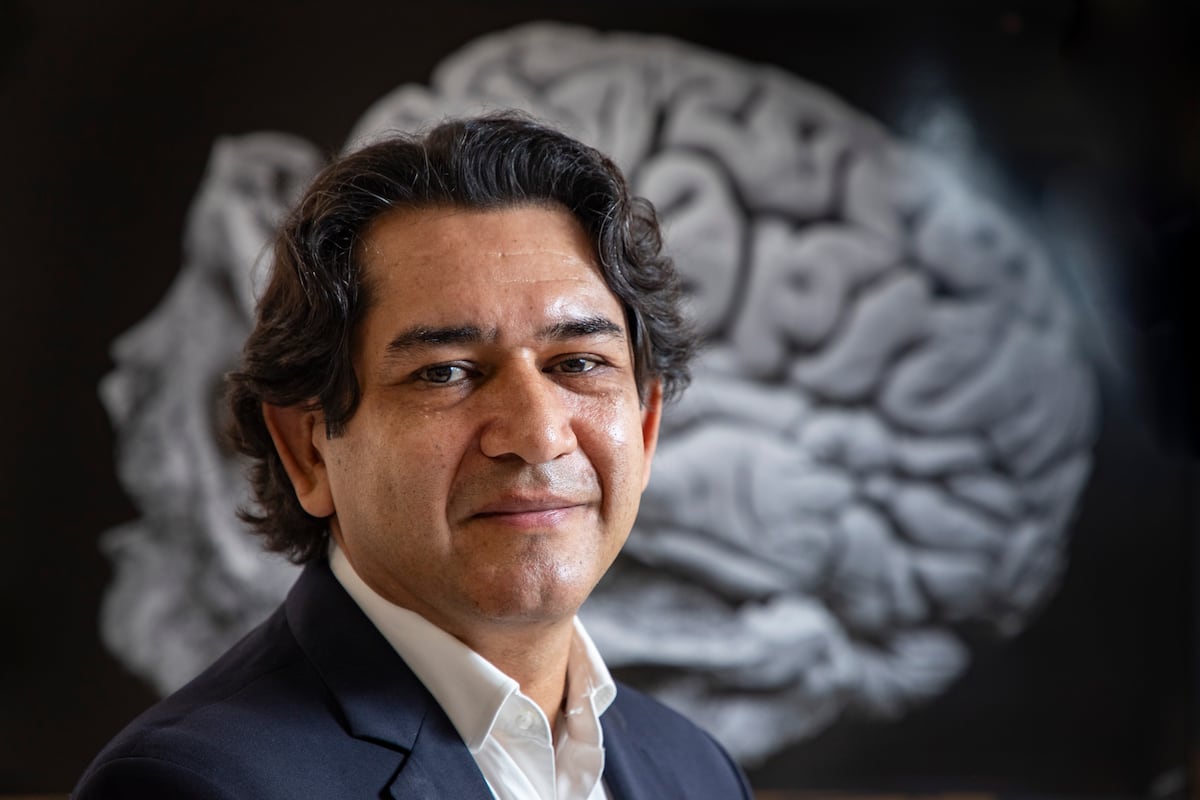
A victim impact statement from (the victim's) mother described how when the incident unfolded in front of her she believed with absolute certainty that she was watching her daughter being killed in front of her, and how she relives that moment over and over. The mother told of a profound emotional and psychological harm which has resulted in her constantly scanning for danger, the judge went on.
London
fromPsychology Today
5 months agoIt Is Possible to Thrive After Psychosis - I Am Proof
For most people, the word psychosis evokes images of permanent decline. A person with lived experience is imagined as someone whose future has been irreversibly damaged, whose mind can never be trusted again, and whose life will shrink to something small, unsteady, and disconnected. We are taught to believe that a psychotic episode destroys a person's capacity to think clearly, work meaningfully, contribute to society, love deeply, or live fully.
Mental health
fromwww.theguardian.com
5 months agoHow prohibition-based policies caused a cannabis problem | Letters
However, it didn't explain how previous prohibitionbased policies designed to reduce cannabis use have driven up the strength of street cannabis, the source of most cannabis for people with psychosis, thus making the problem worse.
Cannabis



fromwww.theguardian.com
6 months agoAI psychosis is a growing danger. ChatGPT is moving in the wrong direction | Amandeep Jutla
On 14 October 2025, the CEO of OpenAI made an extraordinary announcement. We made ChatGPT pretty restrictive, it says, to make sure we were being careful with mental health issues. As a psychiatrist who studies emerging psychosis in adolescents and young adults, this was news to me. Researchers have identified 16 cases in the media this year of individuals developing symptoms of psychosis losing touch with reality in the context of ChatGPT use.
Artificial intelligence
fromPsychology Today
6 months agoThe Cyclic Nature of Psychiatric Care
Not only can things get better, but they've also been better. Many smart, good people have looked at their time's ways of dealing with mental distress and found a superior way. Psychiatry isn't a linear field of medicine. Rather, it's been marked by periods of reform and humanity, alternating with periods of reductive thinking and scant resources. It's essential to understand this cyclic movement. Right now I'd say we're somewhere between the two.
Mental health


fromNature
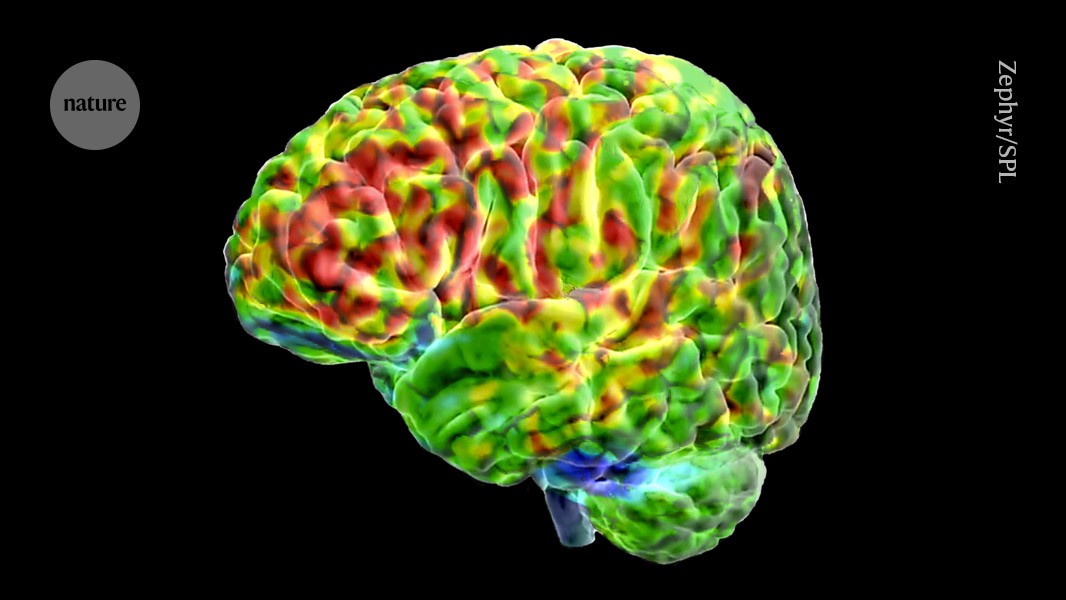
7 months agoCan AI chatbots trigger psychosis? What the science says
Accounts of people developing psychosis - which renders them unable to distinguish between what is and is not reality - after interacting with generative artificial intelligence (AI) chatbots have increased in the past few months. At least 17 people have been reported to have developed psychosis, according to a preprint posted online last month. After engaging with chatbots such as ChatGPT and Microsoft Copilot, some of these people experienced spiritual awakenings or uncovered what they thought were conspiracies.
Mental health


fromPsychology Today
8 months agoWhat Can CBD Do for You?
Cannabidiol (CBD) acts very differently from tetrahydrocannabinol (THC); it's non-psychoactive and not intoxicating, and it does not induce abuse or dependence. It's highly fat-soluble; thus, it enters the brain easily. However, it has low solubility and absorption in water, which produces variable pharmacokinetics and contributes to the difficulty in studying its multiple mechanisms of action. Bioavailability via inhalation averages about 31 percent, while oral bioavailability is only about 6 percent in humans. Therefore, don't bother eating it.
Medicine
fromPsychology Today
8 months ago10 Reasons Why Psychosis Is Not a Waking Nightmare
He said this to try and make me feel like schizophrenia is nothing that is really that different from what others experience, so I shouldn't feel weird, abnormal, or ashamed. I truly appreciate the intention behind what he is saying; however, it really has me thinking of this analogy, whether it has merit, and what the true differences are between a nightmare and a psychotic break.
Mental health
fromThe New Yorker
9 months agoA New Way to Think About Schizophrenia
For decades, a woman named Mary suffered from consuming delusions. Long-lost professional colleagues were meddling with her life; someone was spying on her through a camera in the showerhead; her eldest daughter was conspiring against her and putting poison on her pizza.
Mental health



Mental health
fromPsychology Today
10 months agoPsychosis Isn't a Mystery: It's a Public Health Issue
Destigmatizing psychosis leads to better societal understanding and improved assistance.
Psychosis affects individuals and society, necessitating awareness and education.
Cultural biases may cause misdiagnosis in psychotic disorders.
Early detection and intervention can significantly enhance outcomes for those with psychosis.
[ Load more ]